
Making homemade pet food with sustainable proteins is one of the most practical ways to improve your pet’s nutrition while reducing environmental impact. More pet owners now want control over ingredients, sourcing, and quality. As a result, preparing balanced meals at home has become increasingly popular.
However, success depends on proper planning. You must understand nutrition basics, protein quality, and safe preparation methods. When done correctly, this approach supports both your pet’s health and the planet.
In this complete guide, you’ll learn how to choose eco-friendly proteins, balance nutrients properly, and prepare safe meals your pet will love.
Why Choose Sustainable Proteins for Pets?
Traditional meat production has a significant environmental footprint. It uses large amounts of water, land, and energy. Therefore, many pet owners are looking for alternatives that reduce strain on natural resources.
Sustainable proteins typically require fewer resources to produce. They may include:
- Insect protein
- Plant-based protein blends
- Ethically sourced poultry
- Wild-caught sustainable fish
- By-product meats that reduce waste
By selecting these options, you help lower greenhouse gas emissions. At the same time, you still provide essential amino acids your pet needs.
Additionally, many alternative proteins are highly digestible. That means pets can absorb nutrients efficiently, which supports muscle maintenance and immune health.
Understanding Nutritional Requirements First
Before preparing homemade pet food, you must understand that dogs and cats have different dietary needs.
Dogs are omnivores. They can thrive on a mix of animal proteins, vegetables, and grains. Cats, on the other hand, are obligate carnivores. They require higher levels of animal-based protein and specific nutrients like taurine.
Key nutrients every pet diet should include:
- High-quality protein
- Healthy fats
- Essential amino acids
- Vitamins and minerals
- Calcium and phosphorus balance
Skipping any of these may cause long-term deficiencies. Therefore, consult a veterinarian before transitioning fully to homemade pet food. A professional can help you design balanced meals tailored to your pet’s age, weight, and health condition.
Best Sustainable Protein Options
Choosing the right protein source is the foundation of effective homemade pet food. Below are eco-conscious options that maintain nutritional value.
Insect Protein
Insect-based protein is one of the most sustainable choices available. It requires minimal land and water. Moreover, it produces far fewer emissions compared to beef or lamb.
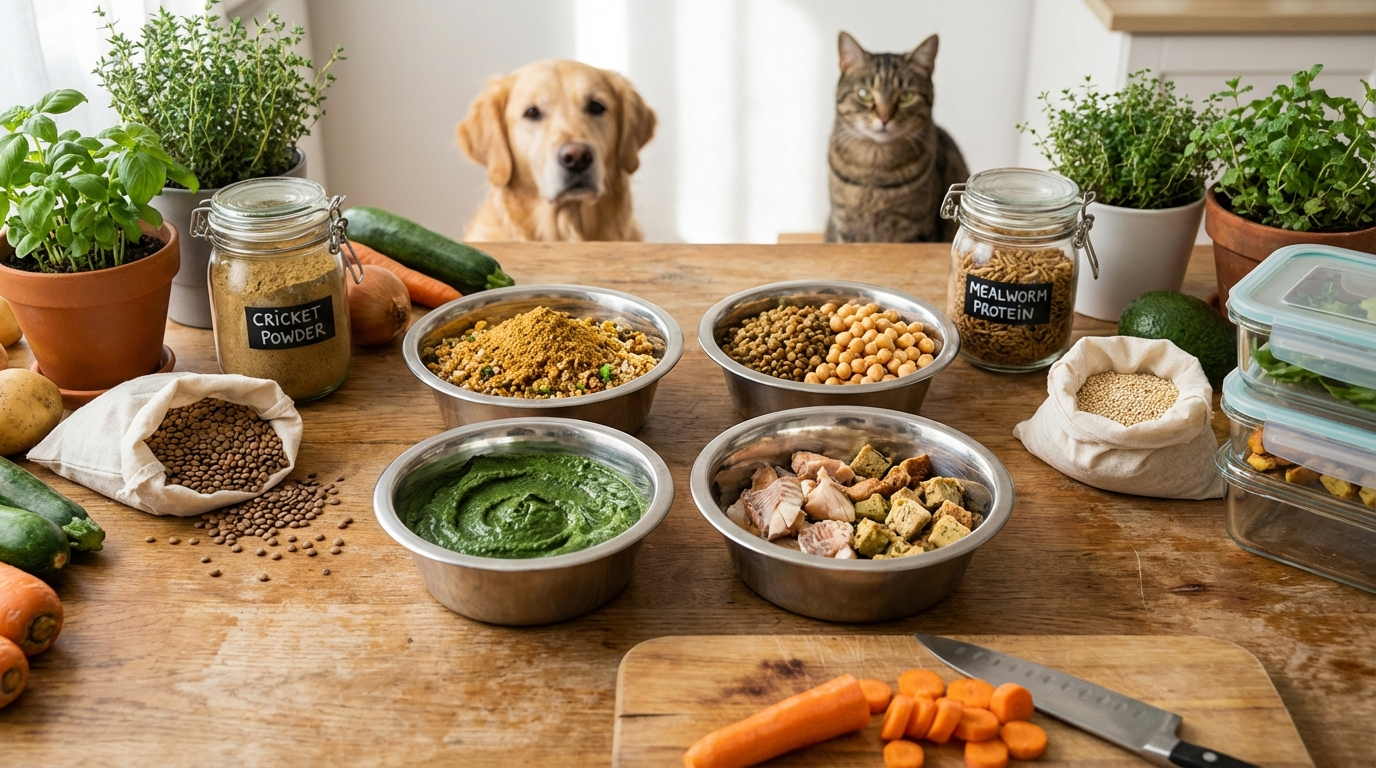
Cricket and black soldier fly larvae meals contain complete amino acid profiles. They are also highly digestible for dogs. While still emerging in home kitchens, insect powders can be incorporated safely under guidance.
Ethically Sourced Poultry
Free-range chicken or turkey from responsible farms reduces environmental impact. Compared to red meat, poultry typically has a smaller carbon footprint.
Lean poultry also provides excellent protein content. It supports muscle growth and healthy metabolism.
Sustainable Fish
Wild-caught sardines or mackerel are rich in omega-3 fatty acids. These healthy fats support skin, coat, and joint health.
However, always verify that the fish is sustainably sourced. Overfishing remains a global concern. Look for certified sustainable seafood options.
Plant-Based Blends for Dogs
Dogs can digest certain plant proteins well. Lentils, peas, and quinoa provide valuable amino acids. When combined properly, they form complete protein profiles.
Still, cats should not rely on plant proteins alone. They require animal-derived nutrients to remain healthy.
How to Balance Macronutrients Properly
When preparing homemade pet food, balance is everything. Too much protein without proper minerals can create health issues. Conversely, excessive carbohydrates may lead to weight gain.
A general guideline for dogs includes:
- 40–50% protein
- 25–30% vegetables
- 20–30% complex carbohydrates
- Added healthy fats
Cats require higher protein levels, often exceeding 60% of total intake. They also need taurine supplementation if meals are not carefully structured.
Additionally, calcium is critical. Many homemade diets lack proper calcium levels. You can add ground eggshell powder or veterinary-approved supplements.
Because mistakes can be costly, always double-check formulations. Balanced homemade pet food protects long-term health.
Step-by-Step: How to Make Homemade Pet Food
Now let’s break down the process in practical terms.
Step 1: Choose Your Protein Source
Select one sustainable protein option. For example, use ethically sourced chicken or sustainable sardines. Rotate proteins weekly to support nutrient diversity.
Step 2: Add Fiber and Vegetables
Include carrots, spinach, zucchini, or pumpkin for dogs. Lightly steam vegetables to improve digestibility. Avoid onions and garlic, as they are toxic.
Step 3: Incorporate Healthy Fats
Add small amounts of fish oil or flaxseed oil. These support skin health and reduce inflammation.
Step 4: Supplement Wisely
Even carefully prepared homemade pet food often requires supplementation. Add:
- Calcium
- Vitamin E
- Taurine for cats
- Multivitamin approved by your vet
Step 5: Cook Safely
Cook meats thoroughly to eliminate bacteria. Avoid heavy seasoning. Pets do not need salt or spices.
Allow food to cool completely before serving. Store leftovers in airtight containers for up to three days in the refrigerator.
Sample Sustainable Recipe for Dogs
Here’s a simple balanced meal example:
- 2 cups cooked free-range turkey
- 1 cup steamed carrots and spinach
- ½ cup cooked quinoa
- 1 tablespoon fish oil
- Calcium supplement as directed
Mix thoroughly and portion based on your dog’s weight.
This type of homemade pet food delivers protein, fiber, and healthy fats. However, individual calorie needs vary. Adjust portions accordingly.
Common Mistakes to Avoid
While preparing homemade pet food offers control, it also carries responsibility. Avoid these frequent errors:
- Feeding unbalanced meals
- Skipping supplements
- Using toxic ingredients
- Ignoring portion control
- Switching diets abruptly
Transition gradually over 7–10 days. Start by mixing 25% new food with 75% existing food. Slowly increase the ratio. This reduces digestive upset.
Environmental Benefits of Sustainable Feeding
Feeding pets responsibly impacts more than just household nutrition. It also affects global sustainability.
By choosing eco-conscious proteins, you reduce reliance on high-emission livestock industries. Additionally, using whole ingredients decreases packaging waste from processed kibble.
Moreover, sourcing locally lowers transportation emissions. Over time, small dietary shifts can make measurable differences.
When homemade pet food includes responsibly sourced proteins, it becomes part of a broader environmental solution.
Cost Considerations and Budget Tips
Many assume preparing meals at home is expensive. However, costs can remain manageable with smart planning.
Buy proteins in bulk from local farms. Use seasonal vegetables. Rotate affordable options like sardines or turkey.
Although specialty proteins like insects may cost more initially, prices are gradually declining.
Furthermore, improved health may reduce long-term veterinary expenses. Balanced homemade pet food can support digestion and weight management, which prevents costly conditions.
Is Homemade Always Better?
Not necessarily. Commercial diets formulated by veterinary nutritionists meet strict guidelines. However, many owners prefer transparency and control.
If you commit to research and veterinary consultation, homemade pet food can be safe and effective. Otherwise, poorly planned recipes may cause deficiencies.
Therefore, weigh both convenience and responsibility carefully.
Conclusion: A Smarter Way to Feed Your Pet
Choosing sustainable proteins is a forward-thinking decision. It supports environmental responsibility and animal health.
With proper planning, homemade pet food can deliver complete nutrition while reducing ecological impact. However, balance remains critical. Always prioritize nutrient completeness over trends.
Start slowly, consult professionals, and monitor your pet’s health regularly. Over time, sustainable feeding can become a rewarding and impactful routine.
FAQ
- Is preparing meals at home safe for all pets?
Yes, but only when diets are properly balanced. Veterinary guidance ensures nutritional completeness and safety. - Can dogs thrive on plant-based protein blends?
Dogs can digest certain plant proteins. However, meals must include complete amino acid profiles and proper supplementation. - What sustainable fish options are best for pets?
Sardines and mackerel are excellent choices when sourced responsibly. They provide beneficial omega-3 fatty acids. - How often should protein sources rotate?
Rotating every one to two weeks supports nutrient variety and reduces food sensitivities. - Do cats need additional supplements in home-prepared meals?
Yes. Cats often require taurine and precise mineral balance to prevent serious health problems.