
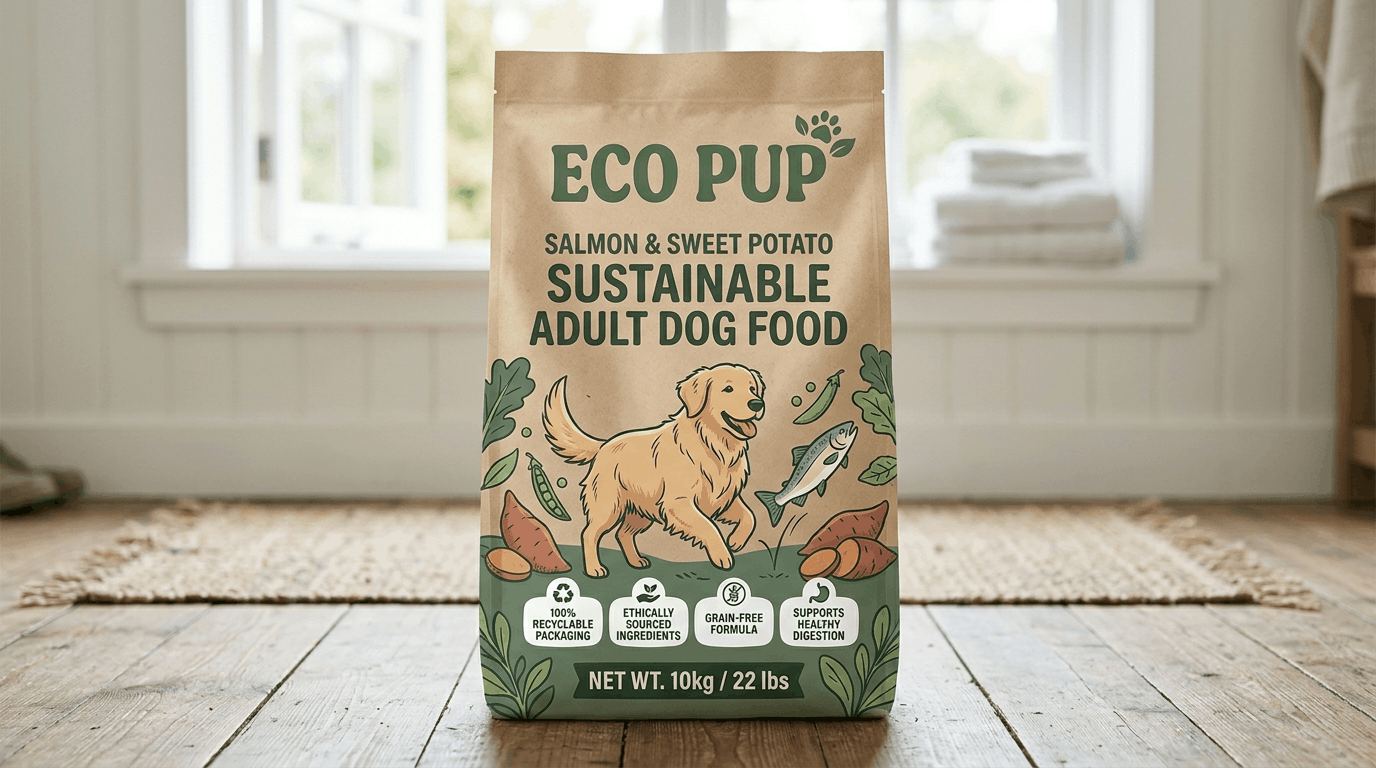

Understanding eco dog food labels has become more important as pet owners search for healthier and more sustainable feeding options. Modern pet food packaging often includes terms like natural, organic, sustainable, eco-friendly, and ethically sourced. However, many shoppers feel confused by marketing claims that sound impressive but provide very little real information.
Pet food companies know consumers care deeply about both animal health and environmental impact. Consequently, brands increasingly use green packaging, environmental slogans, and wellness-focused language to attract attention. While some products genuinely support sustainability, others rely heavily on vague marketing without meaningful standards behind the claims.
Learning how to read labels carefully helps pet owners make smarter decisions. Instead of focusing only on front-package buzzwords, informed shoppers examine ingredient lists, sourcing details, certifications, nutritional balance, and packaging materials. As a result, they gain a clearer understanding of what the food actually provides.
Dogs depend entirely on their owners for nutrition. Therefore, selecting high-quality food matters greatly for long-term health, digestion, energy, and overall well-being. At the same time, sustainable choices may help reduce environmental impact connected to pet food production and packaging waste.
Once you understand how eco dog food labels work, shopping becomes far less overwhelming. More importantly, you can confidently identify products that truly align with your values and your dog’s nutritional needs.
Why Eco Labels Have Become So Popular
Interest in eco dog food labels continues growing because consumers now care more about sustainability than ever before. Many people want products that support healthier lifestyles while reducing environmental harm. Since pets consume enormous amounts of packaged food annually, pet owners increasingly consider how those purchases affect the planet.
Traditional pet food production often depends heavily on resource-intensive meat farming, plastic packaging, and large-scale manufacturing systems. Consequently, environmentally conscious consumers look for alternatives that emphasize responsible sourcing, recyclable materials, and lower carbon footprints.
Brands quickly recognized this shift in consumer priorities. As a result, eco-focused language now appears across many pet food products. Packaging commonly highlights terms such as humanely raised, grass-fed, biodegradable, low-impact, or sustainably sourced.
Unfortunately, not all claims carry equal value. Some labels reflect legitimate certifications and meaningful environmental practices. Others simply use attractive wording designed to influence buying decisions without strong evidence behind the claims.
This practice, often called greenwashing, creates confusion for shoppers trying to make responsible choices. Therefore, learning how to separate genuine sustainability efforts from marketing tactics becomes extremely important.
Pet owners who understand labeling practices usually make more informed purchasing decisions. Additionally, they often support companies that invest genuinely in environmental responsibility and product transparency.
Understanding Ingredient Lists Properly
One of the most important parts of eco dog food labels involves the ingredient list itself. Although front packaging attracts attention first, the ingredient panel reveals far more useful information about food quality and nutritional value.
Ingredients appear in descending order by weight before cooking. Therefore, the first several ingredients usually represent the largest portion of the product. High-quality foods often list recognizable protein sources, whole grains, vegetables, or legumes prominently near the top.
Named ingredients generally provide more transparency than vague descriptions. For example, “chicken meal” offers clearer information than generic terms such as “meat by-products.” Likewise, identifiable plant ingredients usually indicate better formulation transparency.
Some eco-focused foods emphasize sustainably sourced proteins or alternative ingredients with lower environmental impact. These may include responsibly raised poultry, insect protein, plant-based proteins, or fish sourced from certified sustainable fisheries.
Avoid assuming every natural-sounding ingredient automatically means healthier nutrition. Some products use attractive terms while still relying heavily on fillers, artificial preservatives, or poor nutritional balance.
Additionally, ingredient quality matters more than trendy marketing language alone. A food labeled sustainable still needs complete nutrition appropriate for your dog’s age, size, and activity level.
Reading ingredient lists carefully helps consumers look beyond packaging claims and focus on real nutritional content instead.
What Common Eco Claims Really Mean
Many eco dog food labels use popular environmental phrases that sound meaningful but vary widely in actual significance. Understanding these terms helps shoppers avoid confusion while identifying trustworthy products.
The word “natural” remains one of the most common examples. In pet food, natural usually means ingredients originate from plant, animal, or mineral sources rather than synthetic chemicals. However, the term does not automatically guarantee high-quality sourcing or sustainability practices.
“Organic” carries stricter standards in many countries. Certified organic ingredients generally come from farms avoiding certain pesticides, antibiotics, or synthetic fertilizers. Nevertheless, products labeled organic may still contain only partial organic content unless certification standards specify otherwise.
“Sustainably sourced” suggests ingredients come from environmentally responsible production systems. Unfortunately, definitions vary between companies. Therefore, credible certifications or detailed sourcing explanations provide stronger reliability than broad claims alone.
“Human-grade” indicates ingredients meet standards for human food production before entering pet food manufacturing. While this may appeal to some consumers, it does not necessarily guarantee superior nutrition automatically.
Terms such as “free-range” or “grass-fed” often relate to animal welfare and farming practices. However, standards behind these phrases differ depending on regional regulations and certification systems.
Careful shoppers should look for brands providing detailed explanations instead of relying solely on vague marketing language.
Recognizing Reliable Certifications
One of the easiest ways to evaluate eco dog food labels involves checking for third-party certifications. Independent certifications usually provide stronger credibility than self-created marketing claims.
USDA Organic certification remains one of the most widely recognized standards for organic products. Foods carrying this certification must follow specific agricultural and processing guidelines established by regulatory authorities.
Marine Stewardship Council certification may appear on fish-based pet foods sourced from sustainable fisheries. Likewise, certifications related to animal welfare, regenerative agriculture, or fair trade practices sometimes provide additional transparency.
Certain packaging certifications also matter. Labels indicating recyclable, compostable, or responsibly sourced packaging materials may help reduce environmental waste associated with pet food consumption.
However, certifications still require context. A product may carry one sustainability certification while lacking nutritional quality elsewhere. Therefore, balanced evaluation remains important.
Some smaller companies may follow excellent sustainability practices without expensive certifications. In these cases, detailed transparency regarding sourcing, production methods, and ingredient origins becomes especially valuable.
Consumers should remain cautious of labels using vague eco symbols or unverified environmental claims without recognizable certification backing.
Packaging and Sustainability Factors
When evaluating eco dog food labels, packaging deserves attention alongside ingredients and nutrition. Pet food packaging contributes significantly to household plastic waste worldwide.
Many traditional pet food bags combine multiple materials that prove difficult to recycle effectively. Consequently, environmentally conscious brands increasingly explore alternative packaging options designed to reduce landfill impact.
Some companies now use recyclable bags, biodegradable packaging, or reduced plastic designs. Others encourage bulk purchasing systems that minimize packaging waste overall.
Packaging size may also influence sustainability. Larger bags often require less material per serving compared to many small containers. However, freshness and storage conditions still matter for maintaining nutritional quality.
Transportation impacts deserve consideration as well. Locally sourced products sometimes reduce shipping emissions compared to heavily imported alternatives. Still, overall sustainability depends on several factors beyond transportation distance alone.
Consumers increasingly appreciate brands that provide clear packaging disposal instructions. Easy-to-understand recycling guidance encourages more responsible waste management practices at home.
While sustainable packaging cannot solve every environmental concern, it represents one meaningful step toward reducing the overall ecological footprint of pet ownership.
Balancing Sustainability and Nutrition
Although eco dog food labels focus heavily on sustainability, nutrition must always remain the top priority for your dog’s health. Environmentally friendly food still needs to provide complete and balanced nutrition appropriate for canine needs.
Dogs require sufficient protein, healthy fats, vitamins, minerals, and essential amino acids regardless of ingredient sourcing methods. Therefore, nutritional adequacy matters far more than attractive marketing language alone.
Look for foods meeting recognized nutritional standards such as AAFCO guidelines. These standards help ensure products support appropriate canine nutrition across specific life stages.
Some sustainable ingredients may actually provide excellent nutrition. Lentils, oats, responsibly sourced fish, and certain alternative proteins can support both environmental goals and canine health when formulated correctly.
However, extremely restrictive diets or poorly balanced formulas may create health risks despite eco-friendly branding. Consequently, pet owners should avoid choosing foods based solely on sustainability trends.
Veterinary guidance becomes especially important for puppies, senior dogs, or pets with medical conditions. Individual dogs respond differently to dietary changes depending on genetics, activity level, digestion, and health history.
The best approach combines sustainability awareness with evidence-based nutritional decision-making. Responsible feeding supports both pet wellness and environmental responsibility simultaneously.
How to Spot Greenwashing Quickly
As eco marketing becomes more popular, greenwashing continues appearing frequently on eco dog food labels. Greenwashing occurs when companies exaggerate environmental benefits without meaningful action or transparency.
Overly vague phrases often signal potential greenwashing. Terms like eco-conscious, earth-friendly, or planet-safe sound appealing but may lack measurable standards entirely.
Packaging design sometimes creates misleading impressions as well. Green colors, leaf graphics, and nature imagery may encourage assumptions about sustainability even when products provide little environmental benefit.
Transparency remains one of the best indicators of authenticity. Trustworthy brands usually explain ingredient sourcing, manufacturing practices, packaging materials, and sustainability goals clearly.
Companies avoiding detailed information while relying heavily on emotional marketing language deserve greater scrutiny. Similarly, products making unrealistic environmental claims without evidence should raise caution.
Researching company practices beyond packaging also helps. Brand websites, sourcing policies, sustainability reports, and independent reviews often reveal more meaningful information than front-label slogans alone.
Consumers who develop label-reading skills usually become far more confident identifying truly responsible brands versus purely marketing-driven products.
Making Smarter Shopping Decisions
Learning to decode eco dog food labels ultimately helps pet owners make more thoughtful purchasing decisions. Instead of reacting emotionally to marketing claims, informed consumers evaluate nutrition, sustainability, transparency, and overall product quality together.
Comparing products carefully often reveals major differences hidden beneath similar packaging language. Some brands genuinely invest in sustainable sourcing and responsible manufacturing, while others rely mostly on branding strategies.
Budget also matters realistically. Environmentally friendly products sometimes cost more due to ingredient sourcing, certifications, or packaging improvements. However, not every expensive food automatically delivers better sustainability or nutrition.
Shopping gradually and researching carefully usually produces better long-term decisions than impulsive buying based on packaging alone. Additionally, maintaining realistic expectations helps avoid confusion created by trendy marketing promises.
Pet owners should focus on overall balance rather than perfection. Small improvements in sustainability and ingredient quality still create meaningful positive impact over time.
Ultimately, informed choices benefit both pets and the environment more effectively than marketing hype ever could.
Conclusion
Understanding eco dog food labels allows pet owners to make smarter, more responsible feeding decisions without falling for confusing marketing tactics. While sustainability claims continue growing across the pet industry, careful label reading remains essential for identifying genuinely high-quality products.
Ingredient transparency, reliable certifications, balanced nutrition, and responsible packaging all play important roles in evaluating eco-focused pet foods properly. At the same time, avoiding vague claims and recognizing greenwashing helps consumers focus on meaningful environmental practices rather than empty slogans.
Dogs depend on complete and balanced nutrition above all else. Therefore, sustainable choices should always support long-term canine health while reducing environmental impact whenever possible.
As awareness around sustainability continues expanding, pet owners who understand labeling practices will remain better equipped to choose products that align with both their values and their dog’s well-being. Responsible shopping decisions may seem small individually, but collectively they help encourage healthier industry standards and more environmentally conscious pet care practices.
FAQ
1. What Does Natural Mean on Pet Food Packaging?
Natural usually means ingredients come from plant, animal, or mineral sources instead of synthetic chemicals or additives.
2. Are Organic Dog Foods Always Better?
Not necessarily. Organic products may reduce certain chemicals, but nutritional quality and ingredient balance still matter most.
3. How Can I Tell if Sustainability Claims Are Real?
Look for third-party certifications, detailed sourcing information, and transparent company practices instead of vague environmental slogans.
4. Should Packaging Influence My Buying Decision?
Yes, recyclable or reduced-waste packaging can help lower environmental impact when combined with quality nutrition and sourcing.
5. Is Sustainable Dog Food Safe for All Dogs?
Most healthy dogs tolerate quality sustainable foods well, but dietary needs vary depending on age, health, and activity level.