
Learning how to recycle pet accessories is an important step toward reducing waste and making more responsible choices as a pet owner. Items like collars, leashes, toys, and harnesses often wear out over time, yet many people simply throw them away without considering better options. However, with a bit of awareness and effort, you can extend the life of these items or dispose of them in a way that benefits both your home and the environment.
Pet accessories are usually made from mixed materials such as nylon, plastic, and metal. Because of this, they do not always break down easily in landfills. Therefore, when you choose to recycle pet accessories, you help reduce environmental impact while making use of materials that still have value. Small changes in how you handle these items can lead to meaningful long-term benefits.
Why Pet Accessories Should Not Be Thrown Away
Many pet owners do not realize how much waste comes from everyday pet care items. Collars, leashes, and toys may seem small, but they add up over time. When these items are discarded, they often end up in landfills where they can take years to break down.
Because most accessories contain synthetic fibers, they contribute to pollution if not handled properly. Therefore, choosing to recycle pet accessories helps prevent unnecessary waste from accumulating. Additionally, some materials can be reused or repurposed, which reduces the need for new resources.
Another factor to consider is sustainability. By rethinking how you dispose of pet items, you support a more responsible lifestyle. Recycling and reusing accessories not only benefits the environment but also encourages mindful consumption.
Assessing Condition Before Disposal
Before deciding what to do with an item, take time to assess its condition. Some accessories may still be functional even if they show signs of wear. For example, a collar with minor fraying might still be usable for a smaller or less active pet.
If the item is still safe, consider whether it can be reused or passed on. This is often the simplest way to recycle pet accessories without additional effort. However, if the item is damaged beyond safe use, you can explore other options such as recycling or repurposing.
Safety should always come first. Never donate or reuse items that could pose a risk to another pet. By carefully evaluating each accessory, you ensure that your efforts to recycle pet accessories remain both responsible and practical.
Donating Usable Pet Accessories
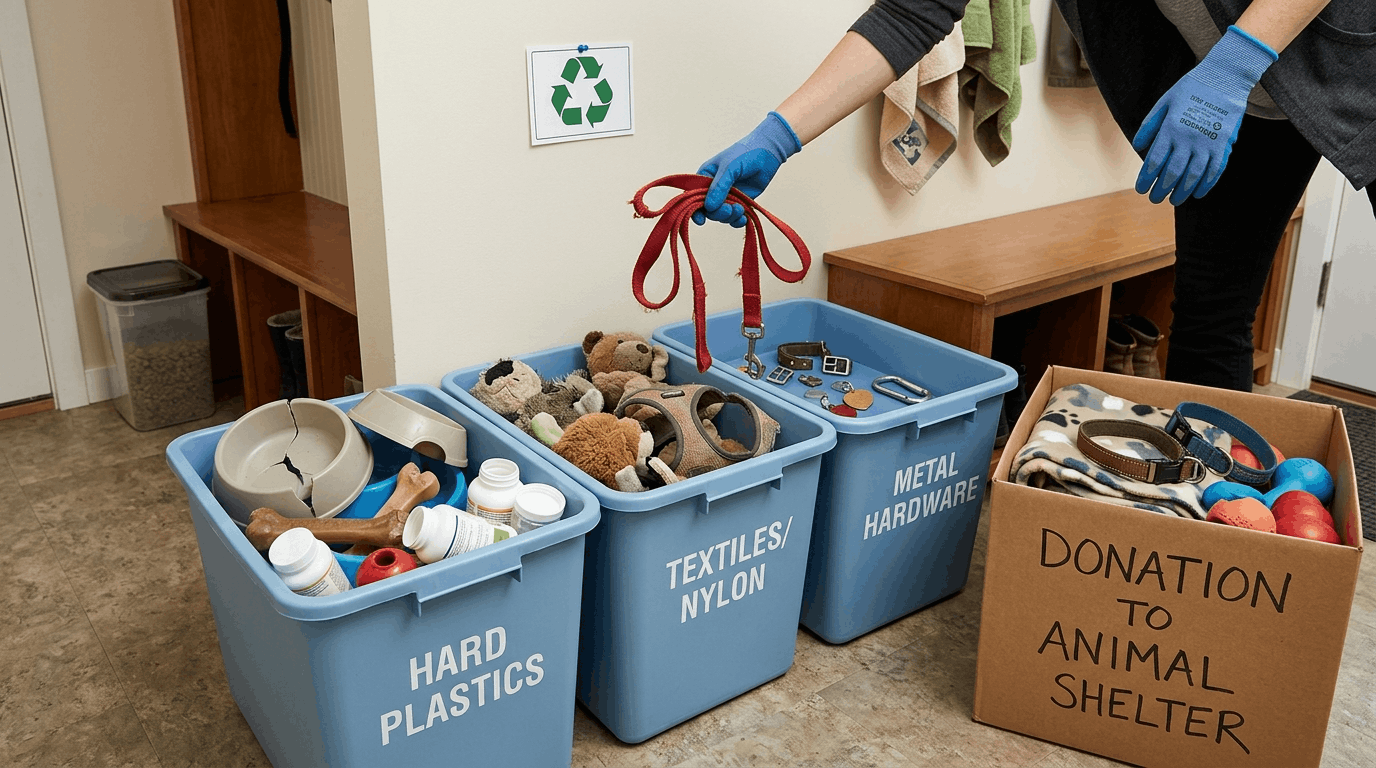
One of the easiest ways to recycle pet accessories is through donation. Animal shelters, rescue groups, and foster networks often accept gently used collars, leashes, and harnesses. These items can help support pets in need while reducing waste.
Before donating, clean the accessories thoroughly to ensure they are safe and hygienic. Many organizations have guidelines for donations, so it is best to check their requirements in advance. This step ensures that your items will be accepted and put to good use.
Additionally, local pet communities or online groups may welcome donated items. By choosing to recycle pet accessories through donation, you give them a second life while supporting other pet owners and animals.
Repurposing Old Collars And Leashes
Repurposing is a creative and effective way to recycle pet accessories. Even if an item is no longer suitable for its original purpose, it may still have value in other ways. For example, old leashes can be turned into garden ties or used for securing items around the home.
Collars can also be repurposed into key holders, bag straps, or decorative elements for DIY projects. With a bit of creativity, these materials can be transformed into practical items. This approach not only reduces waste but also adds a personal touch to your home.
By repurposing, you extend the lifespan of materials that would otherwise be discarded. This makes it one of the most sustainable ways to recycle pet accessories while saving money on new items.
Recycling Materials Properly
When items cannot be reused or repurposed, recycling is the next best option. However, because pet accessories are often made from multiple materials, they may need to be separated before recycling.
For example, metal clips can be removed and recycled separately from nylon straps. Plastic components may also be recyclable depending on local facilities. Therefore, checking your local recycling guidelines is essential when you plan to recycle pet accessories.
Some specialized programs accept mixed materials or hard-to-recycle items. These programs can process materials that standard recycling centers cannot handle. By taking the time to separate and sort materials, you improve the chances of successful recycling.
Using Brand Take Back Programs
Some pet product companies now offer take-back programs for used items. These programs allow you to return old accessories for recycling or proper disposal. In many cases, the materials are reused to create new products.
Participating in these programs is a convenient way to recycle pet accessories responsibly. Additionally, it supports brands that prioritize sustainability and environmental care.
Before sending items, check the program details to understand what is accepted. This ensures that your contribution is processed correctly. Choosing these programs helps reduce waste and encourages better industry practices.
Reducing Waste Through Better Choices
Prevention is just as important as recycling. By choosing durable and high-quality products, you reduce the need for frequent replacements. This makes it easier to manage waste over time.
Look for accessories made from sustainable or recyclable materials. Some brands offer eco-friendly options that are designed with longevity in mind. When you invest in these products, you support a more sustainable cycle.
Additionally, proper care extends the life of accessories. Regular cleaning and maintenance prevent damage and keep items usable for longer. By combining these habits with efforts to recycle pet accessories, you create a more responsible approach to pet ownership.
Avoiding Common Disposal Mistakes
Many people unintentionally dispose of pet accessories in ways that harm the environment. For example, throwing items directly into general waste without considering alternatives increases landfill use. Therefore, awareness is key when learning how to recycle pet accessories.
Another common mistake is failing to clean items before donation or recycling. Dirty accessories are often rejected, leading to unnecessary waste. Taking a few extra steps ensures that your efforts are effective.
Additionally, avoid mixing recyclable materials with non-recyclable waste. Separating components improves the recycling process and reduces contamination. By avoiding these mistakes, you make your approach more efficient and impactful.
Creating A Sustainable Routine For Pet Care
Sustainability should become part of your daily routine as a pet owner. This includes making thoughtful decisions about purchases, usage, and disposal. By consistently choosing to recycle pet accessories, you build habits that benefit both your home and the environment.
Involve your family in these practices to create shared responsibility. Teaching children about recycling and reuse helps build long-term awareness. These small actions contribute to a larger effort toward sustainability.
Over time, these habits become second nature. As a result, you reduce waste while maintaining a clean and organized living space. A consistent routine makes it easier to recycle pet accessories without extra effort.
Conclusion
Learning how to recycle pet accessories is a simple yet meaningful way to reduce waste and support a more sustainable lifestyle. Whether you choose to donate, repurpose, or recycle materials, each step contributes to a cleaner environment.
Although it may require a bit of extra effort, the benefits are clear. By making responsible choices, you extend the life of materials and reduce unnecessary waste. In the long run, these actions help create a better future for both pets and the planet.
With consistency and awareness, you can turn everyday pet care into an opportunity for positive change. Choosing to recycle pet accessories is not just about disposal but about creating a more thoughtful and sustainable way of living.
FAQ
1. Can I donate old collars and leashes to shelters?
Yes, many shelters accept clean and usable accessories to support animals in their care.
2. What should I do with damaged pet gear?
You can repurpose parts or separate materials for recycling depending on local guidelines.
3. Are all pet accessories recyclable?
Not all items are fully recyclable, but many components can be reused or processed separately.
4. How can I repurpose old leashes at home?
Leashes can be used for DIY projects, storage solutions, or simple household tasks.
5. Do brands offer recycling programs for pet items?
Some companies provide take-back programs that allow you to return used accessories for recycling.