
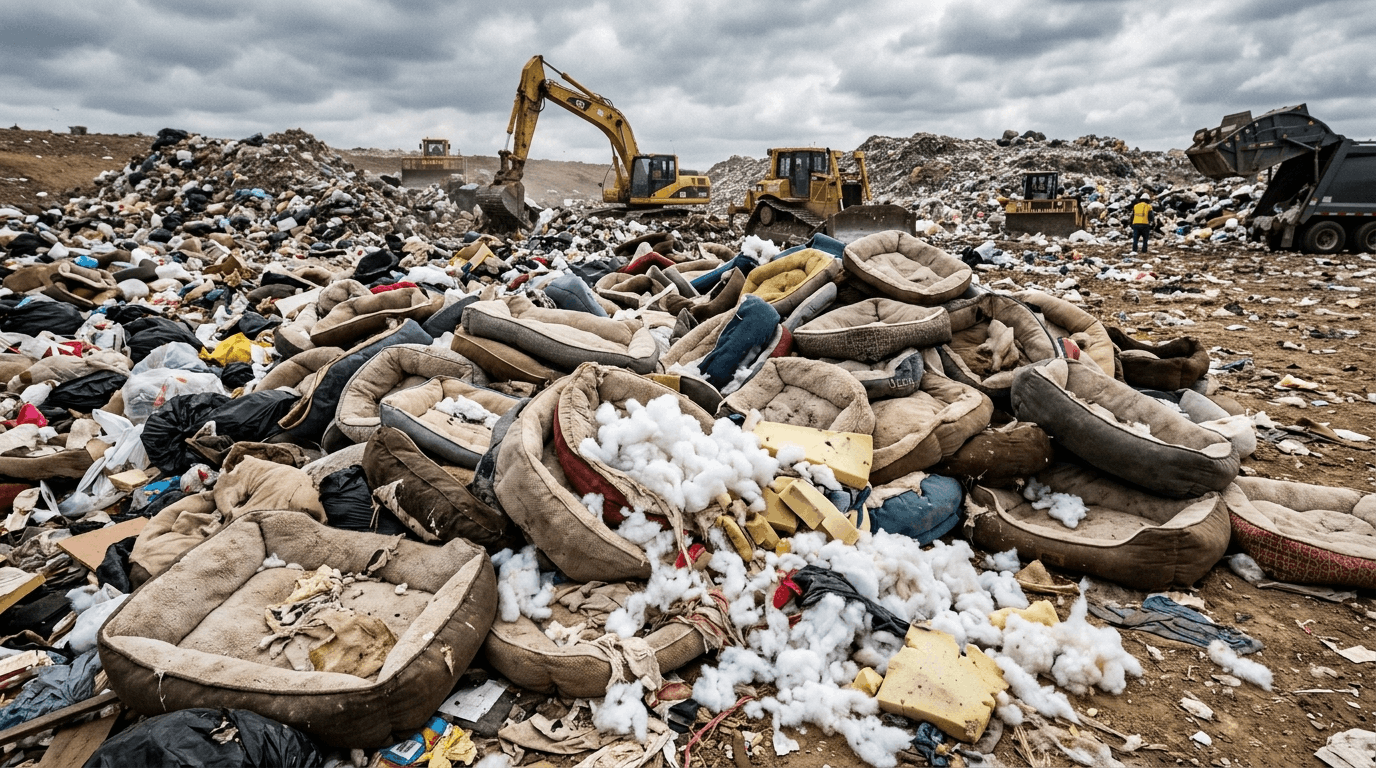

The pet bed waste impact is often overlooked, yet it plays a significant role in the growing problem of household waste. Most pet owners replace beds regularly due to wear, odor, or size changes, and these discarded items usually end up in landfills. While it may seem like a minor issue, the cumulative effect is substantial. Therefore, understanding the pet bed waste impact helps highlight why small choices in pet care can have long-term environmental consequences.
Pet beds are typically made from synthetic materials such as polyester, foam, and plastic blends. These components do not break down easily, which means they can remain in landfills for decades. As a result, the pet bed waste impact continues long after the product is discarded, contributing to pollution and resource depletion.
Why Pet Beds Create More Waste Than Expected
Many people underestimate how frequently pet beds are replaced. Over time, wear and tear, chewing, and hygiene concerns lead owners to discard them. However, each replacement adds to the overall waste stream.
The pet bed waste impact becomes more serious when you consider how these products are constructed. Most beds combine multiple materials, making recycling difficult. Foam interiors, synthetic covers, and plastic stitching often cannot be separated easily.
Because of this complexity, most discarded beds are not recycled. Instead, they end up in landfills, where they contribute to long-term environmental problems. Therefore, reducing the pet bed waste impact requires awareness and better disposal habits.
The Environmental Cost Of Synthetic Materials
The materials used in pet beds play a major role in their environmental footprint. Synthetic fibers like polyester are derived from petroleum, which requires energy-intensive production processes. This increases carbon emissions and resource consumption.
Foam filling is another concern. It is often made from non-biodegradable chemicals that do not break down naturally. Over time, these materials release microplastics and harmful substances into the environment.
The pet bed waste impact extends beyond disposal. From production to disposal, each stage contributes to environmental strain. Therefore, choosing better materials can significantly reduce this impact.
Landfill Pressure And Long Term Pollution
Landfills are already under pressure from increasing waste levels, and bulky items like pet beds add to the problem. Because they take up more space than smaller items, they contribute to faster landfill expansion.
The pet bed waste impact is particularly concerning because these products do not decompose quickly. Instead, they sit in landfills for years, slowly breaking down into smaller particles. These particles can contaminate soil and water.
Additionally, as materials degrade, they may release chemicals into the environment. This process contributes to pollution and affects ecosystems over time. Therefore, reducing landfill waste is essential for long-term sustainability.
How Frequent Replacement Increases Impact
Frequent replacement of pet beds amplifies the problem. Many owners choose cheaper options that wear out quickly, leading to more frequent disposal. While this may seem cost-effective initially, it increases waste over time.
Investing in durable products can reduce the pet bed waste impact significantly. High-quality beds last longer and require fewer replacements. This not only reduces waste but also saves money in the long run.
Additionally, proper maintenance extends the life of a bed. Regular cleaning and repairs can delay the need for replacement. These simple steps help minimize environmental impact.
Hidden Resource Consumption In Production
The production of pet beds consumes resources such as water, energy, and raw materials. Each new bed requires manufacturing processes that contribute to environmental strain.
The pet bed waste impact includes this hidden cost. When beds are discarded prematurely, the resources used to produce them are effectively wasted. Therefore, extending the lifespan of products helps conserve resources.
Sustainable production methods can reduce this impact. However, consumer choices play a key role in driving demand for better practices. By choosing wisely, pet owners can influence the market.
Better Alternatives To Throwing Beds Away
Instead of discarding old beds, there are several alternatives that reduce waste. Donation is one option, especially if the bed is still usable. Animal shelters and rescue organizations often accept gently used items.
Repurposing is another effective solution. Old beds can be used as padding, outdoor cushions, or protective layers for furniture. This extends their usefulness and reduces waste.
Recycling, where available, is also beneficial. Some programs accept specific materials for reuse. By exploring these options, you can reduce the pet bed waste impact significantly.
Choosing More Sustainable Pet Beds
Selecting better products from the start can prevent waste. Look for beds made from natural or recycled materials. These options are often easier to recycle or break down over time.
Durability should also be a priority. A well-made bed lasts longer and reduces the need for replacements. Additionally, removable covers allow for easier cleaning and maintenance.
By choosing sustainable options, you reduce the pet bed waste impact before it begins. This proactive approach is one of the most effective ways to minimize environmental harm.
The Role Of Consumer Awareness
Awareness plays a crucial role in addressing the pet bed waste impact. Many pet owners are unaware of the environmental consequences of their choices. Education helps highlight the importance of sustainable practices.
When consumers understand the impact, they are more likely to make better decisions. This includes choosing durable products, reducing waste, and supporting responsible brands.
Sharing information with others also helps spread awareness. As more people adopt sustainable habits, the collective impact becomes significant.
Small Changes That Lead To Big Results
Reducing waste does not require drastic changes. Small adjustments in daily habits can make a big difference over time. For example, repairing a bed instead of replacing it extends its life.
Rotating beds can also reduce wear and tear. This simple practice helps maintain condition and delays replacement. Additionally, proper cleaning prevents damage and improves longevity.
These small actions reduce the pet bed waste impact while maintaining comfort for your pet. Over time, they contribute to a more sustainable lifestyle.
Future Trends In Sustainable Pet Products
The pet industry is evolving to address environmental concerns. More brands are developing products with sustainability in mind. This includes using recycled materials and eco-friendly designs.
Innovation is also improving durability and recyclability. These advancements help reduce the pet bed waste impact by creating products that last longer and are easier to dispose of responsibly.
As demand grows, these options will become more accessible. This shift represents a positive step toward reducing environmental impact in pet care.
Conclusion
The pet bed waste impact is a significant yet often overlooked issue. From production to disposal, these products contribute to environmental challenges that extend far beyond their use.
By understanding this impact, pet owners can make more informed decisions. Choosing durable products, extending their lifespan, and exploring alternatives to disposal all help reduce waste.
Ultimately, small changes in how you manage pet beds can lead to meaningful environmental benefits. With awareness and thoughtful choices, it is possible to reduce waste while still providing comfort and care for your pet.
FAQ
1. Why do pet beds create so much waste?
They are made from mixed materials that are difficult to recycle and often replaced frequently.
2. Can old pet beds be donated?
Yes, many shelters accept gently used beds if they are clean and in good condition.
3. Are there eco-friendly pet bed options available?
Yes, some are made from recycled or natural materials designed to reduce environmental impact.
4. How can I make a pet bed last longer?
Regular cleaning, repairs, and rotation can extend its lifespan significantly.
5. What is the biggest environmental concern with pet beds?
Their slow decomposition and contribution to landfill waste are the main issues.