
Green pet food marketing has become increasingly common as more pet owners look for environmentally responsible options. While this shift toward sustainability is positive, it has also created opportunities for brands to exaggerate or misrepresent their claims. As a result, many products appear eco-friendly on the surface but fail to deliver meaningful environmental benefits. Therefore, understanding green pet food marketing helps you make smarter choices and avoid being misled.
Consumers today want transparency and accountability. However, not all companies meet these expectations. Some rely on vague language, attractive packaging, and incomplete information to appear sustainable. Because of this, recognizing the signs of misleading green pet food marketing is essential for responsible pet ownership.
Why Green Claims Are Increasing In Pet Food
The demand for eco-friendly products has grown significantly in recent years. Pet owners are becoming more aware of environmental issues and want to reduce their impact. This trend has encouraged companies to promote sustainability as a key selling point.
However, green pet food marketing often evolves faster than regulations. This creates a gap where companies can make claims without strict oversight. As a result, products may appear more sustainable than they actually are.
Additionally, competition in the pet food industry is intense. Brands use eco-friendly messaging to stand out and attract conscious consumers. While some genuinely invest in sustainability, others rely on marketing tactics instead of real change.
Common Tactics Used In Misleading Marketing
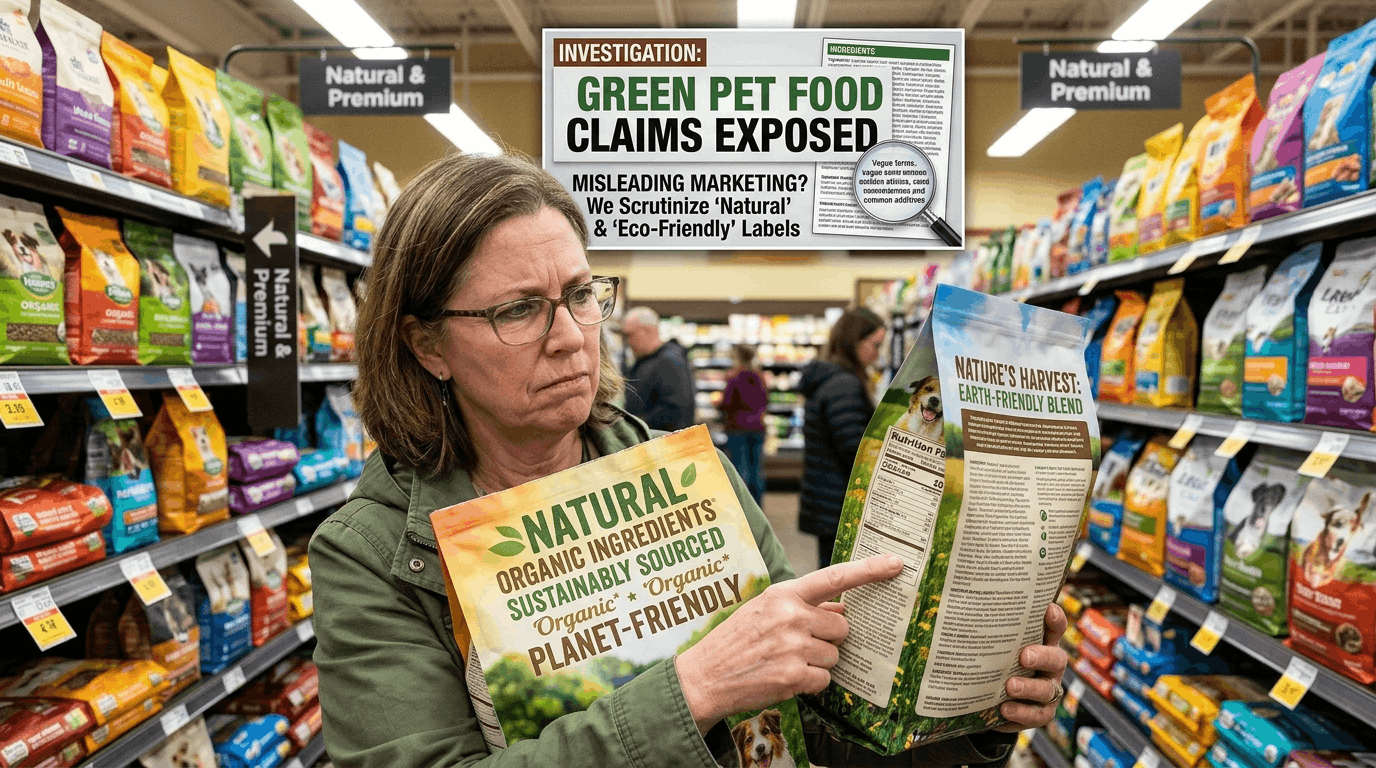
Many companies use similar strategies to create the impression of sustainability. One common tactic is using vague terms such as “natural,” “eco-friendly,” or “green” without clear definitions. These words sound appealing but often lack measurable meaning.
Another approach involves highlighting a single positive feature while ignoring larger environmental issues. For example, a brand may promote recyclable packaging while using unsustainable ingredients. This selective messaging is a key aspect of green pet food marketing.
Visual design also plays a role. Earth tones, leaf symbols, and nature imagery create a perception of sustainability. However, these elements do not guarantee environmentally responsible practices. Therefore, looking beyond packaging is essential.
The Problem With Undefined Labels
Labels such as “natural” or “organic-inspired” are often used without strict standards. This allows companies to apply them loosely, which can confuse consumers. While some products meet high standards, others do not.
Green pet food marketing relies heavily on these undefined terms. Because there is no universal definition, companies can interpret them in ways that benefit their image. This makes it difficult for consumers to compare products accurately.
To avoid confusion, it is important to look for certifications and detailed ingredient information. These provide more reliable indicators of quality and sustainability.
Ingredient Sourcing And Hidden Impacts
Sustainability is not only about packaging but also about ingredient sourcing. Many products claim to be eco-friendly while using ingredients that require significant resources to produce. This creates a hidden environmental cost.
Green pet food marketing often focuses on visible aspects while overlooking sourcing practices. For example, meat production can have a large environmental footprint. If this is not addressed, the product may not be as sustainable as it appears.
Transparency in sourcing is a key factor. Brands that clearly explain where and how ingredients are obtained are more likely to follow responsible practices. Therefore, this information should be a priority when evaluating products.
Packaging Claims That Can Be Misleading
Packaging is one of the most visible aspects of sustainability. Many brands highlight recyclable or biodegradable packaging as a major benefit. While this is important, it does not tell the whole story.
Green pet food marketing may emphasize packaging while ignoring production methods or ingredient sourcing. Additionally, some packaging is only recyclable under specific conditions, which may not be accessible to all consumers.
Understanding these limitations helps you make informed decisions. While eco-friendly packaging is valuable, it should be considered alongside other factors.
How Certifications Help Identify Real Claims
Certifications provide a more reliable way to evaluate sustainability. Independent organizations verify that products meet specific standards, which reduces the risk of misleading claims.
When green pet food marketing includes recognized certifications, it adds credibility. These labels often require companies to meet strict criteria for ingredients, sourcing, and production.
However, not all certifications are equal. Some are more rigorous than others, so it is important to research their meaning. By understanding these labels, you can make more confident choices.
The Role Of Consumer Awareness
Consumer awareness plays a critical role in addressing misleading practices. When buyers understand how green pet food marketing works, they are less likely to be influenced by superficial claims.
Education helps identify red flags such as vague language or lack of transparency. It also encourages demand for higher standards and accountability. Over time, this pressure can lead to industry improvements.
Sharing information with others also contributes to change. As awareness spreads, more people make informed decisions, which reduces the effectiveness of misleading marketing.
Choosing Brands That Prioritize Transparency
Transparency is one of the most important indicators of a trustworthy brand. Companies that openly share information about ingredients, sourcing, and production are more likely to follow sustainable practices.
Green pet food marketing often lacks this level of detail. When information is limited or unclear, it may indicate that the brand is relying on perception rather than substance.
Look for brands that provide detailed explanations and support their claims with evidence. This approach helps ensure that your choices align with your values.
Balancing Marketing And Genuine Sustainability
Marketing itself is not inherently negative. It plays a role in communicating product benefits and educating consumers. However, problems arise when marketing replaces genuine action.
Green pet food marketing should reflect real efforts rather than exaggerate them. Brands that invest in sustainability will have clear, verifiable practices to support their claims.
By focusing on substance over presentation, you can identify products that truly contribute to environmental responsibility.
Small Steps To Avoid Being Misled
Avoiding misleading claims does not require extensive effort. Start by reading labels carefully and looking for detailed information. Avoid relying solely on packaging design or slogans.
Comparing products also helps. When you evaluate multiple options, differences in transparency and quality become more apparent. This makes it easier to identify trustworthy brands.
Additionally, supporting companies that prioritize sustainability encourages better practices across the industry. These small steps reduce the influence of green pet food marketing that lacks substance.
Conclusion
Green pet food marketing has become a powerful tool in the pet industry, but it is not always reliable. While some brands genuinely strive for sustainability, others rely on misleading claims to attract consumers.
By understanding common tactics and focusing on transparency, you can make more informed choices. This helps ensure that your purchases support real environmental benefits rather than empty promises.
Ultimately, awareness is the key to navigating green pet food marketing effectively. With careful evaluation and thoughtful decisions, you can choose products that align with your values and contribute to a more sustainable future.
FAQ
1. What is greenwashing in pet food?
It refers to misleading claims that make products appear more environmentally friendly than they actually are.
2. Are all natural pet foods sustainable?
Not necessarily, as natural ingredients do not always guarantee eco-friendly sourcing or production.
3. How can I verify sustainability claims?
Look for certifications, detailed sourcing information, and transparent labeling.
4. Why do companies use vague eco terms?
They attract consumers without requiring strict proof or meeting specific standards.
5. What is the best way to choose eco-friendly pet food?
Focus on transparency, credible certifications, and responsible ingredient sourcing.