
Cheap vs durable pet gear is a question almost every pet owner faces. At first glance, low prices seem appealing. However, long-term value often tells a different story.
While budget products may work temporarily, they sometimes fail under regular use. In contrast, higher-quality gear typically lasts longer and performs better. Therefore, choosing wisely affects both your wallet and your pet’s safety.
In this guide, we break down costs, safety concerns, durability factors, and real-life value. By the end, you will understand which option truly delivers the best return on investment.
Understanding the Real Cost of Pet Gear
Many buyers focus on upfront price. However, cheap vs durable pet gear should be evaluated over time. A leash that costs less today may require replacement in a few months.
Repeated purchases quickly add up. For example, replacing a $15 collar four times a year equals $60 annually. Meanwhile, a $50 reinforced collar may last several years.
Additionally, product failure may cause accidents. Broken clips or torn harnesses can lead to escapes or injuries. Therefore, cost extends beyond money alone.
Long-term value depends on lifespan, performance, and reliability.
Durability and Material Quality
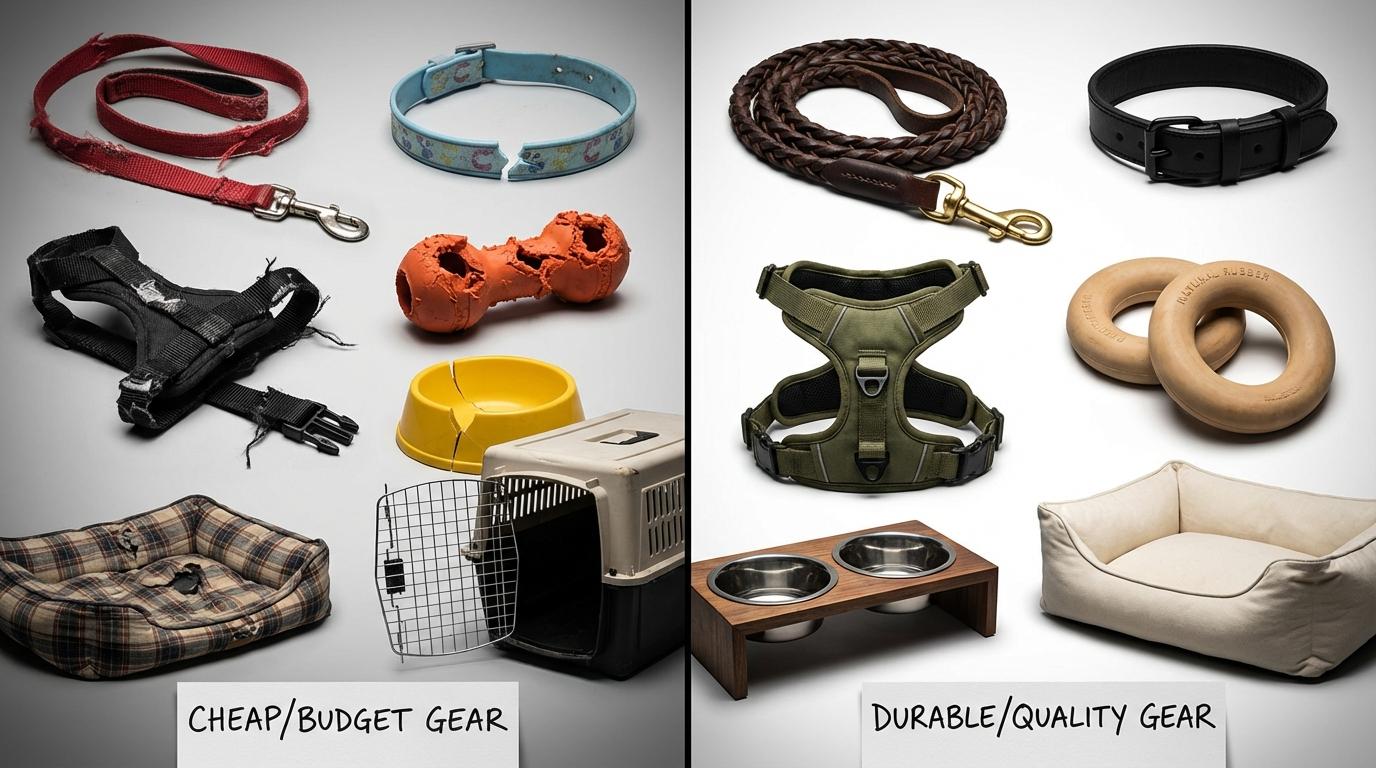
Material quality determines longevity. Cheap products often use thin nylon, weak stitching, or plastic hardware. Consequently, they wear out faster.
In contrast, durable gear typically features reinforced seams, heavy-duty metal clips, and thicker materials. Although the price rises, the lifespan increases significantly.
When comparing cheap vs durable pet gear, examine construction closely. Strong stitching and welded rings indicate higher strength. Additionally, quality padding improves comfort and reduces wear.
Investing in superior materials prevents early breakdown and enhances daily performance.
Safety Considerations Matter Most
Safety should never be compromised to save money. Weak leashes can snap during sudden pulls. Flimsy crates may collapse under pressure.
Therefore, cheap vs durable pet gear becomes more than a financial decision. It becomes a safety issue.
High-quality equipment undergoes stress testing. Manufacturers often list weight limits and material specifications. Meanwhile, low-cost alternatives may lack transparency.
Moreover, durable gear often includes ergonomic design features. Better hardware reduces pinching and chafing. As a result, pets remain comfortable and secure.
Choosing reliable products protects both you and your companion.
When Cheap Gear Makes Sense
Not all affordable gear is automatically bad. Sometimes, budget options serve short-term purposes.
For example, a temporary crate for travel may not require premium materials. Additionally, backup leashes for emergencies can be inexpensive yet functional.
However, evaluate usage frequency. If the item sees daily wear, investing more makes sense. Cheap vs durable pet gear depends heavily on context and purpose.
Occasional use allows flexibility. Daily essentials demand stronger construction.
Durable Gear Saves Money Over Time
Although durable products cost more initially, they often reduce overall expenses. Long-lasting materials mean fewer replacements.
For instance, orthopedic pet beds may seem expensive. However, low-density foam beds flatten quickly. Replacing cheaper beds multiple times eventually exceeds the cost of one high-quality model.
Therefore, cheap vs durable pet gear often favors durability when calculated annually.
Additionally, reliable equipment prevents costly accidents. Avoiding a single emergency vet visit may justify higher upfront spending.
Environmental Impact of Replacements
Frequent replacement increases waste. Discarded collars, beds, and toys contribute to landfill buildup.
Durable gear reduces environmental impact by lasting longer. Consequently, fewer products enter the waste stream.
Cheap vs durable pet gear also connects to sustainability. High-quality products often use better materials that resist wear. Some brands even offer repair options.
By buying less often, you reduce resource consumption. Over time, responsible purchasing benefits both the planet and your budget.
Comfort and Pet Well-Being
Comfort plays a major role in long-term satisfaction. Cheap gear may use rough fabrics or minimal padding. As a result, pets may develop irritation.
Durable options frequently prioritize ergonomic design. Padded harnesses distribute pressure evenly. Orthopedic beds support joints.
While affordability matters, your pet’s daily comfort matters more. Cheap vs durable pet gear directly affects quality of life.
Additionally, better materials maintain shape and structure longer. This consistency supports routine comfort.
Brand Reputation and Transparency
Reputable brands often justify higher prices through transparency. They provide material breakdowns, safety testing details, and warranties.
In contrast, extremely cheap products sometimes lack clear manufacturing information. Limited accountability may signal lower quality standards.
Therefore, when evaluating cheap vs durable pet gear, research brand reputation. Customer reviews reveal performance over time.
Trustworthy manufacturers often stand behind their products with guarantees. That reassurance adds value beyond the price tag.
How to Evaluate True Value
To determine whether an item is worth the cost, ask these questions:
- How often will my pet use it?
- What is the expected lifespan?
- Does it include reinforced materials?
- Are there safety certifications?
- Does the brand offer a warranty?
Answering these questions clarifies the cheap vs durable pet gear debate.
Additionally, calculate cost per month rather than purchase price. A $60 item lasting three years costs less per month than a $20 item lasting six months.
Common Pet Gear Categories Compared
Leashes and Collars
Cheap leashes may fray quickly. Durable versions include thick rope or leather construction. For strong pullers, heavy-duty hardware matters significantly.
Beds
Low-cost beds flatten rapidly. High-density foam maintains support. Over time, orthopedic beds prevent joint strain.
Toys
Budget toys tear easily. Durable rubber toys withstand aggressive chewing. Consequently, they reduce choking risks.
Crates and Carriers
Thin wire crates bend under stress. Reinforced steel frames provide stability.
Across categories, cheap vs durable pet gear often favors stronger construction for daily essentials.
Balancing Budget With Quality
Not every product must be premium. However, identify which items impact safety most.
Spend more on leashes, harnesses, crates, and beds. Save on decorative accessories if needed.
Strategic spending creates balance. Cheap vs durable pet gear becomes manageable when you prioritize high-risk categories first.
Additionally, watch for seasonal sales. Quality brands occasionally discount products. Smart timing reduces financial strain.
Signs You Chose the Right Option
A durable purchase shows minimal wear after months of use. Stitching remains intact. Hardware functions smoothly.
Meanwhile, your pet appears comfortable and secure. That peace of mind confirms value.
If replacements become rare, you likely made the right choice. Cheap vs durable pet gear ultimately reveals itself through performance over time.
Conclusion: Invest Where It Counts
The debate over cheap vs durable pet gear often comes down to long-term thinking. Budget options may seem attractive, yet frequent replacements increase total cost.
Durable gear improves safety, comfort, and environmental responsibility. Although the upfront price may be higher, the long-term return often justifies the investment.
Choose affordability strategically. Prioritize strength and reliability for essential items. By doing so, you protect your pet while making smarter financial decisions.
In most cases, durability wins not just in performance, but also in overall value.
FAQ
- Is expensive pet gear always better?
Not always, but higher-quality materials and testing often improve safety and longevity. - How do I know if a leash is strong enough?
Check weight limits, stitching quality, and metal hardware before purchasing. - Are cheap toys dangerous for pets?
They can be if they break easily or create small pieces that pose choking hazards. - Should I invest more in beds for older pets?
Yes, orthopedic beds provide better joint support and long-term comfort. - Can durable gear really save money over time?
Yes, fewer replacements and improved safety often reduce overall expenses.