
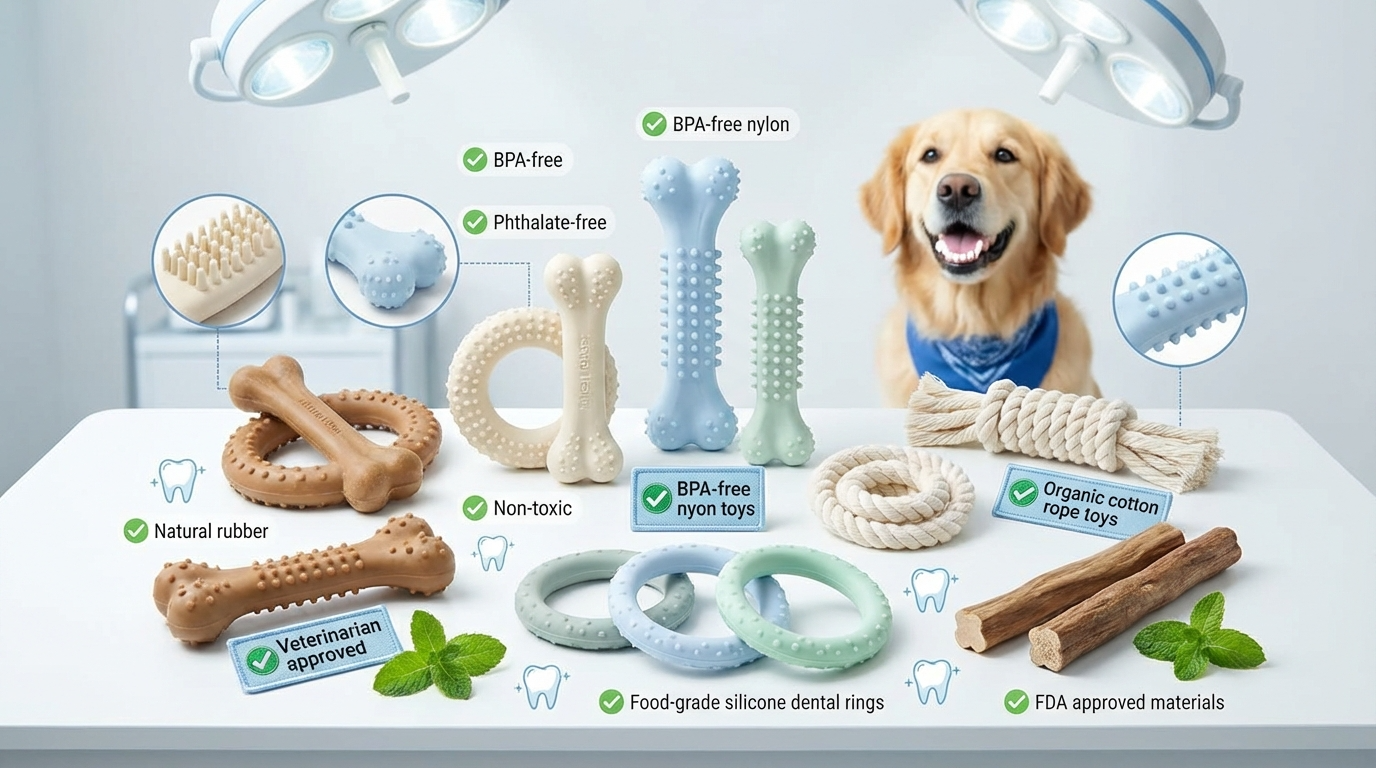

Chewing helps clean teeth and reduce plaque. However, many pet owners now question whether Dog Dental Toys Safe for daily use are truly free from harmful chemicals. Because dogs chew aggressively, they can ingest small particles over time.
Manufacturers design dental toys to improve oral hygiene. Yet, materials used in production may contain additives or contaminants. Therefore, understanding product safety matters just as much as dental benefits.
If you want Dog Dental Toys Safe for your pet, you must evaluate ingredients, manufacturing standards, and certifications carefully. In this guide, you will learn what toxins to watch for and how to select safer chewing options with confidence.
Why Dental Toys Matter for Oral Health
Dental disease affects most adult dogs. Plaque and tartar buildup can lead to gum infections and tooth loss. Consequently, veterinarians recommend chewing tools that reduce bacteria naturally.
Textured toys scrape teeth during chewing. As a result, they help slow plaque formation. Additionally, chewing stimulates saliva production, which washes away food debris.
Because daily brushing can be difficult, many owners rely on dental chews. However, benefits only matter if Dog Dental Toys Safe materials are used.
Selecting the right toy supports oral health without exposing your dog to unnecessary chemical risks.
What Materials Are Commonly Used?
Manufacturers typically use rubber, nylon, thermoplastic elastomers, or synthetic fabrics. These materials offer durability and resistance to heavy chewing.
Natural rubber often appears in premium products. Meanwhile, nylon provides long-lasting strength. Some toys also contain flavor additives to encourage chewing.
However, additives may include plasticizers, dyes, or preservatives. Therefore, understanding composition becomes essential when evaluating whether Dog Dental Toys Safe claims hold true.
Food-grade labeling can provide reassurance. Still, not all brands disclose detailed ingredient information.
Transparency from manufacturers helps you make informed decisions.
Potential Toxins in Dental Chew Toys
Concerns about toxins focus on chemical additives. Phthalates, which soften plastics, have raised health questions. Although children’s products face stricter limits, pet items sometimes follow different standards.
Bisphenol A, or BPA, may appear in certain plastics. While many companies now advertise BPA-free formulas, labeling varies widely.
Heavy metals such as lead may contaminate dyes or recycled materials. Even small amounts can harm pets over time. Consequently, verifying third-party testing matters.
When evaluating Dog Dental Toys Safe claims, look beyond marketing phrases. Independent lab testing offers stronger assurance than vague promises.
Low-cost imports without certification often pose higher risk.
Are Dental Toys Regulated by Law?
In many countries, pet toys fall under general consumer safety regulations. Unlike children’s toys, they rarely undergo mandatory chemical testing before sale.
Manufacturers must comply with broad safety laws. However, specific toxin screening is not always required. Therefore, product oversight depends largely on company responsibility.
Some regions apply chemical restrictions under broader environmental laws. Even so, enforcement may vary.
Because regulation gaps exist, consumers play an important role. Choosing reputable brands increases the likelihood that Dog Dental Toys Safe standards are met voluntarily.
Until stricter rules emerge, informed purchasing remains your strongest defense.
How Dogs Are Exposed to Chemicals
Chewing generates friction and saliva contact. As a result, small particles can detach from the toy surface. Dogs may swallow these fragments unknowingly.
Prolonged chewing increases exposure time. Puppies and aggressive chewers face higher potential intake. Additionally, damaged toys release more debris.
While acute poisoning remains rare, chronic low-level exposure raises concern. Therefore, selecting Dog Dental Toys Safe materials reduces cumulative risk.
Regular inspection prevents excessive wear. Replace toys that crack, splinter, or lose structural integrity.
Prevention minimizes both choking hazards and chemical exposure.
Signs a Dental Toy May Be Unsafe
Strong chemical odors often signal synthetic additives. Discoloration or residue on your dog’s mouth may also indicate dye transfer.
If your dog develops digestive upset after chewing, consider switching products. Similarly, excessive drooling or gum irritation warrants attention.
Choose Dog Dental Toys Safe options labeled non-toxic and free from harmful plasticizers. Additionally, research recall history before purchasing.
Brands with transparent safety documentation demonstrate stronger commitment to pet health.
Observing your dog’s behavior provides early warning signs.
Certifications and Labels to Look For
Certain certifications increase trust. FDA-compliant materials for food contact suggest higher safety standards. Although not specific to pet toys, they provide reassurance.
REACH compliance in the European Union restricts certain hazardous chemicals. Third-party lab testing for heavy metals also strengthens credibility.
Some brands voluntarily meet children’s toy standards. Consequently, those products may offer additional protection.
When evaluating Dog Dental Toys Safe marketing claims, verify that certifications apply to the entire product, not just packaging.
Reliable labeling helps reduce uncertainty.
Safer Material Alternatives
Natural rubber often ranks among safer choices. It contains fewer synthetic additives when responsibly sourced. Additionally, plant-based materials continue to gain popularity.
Food-grade nylon provides durability without questionable plasticizers. However, supervision remains necessary to prevent fragment ingestion.
Rope-based dental toys made from untreated cotton offer mechanical cleaning benefits. Yet, heavy chewers may shred them quickly.
If you prioritize Dog Dental Toys Safe materials, balance chemical safety with structural strength. Durable toys reduce breakage and exposure.
Quality matters more than price.
Supervision and Maintenance Tips
Even the safest toy can pose risks if misused. Therefore, supervise chewing sessions whenever possible.
Rinse toys regularly to remove saliva buildup. Additionally, store them in clean, dry areas to prevent bacterial growth.
Inspect surfaces weekly for cracks or sharp edges. Once visible damage appears, discard the toy immediately.
Using Dog Dental Toys Safe products correctly enhances both safety and oral health benefits.
Responsible usage complements careful selection.
Balancing Dental Benefits and Safety
Dental toys support gum stimulation and plaque control. However, safety should remain the top priority.
Consult your veterinarian about recommended brands. Some products carry veterinary dental association approval for cleaning effectiveness.
Combine chewing tools with regular brushing when possible. Professional cleanings also play a role in long-term oral health.
If you select Dog Dental Toys Safe materials and maintain proper supervision, you reduce risk significantly.
Thoughtful choices create healthy outcomes.
Future Trends in Pet Toy Safety
Consumer demand continues to shape industry standards. As awareness grows, companies invest in safer materials and transparent testing.
Biodegradable and plant-based polymers may replace traditional plastics. Additionally, blockchain tracking could improve supply chain accountability.
Governments may introduce stricter oversight as concerns increase. Until then, informed consumers drive change.
When buyers prioritize Dog Dental Toys Safe certifications, manufacturers respond with better quality control.
Progress depends on awareness and responsible purchasing.
Conclusion
Dental toys offer real oral health benefits. However, safety should never take a back seat to convenience. Although most reputable brands prioritize quality, regulation gaps still exist.
Research materials carefully. Choose products with transparent testing and recognized certifications. Avoid strong chemical odors and replace worn items promptly.
By selecting Dog Dental Toys Safe options and supervising chewing sessions, you protect your dog’s teeth and overall health. Informed decisions reduce risks without sacrificing enrichment.
Your vigilance ensures that dental care remains both effective and safe.
FAQ
- Are natural rubber dental toys better for dogs?
Natural rubber often contains fewer synthetic additives and may offer a safer alternative when properly sourced. - Can toxic chemicals from chew toys harm dogs long term?
Chronic exposure to certain additives may pose risks, especially with heavy chewing over time. - How often should I replace a dental chew toy?
Replace it immediately if cracks, splinters, or loose fragments appear to prevent ingestion. - Do FDA-compliant materials guarantee safety?
They indicate food-contact safety standards, but supervision and durability still matter. - Should I stop using dental toys altogether?
No. Choose high-quality products and combine them with brushing for balanced oral care.