
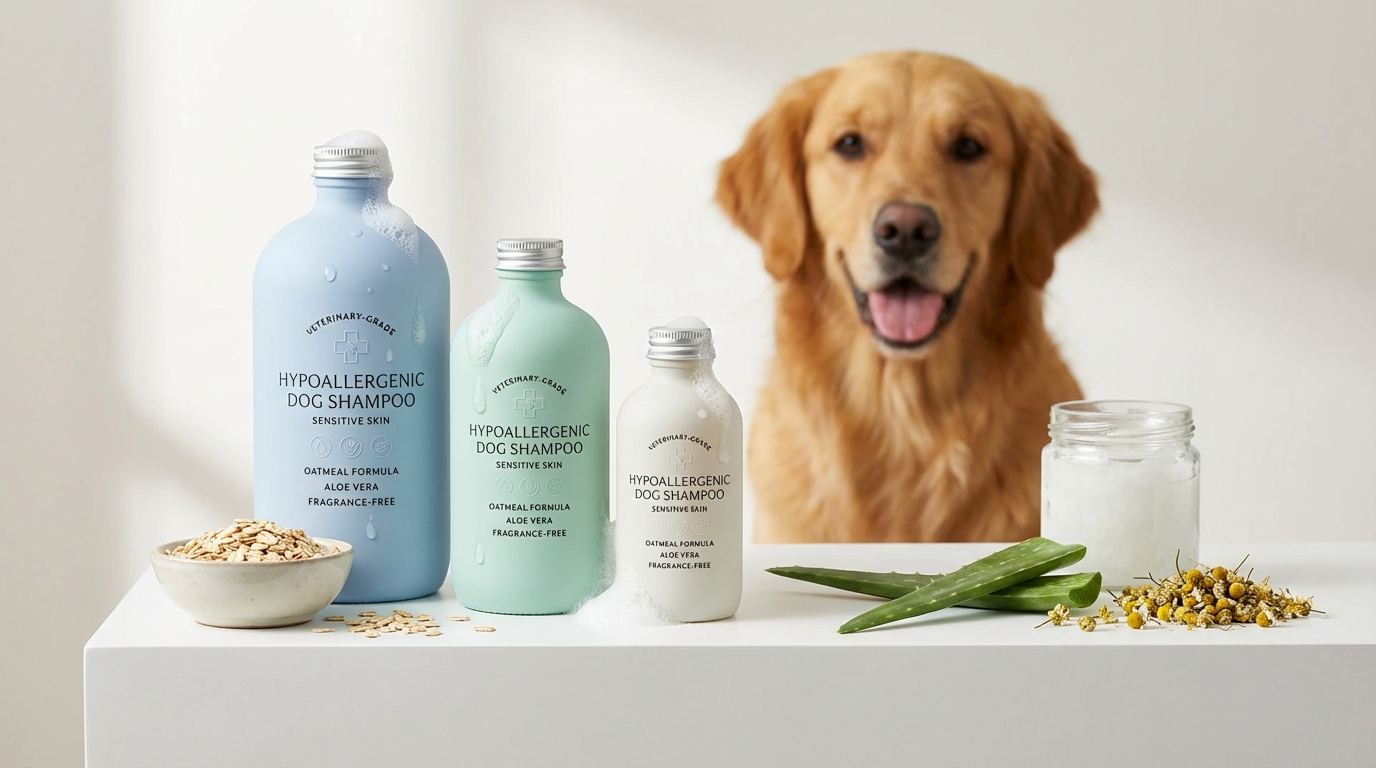

Skin allergies can make life miserable for your pet. Constant scratching, licking, and redness often follow. Therefore, choosing the Best Shampoos for Dogs with sensitive skin becomes essential for relief and healing.
Many dogs react to pollen, dust mites, food ingredients, or flea bites. As a result, their skin becomes inflamed and itchy. While medication sometimes helps, topical care plays a major role in soothing irritation. The right shampoo can calm inflammation, remove allergens, and restore the skin barrier.
In this guide, you will learn how to identify allergy-friendly formulas, what ingredients work best, and which products stand out for comfort and safety.
Understanding Skin Allergies in Dogs
Allergies in dogs often show up on the skin. Instead of sneezing like humans, dogs scratch. Consequently, red patches, hot spots, and flaky areas may develop quickly.
Environmental allergies are common. For example, grass, mold, or pollen can trigger reactions. Food sensitivities also contribute in some cases. Additionally, flea saliva causes intense itching in sensitive pets.
Chronic scratching damages the skin barrier. Therefore, bacteria and yeast may multiply. This cycle makes symptoms worse over time.
Because bathing removes surface allergens, the Best Shampoos for Dogs with allergies focus on soothing and cleansing without stripping natural oils.
How Medicated and Hypoallergenic Shampoos Help
Not all shampoos work the same way. Some formulas treat infections, while others simply calm irritation. Understanding the difference helps you choose wisely.
Medicated options may contain antifungal or antibacterial ingredients. These address secondary infections caused by excessive scratching. On the other hand, hypoallergenic shampoos avoid harsh chemicals and fragrances.
Oatmeal-based formulas soothe itching. Aloe vera reduces redness. Meanwhile, ceramides support skin repair. Together, these ingredients create protective moisture.
When selecting the Best Shampoos for Dogs, look for pH-balanced products made specifically for canine skin. Human shampoos can disrupt the natural acid mantle.
Because dogs have thinner skin than humans, gentle cleansing matters more than strong lather.
Key Ingredients to Look For
Reading ingredient labels helps you avoid irritation. Certain components consistently support sensitive skin.
Colloidal oatmeal stands out for calming inflammation. It forms a protective barrier that locks in moisture. Therefore, it appears in many of the Best Shampoos for Dogs with allergy relief claims.
Hydrocortisone reduces itching quickly. However, it should be used under veterinary guidance for long-term cases. Tea tree oil can help, but only in safe, diluted concentrations.
Additionally, look for omega fatty acids and vitamin E. These nourish the skin and promote healing. On the contrary, avoid sulfates, parabens, and artificial dyes whenever possible.
Natural extracts such as chamomile or calendula also offer soothing benefits without harsh side effects.
Ingredients to Avoid in Allergy-Prone Dogs
While some ingredients soothe, others worsen irritation. Fragrances often trigger allergic reactions. Consequently, unscented formulas are safer.
Alcohol dries the skin and increases inflammation. Artificial colorants may also cause sensitivity. Furthermore, harsh detergents strip essential oils.
If your dog scratches more after bathing, the shampoo may contain irritants. In that case, switch to one of the Best Shampoos for Dogs labeled specifically for sensitive skin.
Because reactions vary by individual, introduce new products slowly. Monitor your dog for redness or excessive licking after each wash.
Top Vet-Recommended Options
Veterinarians frequently recommend specific brands for allergic skin. These products combine soothing ingredients with safety testing.
Oatmeal-based shampoos remain a favorite choice. They hydrate and relieve itching effectively. Additionally, chlorhexidine formulas help when bacterial infections occur.
Some premium brands include ceramide complexes. These restore the skin barrier and reduce future flare-ups. As a result, regular use supports long-term comfort.
When comparing the Best Shampoos for Dogs, consider your pet’s specific symptoms. For example, yeast infections require antifungal treatment, while dry skin benefits from moisturizing formulas.
Always follow bathing frequency guidelines. Overbathing can worsen dryness and irritation.
How Often Should You Bathe an Allergic Dog?
Bathing frequency depends on severity. Mild allergies may require washing every two weeks. However, severe cases sometimes benefit from weekly baths.
Frequent bathing removes allergens like pollen and dust. Therefore, it reduces ongoing irritation. Still, use one of the Best Shampoos for Dogs designed for regular application.
Rinse thoroughly after each bath. Residue can cause itching if left behind. Additionally, dry your dog completely to prevent moisture buildup in skin folds.
Consult your veterinarian if symptoms persist. Underlying conditions may require additional treatment beyond topical care.
Supporting Skin Health Beyond Shampoo
Shampoo alone cannot solve every allergy issue. Diet plays a crucial role in skin health. Omega-3 supplements often reduce inflammation naturally.
Clean bedding regularly to minimize allergen exposure. Vacuum carpets frequently to reduce dust mites. Moreover, use flea prevention consistently.
Hydration also supports skin repair. Ensure your dog drinks enough water daily. Combined with the Best Shampoos for Dogs, these lifestyle adjustments improve overall comfort.
Because allergies tend to flare seasonally, adjust routines during high pollen months.
Natural and Organic Shampoo Options
Some owners prefer plant-based formulas. Organic shampoos often avoid synthetic chemicals. However, natural does not always mean hypoallergenic.
Essential oils can irritate sensitive dogs if improperly formulated. Therefore, choose brands that conduct safety testing.
Look for certifications or veterinarian endorsements when selecting natural products. Many of the Best Shampoos for Dogs now combine organic ingredients with clinical research.
Balance matters. A gentle, evidence-backed formula often performs better than trendy ingredients without testing.
Signs It’s Time to Change Shampoo
If scratching increases after bathing, evaluate your product choice. Excessive dryness or flaking may signal irritation. Additionally, dull coat texture indicates moisture imbalance.
Hot spots require medicated care. In such cases, switch to one of the Best Shampoos for Dogs formulated for infection control.
Pay attention to behavior changes. Restlessness or constant licking often indicates discomfort.
Because skin health directly affects quality of life, timely adjustments make a big difference.
Long-Term Allergy Management
Managing allergies requires consistency. Bathing, diet, and environmental control work together. Therefore, create a routine that supports skin recovery.
Use the Best Shampoos for Dogs as part of a broader plan. Pair topical care with veterinary advice when needed.
Over time, you may notice fewer flare-ups. However, seasonal triggers can still appear. Stay proactive during allergy seasons.
Regular grooming also helps detect early signs of irritation. The sooner you act, the faster your dog finds relief.
Conclusion
Skin allergies challenge many dogs, yet effective care exists. The Best Shampoos for Dogs with sensitive skin soothe itching, reduce redness, and restore balance.
Choose formulas with oatmeal, aloe, and skin-repairing nutrients. Avoid harsh detergents and artificial fragrances. Additionally, maintain consistent bathing routines and supportive home care.
When combined with veterinary guidance, the right shampoo improves comfort dramatically. With patience and proper product selection, your dog can enjoy healthier skin and a happier life.
FAQ
- How do I know if my dog has skin allergies?
Persistent itching, redness, and hot spots often signal allergic reactions that require evaluation. - Are oatmeal shampoos safe for regular use?
Yes, most colloidal oatmeal formulas are gentle enough for routine bathing in sensitive pets. - Can diet affect my dog’s itchy skin?
Absolutely. Food sensitivities and omega deficiencies often contribute to inflammation. - Should I use medicated shampoo without a vet’s advice?
Mild formulas are usually safe, but strong medicated products should be used under veterinary guidance. - What if symptoms don’t improve after switching shampoos?
Consult your veterinarian to rule out infections or underlying medical conditions.