
Eco-friendly pet grooming is more than a passing trend. It is a conscious shift in how we care for our animals and the planet at the same time. When you bathe, brush, and trim your pet, you make choices about water, products, packaging, and waste. Those choices add up.
If you have ever looked at a pile of empty shampoo bottles or watched water run endlessly during bath time, you may have wondered: can grooming be done differently? The answer is yes.
Living sustainably with your pet does not require perfection. Instead, it requires awareness. Small changes in eco-friendly pet grooming habits can reduce waste, lower chemical exposure, and create a healthier home.
Let’s explore how you can groom your pet responsibly while protecting the environment.
Why Eco-Friendly Pet Grooming Matters
Traditional grooming products often contain synthetic chemicals. These chemicals wash down drains and enter waterways. Over time, they affect aquatic ecosystems.
Additionally, plastic packaging creates long-term waste. Many bottles are used briefly, then discarded. While recycling helps, not all plastics are processed properly.
Water usage also plays a major role. Frequent, inefficient bathing consumes more water than necessary. Therefore, sustainable grooming focuses on mindful resource use.
Eco-friendly pet grooming reduces pollution and conserves resources. At the same time, it protects your pet’s skin from harsh ingredients.
When sustainability becomes part of your routine, positive impact follows naturally.
Choosing Natural Products for Eco-Friendly Pet Grooming
The products you select matter deeply.
Look for plant-based shampoos. Avoid sulfates, parabens, and artificial fragrances. These substances can irritate skin and harm the environment.
Biodegradable formulas break down more safely after use. That means fewer chemicals remain in water systems.
Additionally, consider concentrated products. They require less packaging and often last longer. Solid shampoo bars are another excellent option. Because they come without plastic bottles, waste decreases significantly.
When shopping, read ingredient lists carefully. Transparency signals responsible manufacturing.
By choosing cleaner products, eco-friendly pet grooming becomes simple and effective.
Reducing Water Waste During Grooming
Water conservation is a core part of eco-friendly pet grooming.
Instead of leaving taps running, wet your pet thoroughly, turn off the water, lather, then rinse efficiently. This simple adjustment saves gallons.
Use a handheld showerhead with a shutoff valve. It improves control and reduces unnecessary flow.
If your dog only needs minor cleaning, consider spot cleaning rather than a full bath. A damp cloth may remove dirt without excess water use.
Bathing frequency also matters. Overwashing strips natural oils and wastes water. Most healthy dogs require bathing only every four to six weeks.
By adjusting technique, you protect both skin health and water resources.
Sustainable Tools for Eco-Friendly Pet Grooming
Grooming tools often contain plastic. However, alternatives exist.
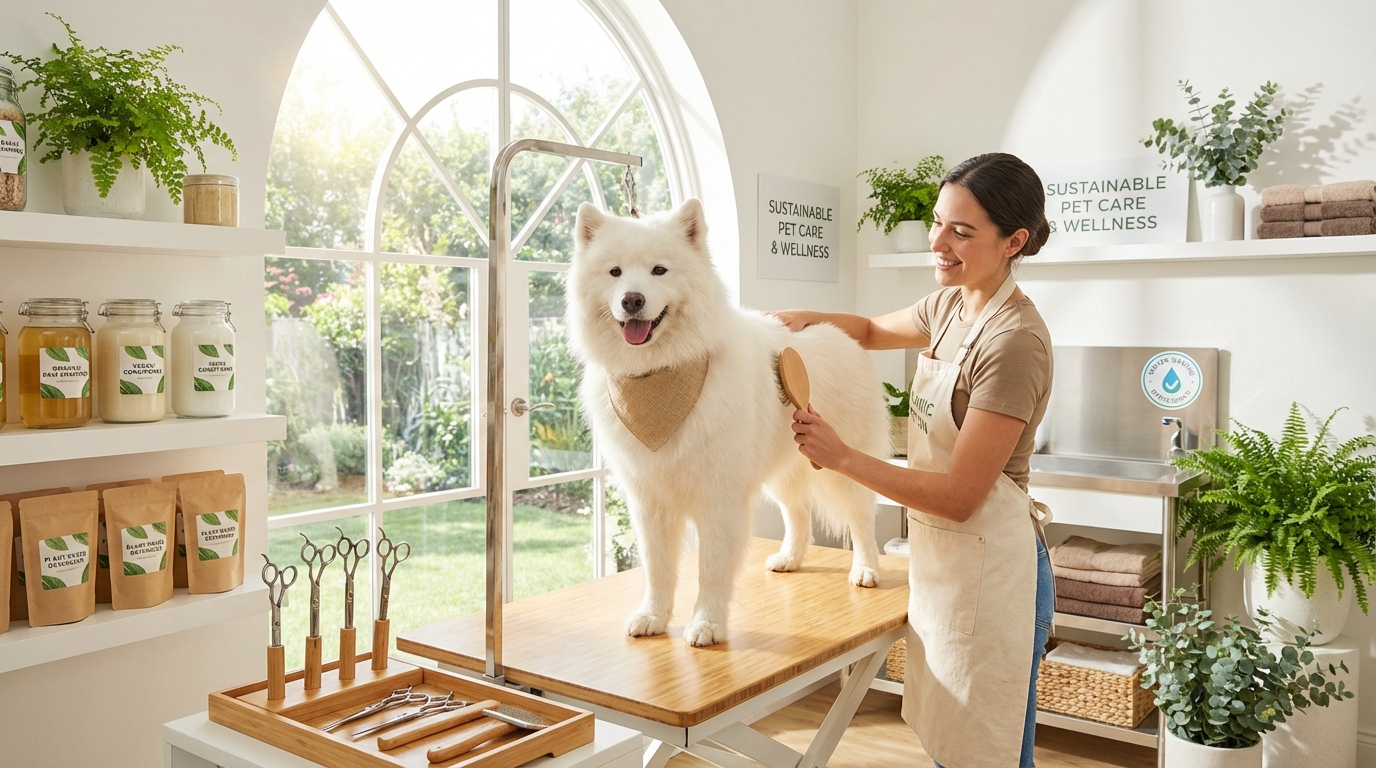
Brushes with wooden handles and natural bristles reduce synthetic materials. Stainless steel combs last longer than cheap plastic versions.
Nail clippers made from durable metal extend lifespan. Because high-quality tools resist breaking, replacements are needed less often.
Reusable microfiber towels reduce paper towel waste. Wash them regularly and reuse repeatedly.
Durability is sustainability in action. When tools last for years, environmental impact decreases.
Managing Pet Hair Waste Responsibly
Pet hair may seem harmless, yet it contributes to landfill volume.
Instead of throwing hair away, compost it. Natural fur decomposes slowly but enriches soil over time.
You can also use collected hair in garden beds. It deters pests and adds nitrogen as it breaks down.
Some crafters even spin pet hair into yarn. While unconventional, it highlights how waste can become resource.
Eco-friendly pet grooming includes creative thinking about byproducts.
Eco-Friendly Pet Grooming and Skin Health
Sustainability and health often align.
Harsh chemical shampoos disrupt skin pH. This may cause dryness or itching. Natural alternatives tend to be gentler.
Oatmeal-based cleansers soothe irritation. Aloe vera supports hydration. Coconut-derived cleansers remove dirt without stripping oils.
When skin remains balanced, less frequent bathing is required. That further reduces water use.
Healthy skin equals fewer products. Fewer products mean less environmental strain.
DIY Solutions for Sustainable Grooming
Homemade grooming solutions can be part of eco-friendly pet grooming routines.
A simple rinse made with diluted apple cider vinegar may reduce odor. Baking soda can help absorb smells between baths.
However, moderation is key. Always test small areas first. Additionally, consult a veterinarian before introducing new treatments.
DIY options reduce packaging waste and increase ingredient awareness.
Still, safety should always guide decisions.
Eco-Friendly Pet Grooming for Professional Services
If you visit a groomer, ask about their practices.
Do they use biodegradable shampoos? Do they conserve water? Are their towels reusable?
Many professional salons now adopt sustainable methods. Some use energy-efficient dryers and recycle packaging.
Supporting eco-conscious businesses encourages industry-wide change.
Your choices influence market demand.
Packaging and Waste Reduction Strategies
Plastic packaging dominates grooming aisles. However, refill stations are growing.
Some brands offer bulk refills. Others provide recyclable aluminum containers.
When possible, buy larger containers to reduce packaging frequency. While initial size may seem excessive, long-term waste decreases.
Additionally, recycle properly according to local guidelines.
Eco-friendly pet grooming extends beyond product content. Packaging matters too.
Energy Use in Grooming Routines
Blow dryers consume electricity. Heated water increases energy demand.
Whenever possible, air dry your pet. During warmer months, natural drying works well.
If you must use a dryer, select energy-efficient models. Keep drying time short and targeted.
Reducing energy consumption complements other sustainable efforts.
Training Your Pet for Efficient Grooming
Stress increases grooming time. Longer sessions waste water and energy.
Train your pet gradually. Positive reinforcement builds cooperation. Calm behavior shortens grooming duration.
Efficient sessions use fewer resources.
Patience today reduces waste tomorrow.
Sustainable Grooming for Different Coat Types
Coat type influences grooming frequency.
Short-haired breeds require less frequent bathing. Regular brushing often suffices.
Long-haired dogs may need more maintenance. However, brushing reduces matting and limits excessive washing.
Double-coated breeds benefit from seasonal brushing instead of frequent baths.
Understanding coat needs prevents unnecessary resource use.
The Role of Diet in Grooming Sustainability
Healthy nutrition supports coat health.
Omega-3 fatty acids improve shine and reduce shedding. Balanced diets minimize skin irritation.
When internal health improves, grooming demands decrease.
Sustainable living connects food choices with grooming outcomes.
Eco-Friendly Pet Grooming as a Lifestyle Choice
Sustainability is not a single act. It is a pattern of mindful habits.
Choose natural products. Conserve water. Select durable tools. Manage waste responsibly.
Each decision reinforces the next.
Living sustainably with pets strengthens your bond with them and the planet.
Conclusion
Eco-friendly pet grooming blends care and responsibility. By choosing biodegradable products, conserving water, reducing packaging waste, and investing in durable tools, you protect both your pet and the environment.
Sustainable grooming does not require dramatic change. Instead, it grows through consistent, thoughtful adjustments.
When you groom with awareness, you support cleaner waterways, healthier ecosystems, and happier pets. Small steps create meaningful impact over time.
Living sustainably with your pet begins in everyday routines. Eco-friendly pet grooming turns ordinary care into environmental stewardship.
FAQs
- What is eco-friendly pet grooming?
It involves using sustainable products and practices that reduce waste, conserve water, and protect the environment during grooming. - Are natural grooming products safe for all pets?
Most are gentle, but always check ingredients and consult a veterinarian if your pet has sensitivities. - How can I reduce water use during baths?
Turn off water while lathering, use efficient showerheads, and avoid unnecessary full baths. - Can pet hair really be composted?
Yes, natural pet hair decomposes and can enrich soil when added to compost properly. - Does eco-friendly pet grooming cost more?
Some products may cost slightly more upfront, but reduced waste and durability often save money long term.