
Learning how to upcycle pet toys is a smart and creative way to reduce waste while making the most of items you already own. Many pet owners regularly replace toys and accessories as they wear out or lose appeal, yet these items often still have usable parts. Instead of throwing them away, you can transform them into something new and functional. Therefore, upcycling offers a practical solution that benefits both your home and the environment.
When you upcycle pet toys, you extend the life of materials that would otherwise end up in landfills. This simple shift in mindset turns waste into opportunity. Additionally, it allows you to create unique items that reflect your creativity while saving money on new purchases.
Why Upcycling Pet Items Matters More Today
Pet ownership continues to grow, and with it comes an increase in discarded accessories. Toys, collars, leashes, and bedding all contribute to household waste. Although each item may seem small, the combined impact is significant. Therefore, choosing to upcycle pet toys helps reduce this growing waste problem.
Most pet toys are made from materials like rubber, fabric, and plastic, which do not break down easily. When discarded, they can remain in the environment for years. By reusing these materials, you reduce the demand for new resources and minimize environmental impact.
Upcycling also supports a more mindful lifestyle. Instead of constantly buying replacements, you focus on making better use of what you already have. Over time, this habit leads to less waste and more intentional consumption.
Simple Ways To Start Upcycling At Home
Getting started does not require special tools or advanced skills. In fact, many upcycling projects are simple and accessible. Begin by gathering old items such as worn toys, frayed leashes, or unused collars. Then, think about how these materials can be reused.
For example, fabric from old toys can be turned into small cushions or cleaning cloths. Rubber toys can be repurposed into interactive feeders or enrichment tools. When you upcycle pet toys, the possibilities are endless.
Start with small projects to build confidence. As you gain experience, you can explore more creative ideas. This gradual approach makes upcycling both enjoyable and sustainable.
Turning Old Toys Into New Enrichment Tools
One of the most effective ways to upcycle pet toys is by transforming them into enrichment tools. Dogs and other pets need mental stimulation, and repurposed items can provide engaging challenges.
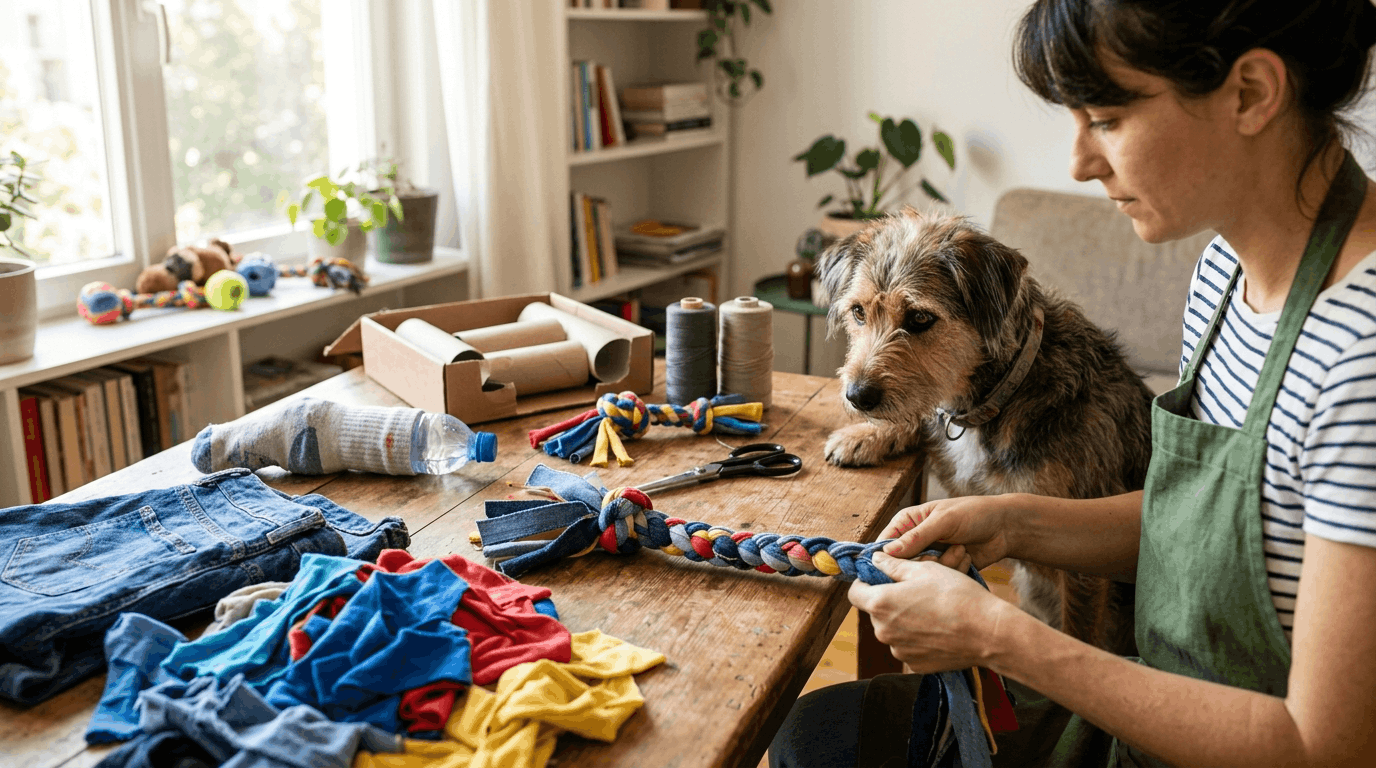
For instance, a worn-out chew toy can be modified to hold treats. This creates a puzzle that encourages problem-solving and keeps your pet entertained. Similarly, fabric scraps can be braided into tug toys that offer both fun and durability.
By choosing to upcycle pet toys into enrichment tools, you give them a second life while improving your pet’s daily routine. This approach combines sustainability with practical benefits.
Creative Uses For Old Collars And Leashes
Collars and leashes are often replaced due to wear or size changes, yet they remain versatile materials. Instead of discarding them, consider how they can be repurposed for other uses.
Old collars can become key holders, bag straps, or decorative items. Meanwhile, leashes can be used as tie-downs, storage straps, or even handles for DIY projects. When you upcycle pet toys and accessories together, you create a wide range of possibilities.
These items are designed to be strong and durable, which makes them ideal for reuse. By repurposing them, you reduce waste while creating functional tools for everyday use.
Repurposing Pet Beds And Soft Materials
Soft items like pet beds, blankets, and plush toys are perfect for upcycling. Even when they are no longer suitable for their original purpose, their materials can still be valuable.
Stuffing from old beds can be used to fill cushions or support other DIY projects. Fabric covers can be turned into cleaning rags, small blankets, or protective layers for furniture. When you upcycle pet toys and bedding, you maximize the use of every component.
This approach not only reduces waste but also saves money. Instead of buying new materials, you reuse what you already have, making upcycling both economical and sustainable.
Making DIY Pet Accessories From Scrap Materials
Creating new accessories from old materials is another effective way to upcycle pet toys. For example, fabric strips can be sewn into bandanas, while leftover materials can be crafted into small storage pouches.
Additionally, combining different items can lead to unique creations. A leash handle and fabric scraps can become a custom tote bag. Similarly, old toys can be combined to create multi-textured play items.
When you upcycle pet toys into new accessories, you not only reduce waste but also create personalized items that reflect your style. This adds a creative and rewarding element to the process.
Reducing Waste Through Thoughtful Design
Upcycling encourages you to think differently about design and functionality. Instead of viewing items as disposable, you begin to see their potential for reuse. This mindset helps reduce waste and promotes sustainability.
For example, choosing materials that are easy to repurpose makes future projects simpler. Additionally, maintaining items properly extends their usability, which reduces the need for frequent replacements.
When you consistently upcycle pet toys, you create a cycle of reuse that benefits both your home and the environment. This approach turns everyday items into valuable resources.
Common Mistakes To Avoid When Upcycling
While upcycling offers many benefits, certain mistakes can limit its effectiveness. One common issue is attempting projects that are too complex at the beginning. This can lead to frustration and incomplete results.
Another mistake is using materials that are unsafe or heavily damaged. Always ensure that items are clean and suitable for reuse. Safety should remain a priority, especially when creating items for pets.
Additionally, avoid storing unused materials indefinitely. Instead, focus on practical projects that serve a purpose. By staying organized and intentional, you make the most of your efforts to upcycle pet toys.
Encouraging Sustainable Habits Through Upcycling
Upcycling is not just about individual projects; it is about building long-term habits. By making reuse a regular part of your routine, you reduce waste and promote sustainability.
Sharing your ideas with others can also create a positive impact. When friends and family see the benefits of upcycling, they may adopt similar practices. This collective effort helps reduce overall waste.
By choosing to upcycle pet toys consistently, you contribute to a culture of creativity and responsibility. Over time, these habits lead to meaningful environmental benefits.
Conclusion
Learning how to upcycle pet toys is a simple yet powerful way to reduce waste and embrace a more sustainable lifestyle. By transforming old items into new creations, you extend their usefulness while minimizing environmental impact.
Although it may require a bit of creativity, the rewards are significant. You save money, reduce waste, and create unique items that serve practical purposes. Over time, these efforts contribute to a cleaner and more responsible way of living.
Ultimately, upcycling is about making better choices with what you already have. With consistency and imagination, you can turn everyday pet items into valuable resources that benefit both your home and the planet.
FAQ
1. What types of pet items can be upcycled?
Most items, including toys, beds, collars, and leashes, can be repurposed if they are still safe to use.
2. Is upcycling safe for pets?
Yes, as long as materials are clean, non-toxic, and suitable for your pet’s size and behavior.
3. Do I need special tools to start upcycling?
No, many projects require only basic tools and simple materials.
4. Can upcycling save money in the long run?
Yes, reusing materials reduces the need to purchase new items frequently.
5. How can I come up with creative ideas for projects?
Look at everyday needs around your home and think about how old items can serve new purposes.