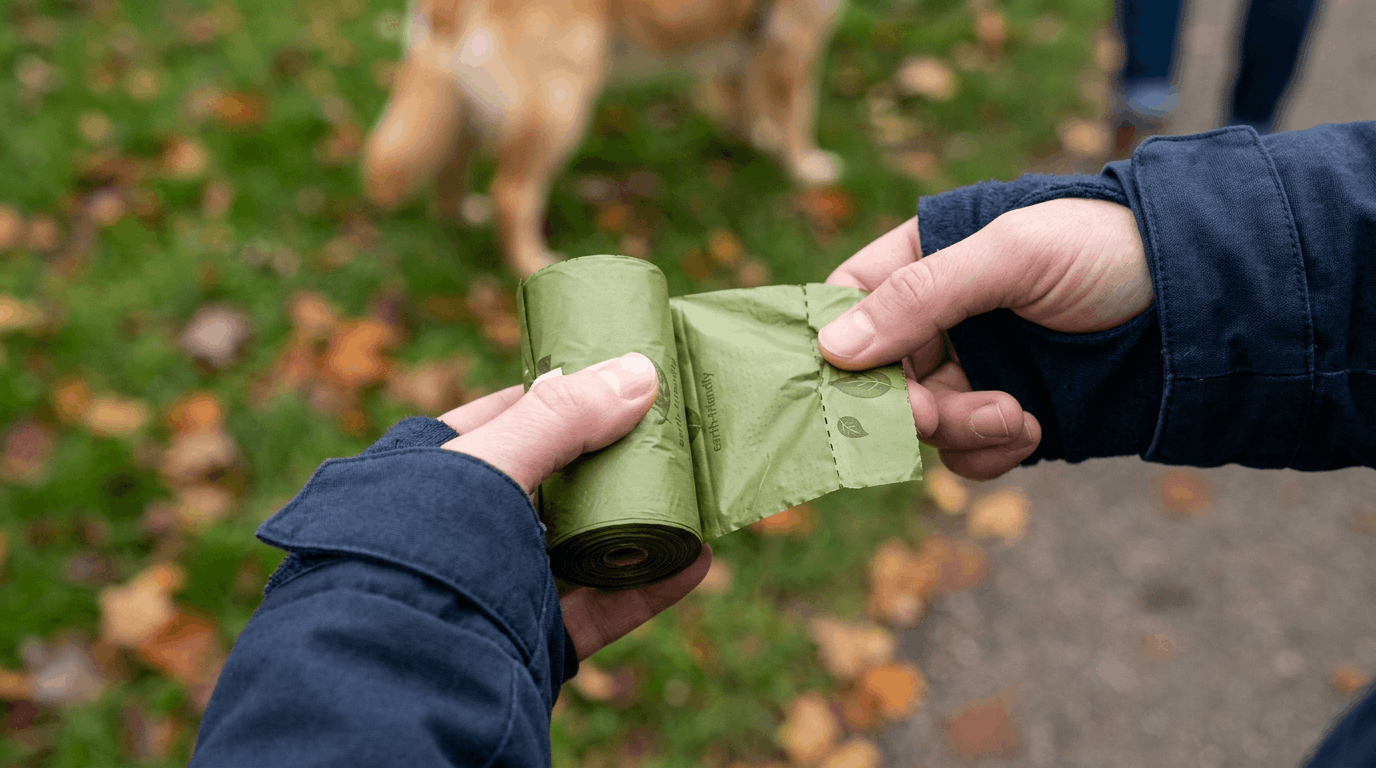

Green dog poop bags have become a popular choice among pet owners who want to reduce their environmental impact. At first glance, these bags seem like the perfect solution to a common problem. They are often labeled as biodegradable, compostable, or eco-friendly, which makes them appealing for those trying to live more sustainably. However, the truth behind green dog poop bags is more complex than many people realize, and understanding how they actually work is essential for making responsible choices.
Most pet owners want to do the right thing, yet marketing claims can sometimes be misleading. While green dog poop bags are certainly better than traditional plastic in many cases, not all of them perform as expected. Therefore, knowing what to look for and how to use them properly helps you avoid common mistakes and truly reduce waste in your daily routine.
What Green Dog Poop Bags Really Mean
The term “green” can mean different things depending on the product. Some bags are labeled biodegradable, while others are marketed as compostable. Although these terms sound similar, they have different meanings in practice. Biodegradable materials break down over time, but they may still leave behind microplastics. Compostable bags, on the other hand, are designed to break down completely under specific conditions.
Because of this difference, not all green dog poop bags offer the same environmental benefits. Some may only partially degrade, especially if they are disposed of in regular landfills. Therefore, understanding the materials and certifications behind these products is important before making a purchase.
Additionally, many green bags still contain plastic blends. While they may break down faster than traditional plastic, they do not always eliminate environmental impact entirely. This is why careful selection matters when choosing green dog poop bags.
Why Traditional Bags Are Still A Problem
Traditional plastic bags remain one of the biggest contributors to long-term waste. They can take hundreds of years to decompose, and during that time, they break into smaller particles that pollute ecosystems. Because pet owners use these bags daily, the amount of waste accumulates quickly.
Green dog poop bags were introduced as a solution to this issue. However, they only provide real benefits when used and disposed of correctly. If they end up in environments where decomposition is limited, their advantage over plastic may be reduced.
This highlights the importance of not only choosing better products but also understanding how to manage them responsibly. Without proper disposal, even green dog poop bags may not deliver the expected results.
The Role Of Composting In Sustainability
Composting plays a key role in making green dog poop bags effective. Compostable bags are designed to break down in controlled environments where heat, moisture, and microorganisms support decomposition. These conditions are typically found in industrial composting facilities.
However, not all areas provide access to such facilities. As a result, many green dog poop bags end up in standard waste systems where decomposition is slower. This limits their environmental benefits and can create confusion for pet owners.
Home composting is another option, but pet waste must be handled carefully to avoid contamination. Therefore, while composting enhances the value of green dog poop bags, it requires proper knowledge and infrastructure to be effective.
Common Misconceptions About Eco Friendly Bags
One of the most common misconceptions is that all green dog poop bags break down quickly in any environment. In reality, decomposition depends on specific conditions. Without the right environment, even biodegradable materials may take a long time to degrade.
Another misunderstanding is that these bags eliminate pollution entirely. While they reduce impact compared to plastic, they are not a perfect solution. Some materials may still leave traces behind, especially if they contain synthetic components.
Additionally, many people assume that eco-friendly bags are less durable. However, modern green dog poop bags are often designed to be just as strong as traditional options. Therefore, durability should not be a concern when choosing high-quality products.
How To Choose Truly Sustainable Options
Selecting the right product requires attention to detail. Look for certifications that confirm compostability or biodegradability. These labels provide assurance that the bag meets certain environmental standards.
Material composition is also important. Bags made from plant-based materials or certified compostable compounds tend to perform better. Avoid products that use vague terms without clear explanations.
Packaging should not be overlooked either. Some brands use excessive plastic packaging, which offsets the benefits of the bags themselves. Therefore, choosing brands that prioritize sustainability in both product and packaging improves your overall impact.
When chosen carefully, green dog poop bags can become a reliable part of a more eco-conscious routine.
Proper Disposal Makes A Big Difference
Even the best products require proper disposal to be effective. Simply throwing green dog poop bags into general waste may limit their benefits. However, when disposed of correctly, they can break down more efficiently and reduce environmental impact.
If composting facilities are available, using them is the best option. Otherwise, placing the bags in waste systems designed to handle organic materials can still be beneficial. Avoid leaving bags in natural areas, as they may take longer to decompose without proper conditions.
Consistency is key. By using and disposing of green dog poop bags responsibly, you ensure that your efforts lead to meaningful results.
Reducing Waste Beyond Just Bag Choice
While switching bags is important, other habits can further reduce waste. For example, using fewer bags when possible or choosing bulk options can minimize packaging waste. Additionally, selecting durable pet products reduces the need for frequent replacements.
Reusable solutions, where practical, can also contribute to sustainability. Although not always suitable for waste collection, they can be used for other aspects of pet care. Combining these habits with the use of green dog poop bags creates a more comprehensive approach.
Small changes, when practiced consistently, add up over time. Therefore, focusing on overall habits rather than a single product leads to better long-term results.
The Future Of Eco Friendly Pet Products
The demand for sustainable products is growing, and the pet industry is beginning to respond. More brands are investing in better materials, improved designs, and transparent practices. As a result, the quality and effectiveness of green dog poop bags continue to improve.
Innovation is also playing a role. New materials and technologies are being developed to create products that break down more efficiently. These advancements offer hope for reducing waste on a larger scale.
Consumer choices remain a driving force behind this progress. By supporting responsible brands, pet owners encourage further innovation and better standards across the industry.
Conclusion
Green dog poop bags offer a practical step toward reducing environmental impact, but they are not a complete solution on their own. While they provide advantages over traditional plastic, their effectiveness depends on proper selection, use, and disposal.
Understanding the truth behind these products helps you make informed decisions that align with your values. By choosing high-quality options and adopting responsible habits, you can reduce waste and contribute to a more sustainable future.
Although no single product can solve the problem entirely, consistent effort makes a difference. With awareness and careful choices, green dog poop bags can become part of a broader commitment to eco-friendly pet care.
FAQ
1. Are all eco-friendly poop bags truly biodegradable?
No, some only partially break down and may still leave residues depending on their materials.
2. Can these bags be composted at home?
Some can, but pet waste requires careful handling to avoid contamination risks.
3. Do green bags break down in landfills?
They may break down slowly, but landfills often lack the conditions needed for proper decomposition.
4. Are compostable bags better than biodegradable ones?
Compostable options usually break down more completely under the right conditions.
5. How can I reduce waste beyond using better bags?
Choose minimal packaging, buy in bulk, and adopt consistent eco-friendly habits.