
The rise of plastic packaging in dog products has become a growing concern for environmentally conscious pet owners. While convenient and widely used, plastic packaging often creates more harm than most people realize. From single-use wrappers to bulky containers, the pet industry generates significant waste every year. Because of this, understanding the impact of plastic packaging in dog products is essential if you want to make better choices for your pet and the environment.
Many dog products, including treats, toys, and grooming supplies, rely heavily on plastic for protection and storage. However, this convenience comes at a cost. Most plastic packaging is not recycled properly, and a large portion ends up in landfills or oceans. As a result, the environmental footprint of everyday pet care continues to grow.
The Environmental Cost of Plastic Waste
Plastic packaging in dog products contributes directly to global waste problems. Unlike organic materials, plastic does not break down easily. Instead, it can take hundreds of years to decompose, releasing harmful substances into the environment over time.
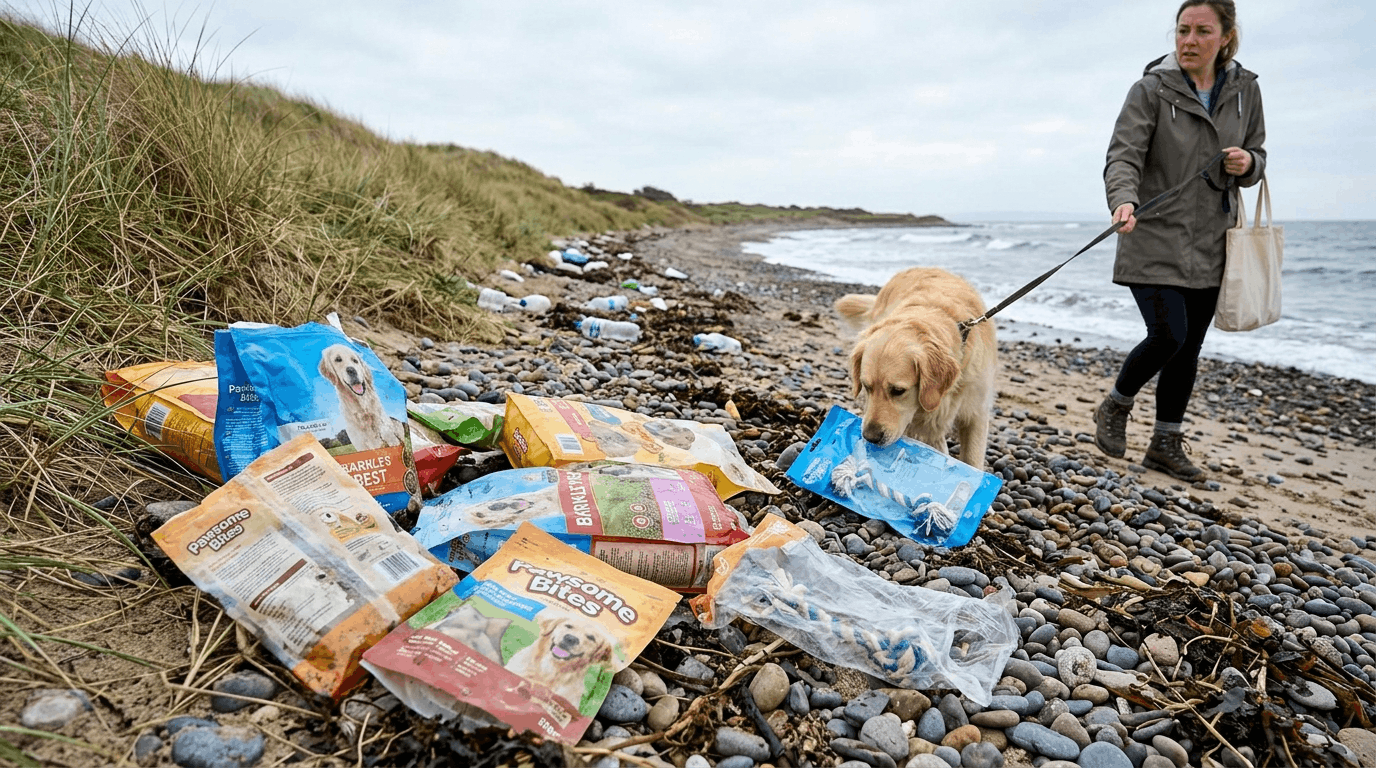
In addition, plastic waste often finds its way into waterways. Once there, it breaks into microplastics that can harm marine life. These tiny particles are easily ingested by animals, leading to long-term ecological damage. Therefore, even small amounts of plastic waste can have a widespread impact.
Moreover, recycling systems are not always effective. Many types of plastic used in dog product packaging are difficult to process. Because of this, a large percentage of recyclable plastic still ends up as waste. This inefficiency makes plastic packaging in dog products a significant environmental issue.
How Pet Products Contribute to Plastic Overuse
The pet industry relies heavily on plastic packaging in dog products due to its low cost and durability. Manufacturers often choose plastic because it is lightweight, flexible, and easy to produce. However, these advantages also contribute to overuse.
For example, dog treats are frequently packaged in multi-layer plastic bags that are not recyclable. Similarly, toys often come wrapped in additional plastic layers for display purposes. Even grooming products like shampoos and sprays use plastic bottles that may not be reused.
Because of these practices, the amount of waste generated from pet products continues to increase. While each item may seem small, the cumulative effect is substantial. Therefore, reducing plastic packaging in dog products requires both awareness and action.
Impact on Wildlife and Ecosystems
The effects of plastic packaging in dog products extend beyond landfills. Wildlife is particularly vulnerable to plastic pollution, as animals may mistake plastic for food or become entangled in it.
In marine environments, plastic debris can disrupt entire ecosystems. Fish, birds, and other animals often ingest plastic particles, which can lead to serious health issues or death. As a result, plastic waste contributes to biodiversity loss and ecological imbalance.
On land, animals may also encounter discarded packaging. This exposure can lead to injuries or ingestion of harmful materials. Therefore, reducing plastic packaging in dog products is crucial for protecting wildlife and preserving natural habitats.
The Hidden Carbon Footprint of Plastic Production
Beyond waste, plastic packaging in dog products also has a significant carbon footprint. Producing plastic requires fossil fuels, which contribute to greenhouse gas emissions. From extraction to manufacturing, the process consumes energy and releases pollutants.
In addition, transportation adds to the environmental impact. Plastic packaging increases the weight and volume of products, leading to higher fuel consumption during shipping. As a result, the overall carbon footprint of pet products becomes even larger.
Moreover, disposal processes such as incineration can release harmful gases into the atmosphere. Therefore, the lifecycle of plastic packaging in dog products has far-reaching consequences that go beyond visible waste.
Why Recycling Alone Is Not Enough
Many people believe that recycling solves the problem of plastic packaging in dog products. While recycling helps, it is not a complete solution. In fact, only a small percentage of plastic is successfully recycled worldwide.
One reason is contamination. Food residue or mixed materials can make packaging unsuitable for recycling. Additionally, some plastics are not accepted by local facilities, limiting recycling options.
Because of these challenges, reducing plastic use is more effective than relying solely on recycling. By minimizing plastic packaging in dog products, you can significantly lower your environmental impact.
Eco Friendly Alternatives and Better Choices
Fortunately, there are alternatives to plastic packaging in dog products that are both practical and sustainable. Many brands now offer packaging made from recyclable, compostable, or biodegradable materials. These options help reduce waste and support eco-friendly practices.
For example, paper-based packaging is becoming more common for treats and dry food. Similarly, refillable containers allow you to reuse packaging instead of discarding it. These solutions provide convenience without compromising sustainability.
In addition, buying in bulk can reduce packaging waste. By purchasing larger quantities, you minimize the number of packages used over time. Therefore, small changes in buying habits can make a big difference.
How Pet Owners Can Reduce Plastic Waste
Reducing plastic packaging in dog products starts with mindful choices. First, consider the packaging before purchasing an item. Look for products with minimal or eco-friendly packaging.
Next, reuse containers whenever possible. Plastic jars and bottles can be repurposed for storage or other household uses. This approach extends the life of materials and reduces waste.
In addition, support brands that prioritize sustainability. By choosing companies that reduce plastic use, you encourage better industry practices. Over time, this demand can lead to broader changes in the market.
Furthermore, proper disposal is essential. Even if recycling is limited, sorting waste correctly helps improve recycling outcomes. Therefore, every step you take contributes to a more sustainable system.
The Role of the Pet Industry in Change
While individual actions matter, the pet industry also plays a crucial role in addressing plastic packaging in dog products. Manufacturers have the power to redesign packaging and adopt sustainable materials.
Many companies are already exploring innovative solutions. For example, some are developing compostable packaging or reducing unnecessary layers. These efforts demonstrate that change is possible.
However, progress depends on consumer demand. When pet owners choose eco-friendly products, companies are more likely to invest in sustainable practices. Therefore, your purchasing decisions can influence the future of the industry.
Conclusion
Plastic packaging in dog products may seem like a small issue, but its impact is far-reaching. From environmental pollution to wildlife harm and carbon emissions, the consequences are significant. However, by understanding the problem and making conscious choices, you can reduce your contribution to this growing concern.
Switching to eco-friendly alternatives, supporting sustainable brands, and reducing waste are all effective steps. While change may take time, every effort counts. By taking action today, you help create a healthier planet for both pets and people.
FAQ
1. Why is plastic packaging harmful to the environment?
Plastic takes years to break down and often pollutes land and water, harming ecosystems and wildlife.
2. Can all pet product packaging be recycled?
No, many types are not accepted by recycling facilities due to mixed materials or contamination.
3. What are eco-friendly alternatives to plastic packaging?
Options include paper, biodegradable materials, and reusable containers that reduce waste.
4. How can I reduce waste when buying dog products?
Choose products with minimal packaging, buy in bulk, and support sustainable brands.
5. Does the pet industry contribute significantly to plastic waste?
Yes, packaging from pet products adds to global waste, making it important to adopt better practices.