
Eco-friendly pet treats are becoming a smart choice for responsible pet owners. As more people focus on sustainability, they also rethink what goes into their pet’s snacks. Traditional meat-based treats often rely on resource-heavy farming. Therefore, switching to sustainable protein sources can reduce environmental impact while still supporting pet health.
Although treats may seem small, their production footprint adds up over time. By choosing better ingredients, you can lower emissions and reduce waste. At the same time, your pet still enjoys flavorful rewards. This guide explains how sustainable proteins work, what ingredients to look for, and how to select high-quality options safely.
Why Sustainability Matters in Pet Treats
Pet food production contributes to land use, water consumption, and greenhouse gas emissions. While main meals account for most of this impact, snacks also play a role. Consequently, small changes in treat selection can make a difference.
Sustainable proteins require fewer natural resources. In addition, many are produced with lower carbon output compared to beef or lamb. Therefore, eco-friendly pet treats help reduce environmental strain without sacrificing nutrition.
Moreover, many sustainable brands use recyclable packaging. Some even source ingredients locally to reduce transportation emissions. These practices create a more responsible supply chain.
Choosing greener options supports both your pet and the planet.
Understanding Sustainable Protein Sources
Sustainable proteins focus on efficiency, ethical sourcing, and environmental balance. Not all protein sources impact the planet equally.
Insect Protein
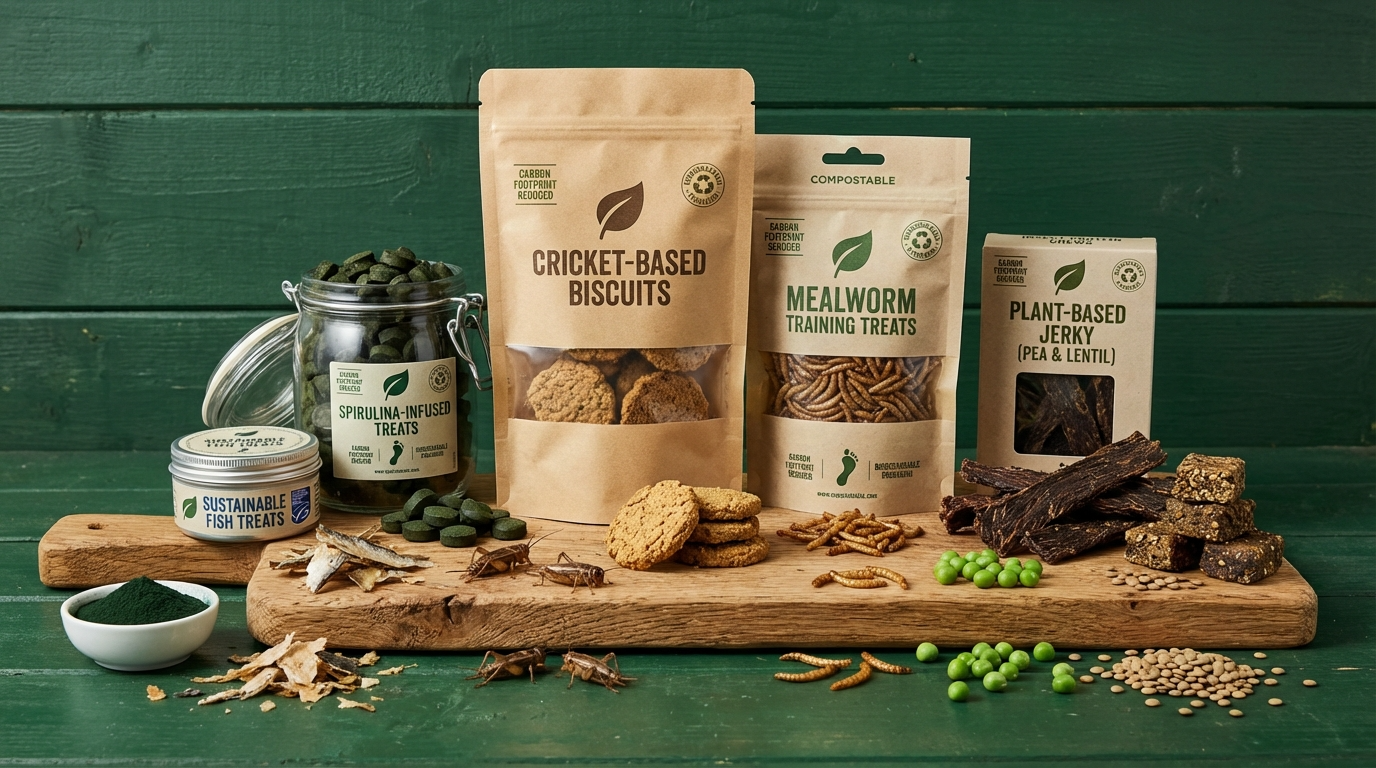
Insect protein stands out as one of the most sustainable options available. Crickets and black soldier fly larvae require minimal water and land. Furthermore, they produce significantly fewer greenhouse gases.
Despite common hesitation, insects provide complete amino acid profiles. Dogs digest them well. As a result, eco-friendly pet treats made with insect protein deliver strong nutritional value.
Plant-Based Protein Blends
Certain plant proteins, such as lentils and peas, require fewer resources than livestock farming. When combined properly, they offer balanced nutrition for dogs.
However, plant-based options are better suited for dogs than cats. Cats require higher animal-based protein levels. Therefore, always verify species-appropriate ingredients.
Sustainably Sourced Fish
Small wild-caught fish like sardines and anchovies often regenerate quickly. Responsible fisheries help maintain ocean ecosystems.
These fish also contain omega-3 fatty acids. Consequently, eco-friendly pet treats using sustainable seafood can support coat and joint health.
Ethically Raised Poultry
Free-range poultry farms generally use fewer intensive practices than industrial beef production. Although not entirely carbon-free, poultry remains a lower-impact option.
By selecting responsibly raised chicken or turkey, manufacturers reduce environmental strain.
Nutritional Quality Still Comes First
Sustainability should never compromise nutrition. Treats must provide value without excess fillers or artificial additives.
Look for clear labeling. High-quality eco-friendly pet treats list recognizable ingredients. Avoid vague terms like “meat by-products” without explanation.
Additionally, check protein percentages. Even sustainable treats should support muscle health and energy.
Healthy fats also matter. Ingredients like flaxseed or fish oil improve skin and coat condition.
When sustainability aligns with balanced nutrition, you make a responsible choice.
Ingredients to Avoid in Green Treats
Some products claim sustainability but still include questionable additives. Therefore, read labels carefully.
Avoid:
- Artificial preservatives
- Synthetic dyes
- Excess sugar
- Chemical flavor enhancers
- Unverified “natural flavors”
True eco-friendly pet treats prioritize clean ingredient lists. Transparency reflects brand integrity.
Additionally, check for third-party certifications when possible. Independent testing often confirms quality standards.
Packaging and Environmental Impact
Ingredients matter, but packaging also affects sustainability. Many brands now use compostable or recyclable materials.
While plastic remains common, some companies offer biodegradable alternatives. Moreover, refillable treat containers reduce waste long term.
By selecting eco-friendly pet treats packaged responsibly, you further minimize environmental harm.
Consider buying in bulk when storage allows. Larger quantities reduce packaging waste per serving.
Homemade Sustainable Treat Options
Making treats at home gives you full ingredient control. Additionally, it reduces packaging waste.
You can create simple recipes using:
- Oat flour
- Pumpkin puree
- Ground cricket powder
- Sardines
- Sweet potato
Baking small batches ensures freshness. However, always confirm portion sizes. Treats should not exceed 10 percent of daily caloric intake.
Homemade eco-friendly pet treats allow customization while maintaining sustainability goals.
Cost vs. Environmental Value
Sustainable options may cost slightly more. However, long-term benefits often outweigh price differences.
Supporting ethical farming encourages responsible production practices. Over time, increased demand may reduce prices.
Moreover, healthier ingredient profiles may reduce digestive issues. Consequently, fewer health problems can lower veterinary costs.
Balancing budget and environmental responsibility requires research. Nevertheless, informed decisions support better outcomes.
How to Transition to Sustainable Treats
Switch gradually. Introduce new treats slowly to avoid digestive upset.
Start with small portions. Monitor for allergic reactions or sensitivities. If issues arise, consult your veterinarian.
Although eco-friendly pet treats often use novel proteins, some pets may need adjustment time. Gradual introduction ensures smooth transition.
Are Sustainable Treats Safe for All Pets?
Most dogs adapt well to alternative proteins. However, cats require careful selection due to strict dietary needs.
Always verify that treats match your pet’s species, size, and age. Puppies and senior pets may have specific nutritional requirements.
Additionally, consult your vet if your pet has allergies or medical conditions. Professional guidance ensures safe dietary changes.
Environmental Benefits Beyond Ingredients
Sustainable brands often engage in broader environmental efforts. Some support regenerative agriculture. Others invest in carbon offset programs.
Therefore, purchasing eco-friendly pet treats contributes to larger sustainability initiatives.
Consumer demand shapes industry practices. When more owners choose responsible options, companies respond with greener innovation.
How to Identify Trustworthy Brands
Look for brands that clearly explain sourcing. Transparent companies share farm partnerships and sustainability metrics.
Certifications such as organic or responsibly sourced seafood labels increase credibility.
Additionally, read customer reviews. Consistent feedback about quality and digestibility indicates reliability.
Choosing trusted eco-friendly pet treats reduces risk and ensures both safety and sustainability.
Balancing Treat Frequency and Health
Even healthy snacks should remain occasional rewards. Overfeeding treats can lead to weight gain.
Instead, use small portions for training or positive reinforcement. Balanced feeding maintains ideal body condition.
Sustainable snacks support environmental goals, but moderation protects physical health.
Conclusion: A Greener Way to Reward Your Pet
Treat time can align with environmental responsibility. By selecting sustainable proteins and clean ingredients, you reduce your pet’s ecological footprint.
Eco-friendly pet treats combine responsible sourcing with strong nutritional value. Although no product is entirely impact-free, smarter choices create measurable change.
When you support brands focused on sustainability, you encourage innovation and ethical production. At the same time, your pet enjoys safe, healthy rewards.
Choosing responsibly today helps protect the planet for future generations of pets and owners alike.
FAQ
- Are insect-based treats safe for dogs?
Yes, insect protein provides complete amino acids and is highly digestible for most dogs. - Can cats eat plant-based snack options?
Cats require higher animal protein levels, so plant-based options are generally not ideal for them. - Do sustainable treats cost more than traditional ones?
They may cost slightly more, but improved quality and environmental benefits often justify the price. - How can I verify responsible sourcing claims?
Look for transparent labeling, certifications, and third-party verification from reputable organizations. - How often should I give sustainable snacks to my pet?
Limit treats to about 10 percent of daily calories to maintain a healthy weight.