
Safe dog toys for senior dogs are not just smaller versions of puppy toys. As your dog grows older, their teeth weaken, joints stiffen, and energy levels shift. Yet their desire to play often remains strong. That playful spark does not fade overnight.
However, the wrong toy can cause discomfort or even injury. Hard rubber may crack fragile teeth. Heavy objects may strain sore joints. Therefore, choosing the right option becomes essential.
If you want your aging companion to stay engaged and comfortable, you need toys designed for their stage of life. Let’s explore how to find safe dog toys for senior dogs that truly support their health and happiness.
Why Senior Dogs Need Specialized Safe Dog Toys
Aging changes a dog’s body in subtle ways. Teeth wear down. Gums become sensitive. Arthritis may develop in hips or elbows. Because of this, playtime must adapt.
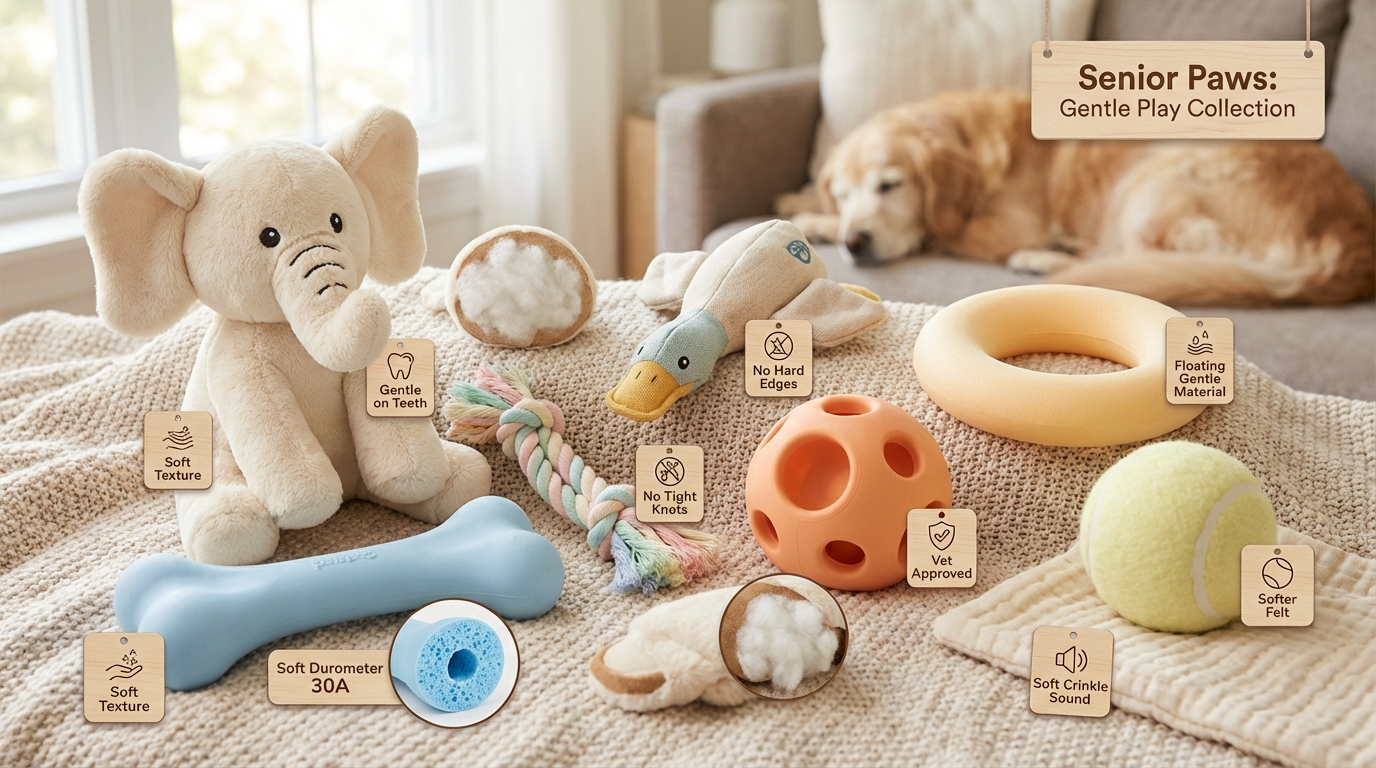
Safe dog toys for senior dogs are designed with softness and flexibility in mind. They reduce pressure on the jaw. They avoid sharp edges. Additionally, they are lighter in weight.
Although senior dogs may not chase balls like they once did, mental stimulation remains crucial. Interactive toys keep their minds sharp. Gentle tug toys encourage light exercise.
Ignoring these needs can lead to discomfort. Therefore, thoughtful selection matters more than ever.
Key Features of Safe Dog Toys for Senior Dogs
When shopping for safe dog toys for senior dogs, focus on specific features.
Softness ranks high on the list. Materials should bend easily under pressure. However, they should not be so flimsy that pieces tear off.
Lightweight construction prevents strain. Older dogs may struggle with heavy toys. Therefore, choose designs they can carry comfortably.
Non-toxic materials are essential at every age. Yet seniors may be more sensitive to chemicals. Look for clear safety certifications.
Finally, easy-to-clean surfaces support hygiene. Older dogs may have weaker immune systems. Clean toys reduce bacterial buildup.
These features combine to create safe and comfortable play experiences.
Best Materials for Safe Dog Toys for Senior Dogs
Material choice determines durability and comfort.
Natural rubber that is labeled soft or flexible works well. It cushions teeth without excessive resistance.
Plush fabrics provide gentle chewing surfaces. However, inspect stitching carefully. Loose threads create choking hazards.
Food-grade silicone offers another safe alternative. It remains flexible and durable over time.
Avoid extremely hard nylon or dense plastic. These materials may crack aging teeth.
By selecting appropriate materials, you protect oral health while maintaining engagement.
Dental Health and Gentle Chewing Options
Dental care becomes increasingly important with age. Plaque buildup can worsen quickly in senior dogs.
Safe dog toys for senior dogs often include textured surfaces. These textures massage gums gently. They also help remove mild plaque during chewing.
However, toys should never replace professional dental care. Instead, they complement brushing routines.
Soft dental chews and rubber ridged toys provide mild resistance. Because they flex under pressure, they reduce fracture risk.
If your dog has missing teeth, choose ultra-soft designs.
Comfort should always come first.
Interactive Toys for Mental Stimulation
Physical play may slow down. Nevertheless, cognitive stimulation remains vital.
Puzzle toys designed for gentle interaction keep older dogs mentally active. These toys encourage problem-solving without requiring intense movement.
Treat-dispensing balls made from soft materials combine reward with activity. Because seniors may move slower, adjustable difficulty settings are helpful.
Interactive play strengthens your bond. Moreover, it reduces boredom-related behaviors.
Safe dog toys for senior dogs should challenge the mind without overwhelming the body.
Joint-Friendly Fetch Alternatives
Many senior dogs still enjoy fetch. However, traditional tennis balls may bounce too unpredictably.
Soft foam balls or fabric-covered toys reduce impact. They are easier on arthritic joints.
Additionally, shorter play sessions prevent overexertion. Watch for signs of fatigue.
Gentle movement maintains muscle tone. Therefore, balanced activity supports mobility.
By adapting familiar games, you extend joyful moments safely.
Signs a Toy Is Not Safe for Your Senior Dog
Not every toy labeled “gentle” truly fits older dogs.
If your dog struggles to pick up the toy, it may be too heavy. If chewing causes hesitation, the texture may be too firm.
Cracked surfaces or broken seams indicate replacement is needed. Small fragments present choking risks.
Observe behavior carefully. Discomfort often appears subtly.
Safe dog toys for senior dogs should encourage enthusiasm, not reluctance.
How Size Affects Safety
Proper sizing prevents accidents.
Toys that are too small may be swallowed. Oversized toys may cause jaw strain.
Choose a size proportionate to your dog’s breed and mouth width.
Because senior dogs may have weaker bite strength, slightly larger toys can offer better control.
Balanced proportions enhance comfort and safety.
Seasonal Considerations for Senior Dog Toys
Cold weather may worsen joint stiffness. During winter, indoor toys become more important.
Soft indoor fetch toys and puzzle games maintain stimulation without exposure to harsh temperatures.
In summer, ensure materials do not overheat in direct sunlight. Some rubber compounds retain heat.
Adapting toy choices to seasonal conditions protects comfort year-round.
Cleaning and Maintenance of Senior Dog Toys
Older dogs may be more susceptible to infections. Therefore, toy hygiene matters.
Wash plush toys regularly. Use mild detergent. Rinse thoroughly to remove residue.
Rubber toys can be cleaned with warm water and pet-safe soap.
Inspect toys weekly. Replace worn items promptly.
Routine care extends product lifespan and protects health.
When to Replace Safe Dog Toys for Senior Dogs
Even durable toys wear out.
If a toy becomes flattened or torn, replace it. If your dog’s chewing habits change due to dental issues, adjust selections.
As health conditions evolve, toy preferences may shift.
Regular reassessment ensures ongoing comfort.
Balancing Comfort and Enrichment
Some owners reduce playtime entirely for seniors. However, that can lead to boredom.
Instead, adjust intensity. Shorter sessions and softer toys maintain enrichment safely.
Safe dog toys for senior dogs create a bridge between comfort and stimulation.
Play supports emotional well-being. It strengthens routine and connection.
Consulting Your Veterinarian
If your senior dog has advanced dental disease or arthritis, consult your veterinarian before introducing new toys.
Medical insight guides appropriate selection.
Some dogs may require ultra-soft options. Others may benefit from specific dental designs.
Professional advice ensures safety tailored to individual needs.
Conclusion
Safe dog toys for senior dogs are essential tools for maintaining comfort, dental health, and mental engagement. Aging does not eliminate the desire to play. It simply changes how play should look.
By choosing soft materials, lightweight designs, and joint-friendly options, you protect your dog’s well-being. Regular cleaning and thoughtful observation further enhance safety.
Your senior companion has given years of loyalty and joy. Offering age-appropriate toys shows that care continues in every life stage. With the right choices, playtime remains a source of happiness for years to come.
FAQs
- What are the safest materials for senior dog toys?
Soft natural rubber, plush fabric with strong stitching, and flexible food-grade silicone are generally safe options. - Should senior dogs still chew toys?
Yes, but chewing should be gentle. Choose soft textures that do not strain teeth. - How often should I replace toys for an older dog?
Inspect weekly and replace immediately if damage appears or if chewing becomes difficult. - Are puzzle toys suitable for senior dogs?
Yes, as long as they are low-impact and not physically demanding. - Can hard chew toys damage senior dog teeth?
Yes, very hard toys may crack weakened teeth, so softer alternatives are recommended.