
Plastic pet toys are everywhere. Dogs chew on rubber bones, cats chase plastic balls, birds peck colorful toys, and small pets interact with tunnels, wheels, and enrichment accessories daily. Although these products entertain pets and support mental stimulation, many eventually crack, fade, or break apart. Unfortunately, most owners simply throw them into household trash without considering the environmental impact. Learning how to recycle pet toys responsibly can reduce waste significantly while creating healthier habits for both pets and owners.
Pet ownership continues to grow worldwide, and so does the amount of discarded plastic pet products. Many toys contain mixed materials, synthetic fabrics, dyes, and chemical coatings that complicate recycling efforts. However, responsible disposal still matters because millions of damaged toys end up in landfills every year. Small changes in how owners handle worn pet products can create long-term environmental benefits.
Responsible recycling also protects pets from unsafe products. Old plastic toys may develop sharp edges, loose fragments, or chemical breakdown that becomes dangerous over time. Therefore, recycling and replacing damaged toys promptly supports both safety and sustainability.
Many owners assume recycling pet toys is complicated. In reality, simple habits often make the biggest difference. Understanding materials, cleaning products properly, and exploring reuse options can help households reduce unnecessary waste dramatically.
Why Plastic Pet Toys Create Environmental Problems
Plastic toys remain popular because they are durable, colorful, and affordable. However, many products use petroleum-based plastics that take decades or even centuries to break down naturally. As a result, discarded pet products contribute heavily to growing landfill waste.
Some toys also contain mixed materials that complicate recycling systems. For example, a chew toy may combine rubber, nylon, fabric, glue, and squeakers in one product. Recycling facilities often cannot process these mixed materials easily.
Broken toys may also create microplastic pollution. When plastic fragments enter soil or water systems, wildlife and ecosystems can suffer serious damage over time. Therefore, owners who recycle pet toys responsibly help reduce long-term environmental harm.
Cheap pet toys sometimes wear out quickly, which encourages repeated replacement. While convenient, this cycle increases household waste significantly. Choosing durable products and disposing of them correctly becomes especially important for environmentally conscious pet owners.
Additionally, many damaged toys still contain reusable components. Before throwing them away, owners should evaluate whether parts can be repurposed safely for enrichment or crafts.
How to Identify Recyclable Pet Toys
Not all pet toys qualify for traditional recycling programs. Therefore, owners should check labels carefully before disposal. Many plastic products include recycling symbols that identify material types and processing compatibility.
Hard plastics usually recycle more easily than soft rubber or mixed synthetic materials. Balls, treat containers, and rigid enrichment toys often qualify for recycling if cleaned properly first.
However, heavily chewed toys may no longer meet recycling standards. Saliva residue, food contamination, or damaged surfaces sometimes interfere with recycling processes. Cleaning products thoroughly before disposal improves acceptance rates significantly.
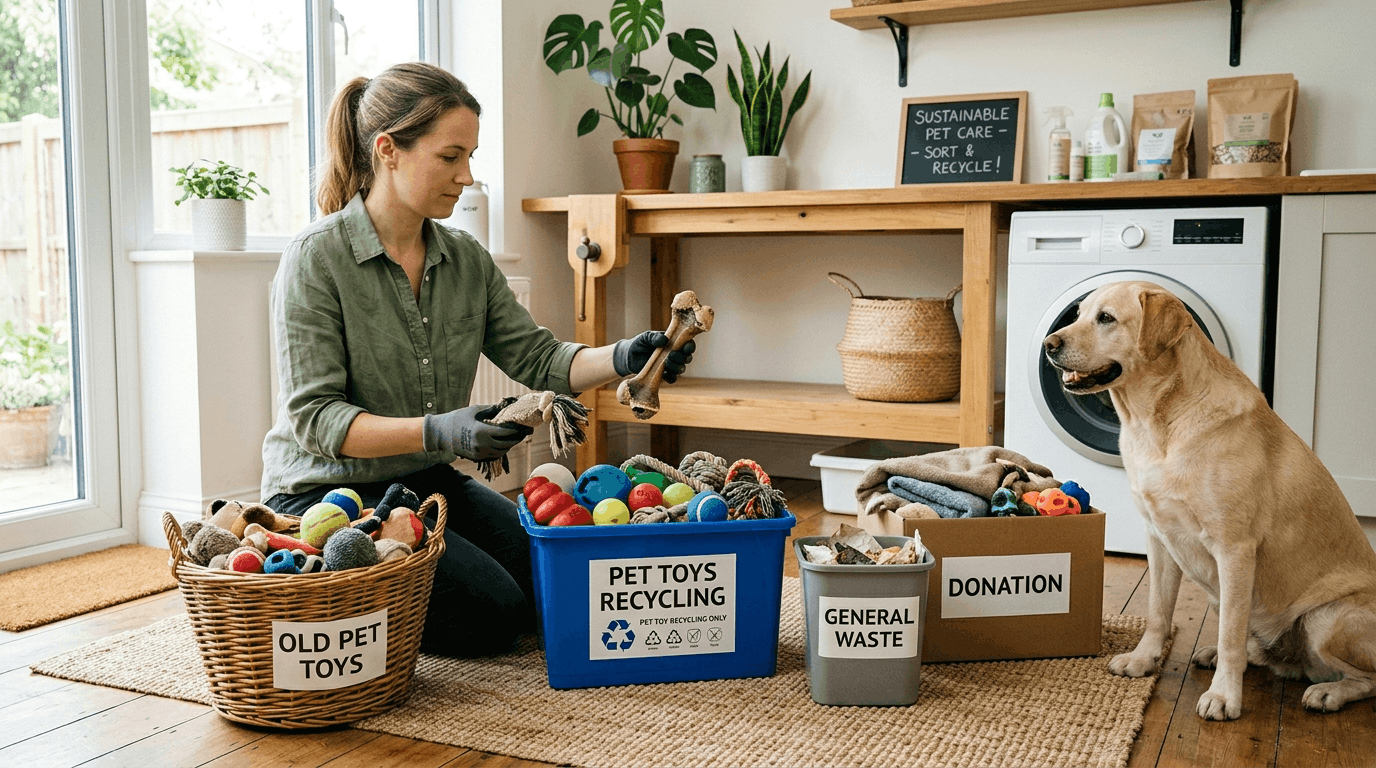
Owners should also separate removable materials whenever possible. Fabric straps, squeakers, metal clips, and electronic components may require different disposal methods. Taking toys apart carefully helps improve recycling success.
If local curbside recycling programs reject pet toys, specialty recycling centers may still accept them. Some companies now offer pet product recycling initiatives specifically for used plastic accessories and enrichment products.
Learning local recycling guidelines remains essential because rules vary greatly between regions. Some municipalities process hard plastics broadly, while others restrict acceptable materials heavily.
Best Ways to Clean Toys Before Recycling
Clean products recycle more effectively and safely. Dirty toys may contaminate other recyclable materials, causing entire batches to be rejected during processing.
Warm water and mild soap usually work well for most plastic pet toys. Owners should remove dirt, saliva, food residue, and hair thoroughly before drying items completely.
Avoid harsh chemical cleaners whenever possible. Strong chemicals may leave harmful residue or interfere with recycling systems. Instead, simple pet-safe cleaning methods provide safer results.
Bird toys, reptile accessories, and aquarium decorations often require extra attention because they may carry biological contamination. Cleaning these items carefully helps prevent sanitation issues during handling and recycling.
Toys containing mold, mildew, or heavy deterioration may not qualify for recycling anymore. In these cases, responsible disposal still matters because damaged products can become environmental hazards if dumped carelessly outdoors.
Owners who recycle pet toys responsibly should establish regular cleaning habits before items reach unusable condition. Maintaining toys properly may extend product lifespan while simplifying future recycling.
Creative Ways to Reuse Old Pet Toys
Reusing products before recycling helps reduce waste even further. Some worn toys may no longer suit active play but still serve useful secondary purposes safely.
Plastic treat containers can become storage bins for grooming tools, pet treats, or small accessories. Hard rubber toys sometimes work well for supervised scent games or enrichment puzzles after minor damage appears.
Bird owners may repurpose clean plastic rings or hanging components into homemade enrichment systems. Rabbit and guinea pig owners often reuse untreated cardboard enrichment items for digging or foraging activities.
Craft projects also provide recycling alternatives. Families sometimes turn old pet toys into decorative items, garden markers, or sensory materials for creative projects.
However, safety always comes first. Owners should never reuse toys with sharp edges, loose fragments, peeling paint, or dangerous structural damage. Pets may accidentally swallow broken pieces if unsafe products remain accessible.
Repurposing works best when owners inspect materials carefully and supervise pet interaction closely afterward.
Choosing Eco-Friendly Pet Toys in the Future
One of the best ways to recycle pet toys responsibly involves reducing unnecessary waste from the beginning. Purchasing durable, sustainable products decreases replacement frequency and landfill contribution.
Natural rubber toys often last longer than cheaper plastic alternatives. Hemp rope, untreated wood, cork, bamboo, and recycled materials also provide environmentally friendlier options for many species.
Some manufacturers now design toys specifically for recyclability. These products use fewer mixed materials and safer production methods that simplify disposal later.
Quality usually matters more than quantity. Instead of buying multiple cheap toys that break quickly, investing in durable enrichment products often saves money over time while reducing waste.
Owners should also consider species-specific durability. Large dogs require stronger chew products than hamsters or guinea pigs. Matching toy strength to pet behavior helps prevent excessive damage and frequent replacement.
Packaging matters as well. Environmentally responsible companies often minimize plastic packaging while using recyclable materials throughout shipping and production.
Species-Specific Recycling Considerations
Different pets use different toy materials, which affects recycling options significantly. Therefore, responsible disposal strategies should match each animal type carefully.
Dog toys often contain thick rubber, nylon, or reinforced plastic. These products may require specialty recycling due to durability-focused materials. Heavy chewers also damage toys faster, increasing replacement frequency.
Cat toys commonly include fabric, bells, feathers, and synthetic stuffing. Owners should separate these materials whenever possible before disposal. Additionally, worn string toys may become dangerous if left accessible.
Bird toys frequently combine plastic, rope, wood, and metal clips. Separating reusable hardware from disposable components improves recycling potential significantly.
Fish tank decorations may contain treated plastics or painted coatings unsuitable for standard recycling. Aquarium-safe materials sometimes require specialized disposal methods depending on local guidelines.
Reptile accessories such as hides, feeding tools, and climbing decorations often use hard molded plastics that recycle more easily after proper cleaning.
Small pet enrichment products vary greatly depending on species. Hamster wheels, rabbit tunnels, and guinea pig hideouts each contain different material combinations that may require separate disposal strategies.
How to Spot Unsafe Toys Before Disposal
Damaged toys can become dangerous quickly. Therefore, owners should inspect pet products regularly instead of waiting for complete breakage.
Cracks, sharp edges, loose stitching, peeling paint, and exposed stuffing all signal replacement time. Additionally, faded or brittle plastic may indicate chemical deterioration caused by heat or sunlight exposure.
Strong odors may also signal breakdown in lower-quality plastic products. If toys develop unusual smells after cleaning, disposal becomes the safest option.
Bird owners should monitor toys for rusted clips or frayed rope fibers carefully. Reptile owners should inspect heating accessories and tank decorations regularly for cracks or instability.
Pets sometimes continue using dangerous toys enthusiastically despite injury risks. Therefore, owners must evaluate products proactively rather than relying on visible pet discomfort alone.
Removing unsafe items promptly protects pets while supporting responsible recycling habits overall.
Building Sustainable Habits as a Pet Owner
Sustainability begins with everyday decisions. Owners who recycle pet toys responsibly often adopt broader environmentally friendly pet care habits naturally over time.
Buying fewer disposable products reduces waste immediately. Choosing washable bedding, refillable containers, and durable accessories supports longer-term sustainability goals.
Toy rotation also helps extend product lifespan. Instead of leaving every toy accessible constantly, owners can rotate enrichment items weekly to maintain novelty and reduce wear.
Donating lightly used products may help local shelters or rescue groups as well. However, donations should always remain clean, safe, and undamaged.
Educating family members matters too. Children especially benefit from learning how responsible pet ownership includes environmental responsibility alongside animal care.
Community recycling events and specialty pet recycling programs continue growing in popularity. Participating in these programs supports broader sustainability efforts while reducing landfill contribution.
The Long-Term Benefits of Responsible Recycling
Environmental responsibility benefits both pets and people. Cleaner ecosystems support healthier wildlife, safer water systems, and more sustainable communities overall.
Pets also benefit directly from thoughtful purchasing and recycling habits. Higher-quality toys often last longer, perform better, and reduce exposure to potentially harmful low-grade plastics.
Financial savings may appear over time as well. Durable products usually require fewer replacements, while organized recycling and reuse reduce unnecessary spending on disposable items.
Owners who recycle pet toys responsibly often become more mindful consumers generally. This awareness may influence food packaging choices, habitat design, grooming products, and enrichment purchases positively.
Even small household changes matter collectively. Millions of pet owners making slightly better disposal decisions can reduce enormous amounts of waste over time.
Conclusion
Plastic pet toys provide entertainment, enrichment, and stimulation for countless animals every day. However, damaged or discarded products also create growing environmental challenges when handled irresponsibly. Learning how to recycle pet toys responsibly helps reduce landfill waste, protect ecosystems, and encourage safer habits for pets and owners alike.
Cleaning toys properly, separating materials carefully, and exploring reuse opportunities all improve recycling success significantly. Additionally, choosing durable and sustainable products from the beginning reduces waste generation naturally over time.
Responsible disposal also protects pets directly by removing unsafe, damaged toys before injuries occur. Whether caring for dogs, cats, birds, reptiles, fish, or small mammals, environmentally conscious habits support healthier homes and stronger long-term sustainability.
Ultimately, thoughtful pet ownership extends beyond feeding and enrichment. It also includes protecting the environment pets and people share together every day.
FAQ
1. Can all plastic pet toys be recycled?
No, some toys contain mixed materials or damage that prevents standard recycling acceptance.
2. How should I clean pet toys before recycling them?
Use warm water and mild soap to remove saliva, dirt, food residue, and hair completely.
3. Are broken chew toys dangerous for pets?
Yes, cracked or fragmented toys may cause choking, digestive blockage, or mouth injuries.
4. What eco-friendly materials work best for pet toys?
Natural rubber, hemp, untreated wood, cork, and recycled materials are safer sustainable choices.
5. Should I donate old pet toys instead of throwing them away?
Yes, lightly used and fully safe toys may help shelters or rescue groups when cleaned properly.