
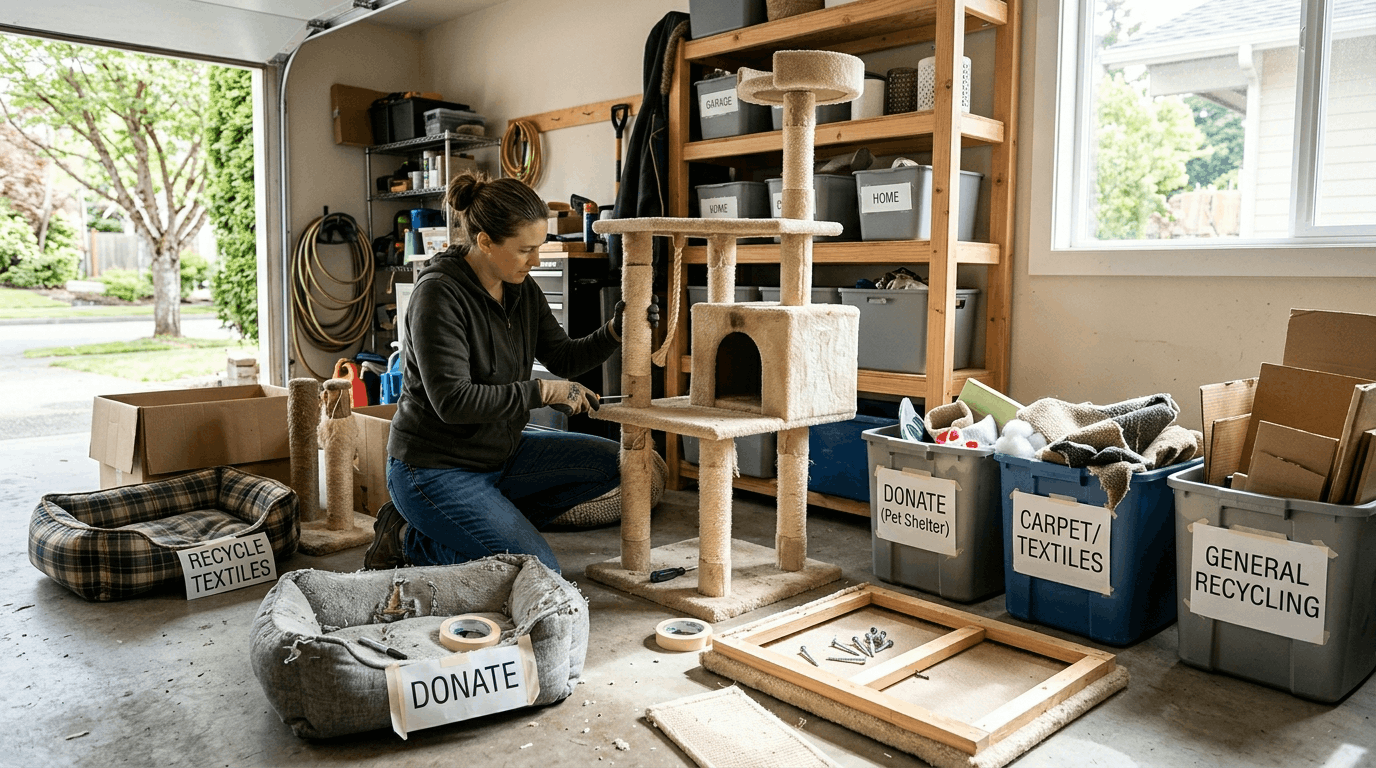

Many pet owners eventually face the challenge of disposing of bulky pet items that no longer serve their purpose. Whether it is an old cat tree, worn dog bed, damaged crate, or scratched scratching post, large pet products often create unnecessary waste. Fortunately, there are several ways to recycle pet furniture responsibly while reducing landfill impact and supporting more sustainable habits at home.
Large pet furniture can be difficult to throw away properly because many items contain mixed materials. Wood, fabric, foam, carpet, metal, and plastic components often combine into a single structure. As a result, standard recycling systems may not accept them without preparation or disassembly. However, with some planning and creativity, many pet owners can find eco-friendly alternatives to simple disposal.
More people now recognize the environmental impact caused by oversized pet products. Cheap furniture often breaks quickly, leading to frequent replacements and growing landfill waste. Therefore, learning how to extend the life of these items or recycle them correctly has become increasingly important.
Choosing sustainable disposal methods also benefits local communities. Donation programs, recycling centers, and animal shelters may all gain value from gently used furniture that would otherwise become trash. In many cases, responsible recycling creates positive outcomes for both pets and the environment.
Why Large Pet Furniture Creates Waste Problems
The need to recycle pet furniture responsibly continues growing because oversized pet products create significant waste challenges. Unlike smaller toys or bowls, large furniture items consume more landfill space and contain more difficult-to-process materials.
Many cat trees and dog beds use synthetic fabrics, foam padding, engineered wood, and adhesives. Unfortunately, these materials often break down slowly in landfills. Some components may also release harmful chemicals during decomposition or incineration.
Frequent product replacement increases the issue further. Pets naturally scratch, chew, stain, and wear down furniture over time. As a result, owners sometimes replace bulky items every few years or even sooner. Lower-quality furniture often fails especially quickly.
Shipping and packaging also contribute to environmental strain. Large pet products require oversized boxes, foam inserts, and plastic wrapping during transport. Consequently, each purchase generates additional waste before the item even enters the home.
Another challenge involves improper disposal. Many people simply leave damaged furniture beside dumpsters or send entire structures directly to landfills. While this option feels convenient, it wastes reusable materials that could still serve practical purposes elsewhere.
Understanding these environmental concerns encourages more thoughtful decisions when replacing or removing old pet furniture.
How to Determine if Furniture Can Be Reused
Before you recycle pet furniture responsibly, inspect the item carefully to determine whether reuse remains possible. Many pet products look worn but still function safely with minor cleaning or repairs.
Start by checking structural stability. Cat trees, crates, and pet ramps should feel secure without dangerous wobbling or broken supports. If the frame remains strong, replacing fabric or scratching surfaces may restore usability easily.
Next, examine hygiene concerns. Deep stains, mold, strong odors, or pest infestations may make certain furniture unsuitable for donation or reuse. However, removable covers, washable cushions, and replaceable surfaces can often solve minor cleanliness issues.
Scratching posts and climbing towers frequently benefit from simple repairs. Rewrapping sisal rope, replacing carpet panels, or tightening screws can dramatically extend product life without major expense.
Dog beds also deserve closer inspection before disposal. Many beds only require fresh covers or additional stuffing to become comfortable again. Some pet owners even repurpose old beds into outdoor cushions or travel pads.
If the furniture still functions safely, consider whether someone else could use it. Animal shelters, foster organizations, and rescue groups sometimes welcome gently used pet furniture donations.
Careful evaluation helps prevent unnecessary waste while maximizing the value of existing products.
Donation Options for Used Pet Furniture
One of the easiest ways to recycle pet furniture responsibly involves donating usable items to organizations that care for animals. Shelters and rescue groups often operate with limited budgets and appreciate quality pet supplies whenever possible.
Large dog crates, beds, ramps, and cat trees can support foster programs or shelter environments if they remain clean and structurally sound. Since animal organizations frequently care for multiple pets at once, donated furniture may provide comfort and enrichment for animals awaiting adoption.
Local pet charities, community groups, and nonprofit thrift stores sometimes accept pet furniture as well. Additionally, neighborhood social media groups often connect owners with families seeking affordable secondhand pet supplies.
Before donating, clean the furniture thoroughly using pet-safe cleaning products. Removing excess fur, stains, and odors improves the chances of successful reuse while creating a healthier environment for future animals.
Always contact organizations first before delivering large items. Some shelters lack storage space or have restrictions regarding upholstered furniture. Confirming donation guidelines helps avoid unnecessary transportation and confusion.
Even older furniture may still provide temporary value in training programs, foster homes, or emergency animal shelters. Therefore, donation often remains a far better option than immediate disposal.
Creative Ways to Upcycle Old Pet Furniture
Many homeowners now recycle pet furniture responsibly by transforming old items into creative household projects. Upcycling extends product life while reducing environmental impact and encouraging resourcefulness.
Old wooden pet ramps or crate panels can become rustic shelves, garden planters, or storage organizers. Because many pet furniture frames use durable wood materials, they often adapt well to simple DIY projects.
Cat trees offer especially interesting upcycling possibilities. Platforms may become wall-mounted shelves, while sisal rope sections work well for craft projects or outdoor gardening support. Some owners even convert sturdy cat towers into indoor plant stands or decorative storage units.
Dog bed cushions frequently gain second lives as floor pillows, outdoor seating pads, or garage kneeling mats. Additionally, foam inserts from large beds may serve as padding for camping gear or travel seating.
Metal crate frames can transform into storage racks, drying stations, or garage organizers with minimal modifications. Since metal structures often remain durable long after pet use ends, repurposing them helps avoid unnecessary waste.
Creative reuse also allows owners to customize projects according to household needs. Instead of purchasing entirely new furniture or storage items, repurposed pet products offer affordable and environmentally friendly alternatives.
Separating Materials for Recycling
Sometimes furniture becomes too damaged for donation or reuse. In those situations, the best way to recycle pet furniture responsibly involves separating recyclable components before disposal.
Many large pet products contain recyclable metal frames, untreated wood, or rigid plastic sections. By disassembling furniture carefully, owners can often divert substantial materials away from landfills.
Metal screws, brackets, and crate components usually qualify for scrap metal recycling programs. Likewise, untreated wood pieces may enter wood recycling facilities or serve as firewood in appropriate settings.
Certain hard plastics can also enter municipal recycling systems if cleaned properly. However, recycling rules vary significantly between locations. Therefore, checking local recycling guidelines remains important before disposal.
Foam padding and heavily contaminated fabrics often present greater challenges. Although these materials may not qualify for standard recycling, some textile recycling programs accept certain fabric components separately.
Using basic tools such as screwdrivers, pliers, and utility knives can simplify the disassembly process considerably. While separating materials requires extra effort, it dramatically reduces landfill waste compared to discarding entire furniture pieces intact.
Choosing Sustainable Replacement Furniture
Learning to recycle pet furniture responsibly also involves making smarter purchasing decisions for future replacements. Durable and sustainable products typically generate less waste over time.
Higher-quality pet furniture often lasts significantly longer than cheaper alternatives. Although premium products may cost more initially, they usually withstand scratching, chewing, and daily wear more effectively. Consequently, owners replace them less frequently.
Natural materials such as solid wood, organic cotton, hemp, and natural sisal generally offer better sustainability than heavily synthetic options. These materials also tend to age more gracefully while remaining easier to repair or recycle later.
Modular furniture designs provide another advantage. Products with replaceable scratching panels, removable cushions, or repairable sections allow owners to extend furniture life without replacing entire structures.
Many eco-conscious brands now focus on recyclable packaging and responsibly sourced materials as well. Supporting these companies encourages broader sustainability improvements across the pet industry.
Before purchasing new furniture, consider whether the item truly meets long-term needs. Choosing adaptable, durable products often reduces both waste and future replacement costs.
Environmental Benefits of Responsible Disposal
Efforts to recycle pet furniture responsibly create several meaningful environmental benefits. Large pet products consume considerable landfill space when discarded improperly. Therefore, extending product life or recycling components helps reduce long-term waste accumulation.
Reusing furniture also conserves natural resources. Manufacturing new pet products requires wood, metal, textiles, plastics, and energy-intensive production processes. By keeping existing items in circulation longer, consumers reduce demand for additional raw material extraction.
Donation programs support sustainability while helping animals in need. Shelters and foster networks frequently operate with limited resources, so reused furniture may improve comfort for rescued pets without requiring new purchases.
Upcycling projects further encourage mindful consumption habits. Families who creatively reuse materials often become more conscious of waste reduction in other areas of life as well.
Additionally, responsible disposal reduces illegal dumping and neighborhood clutter. Oversized furniture abandoned near dumpsters or roadsides creates environmental and visual problems for communities.
Although recycling one cat tree or dog bed may seem small individually, collective efforts from many households create significant environmental improvements over time.
Conclusion
Choosing to recycle pet furniture responsibly helps reduce waste, support sustainability, and extend the value of oversized pet products. Instead of sending damaged furniture directly to landfills, pet owners can explore donation opportunities, creative upcycling projects, and material recycling options that benefit both the environment and local communities.
Large pet items often contain reusable components that still offer practical value long after their original purpose ends. With proper cleaning, repairs, or disassembly, many products can avoid premature disposal entirely.
At the same time, smarter purchasing decisions help reduce future waste problems. Durable furniture made from sustainable materials typically lasts longer and remains easier to repair or recycle responsibly.
As environmental awareness continues growing, more pet owners are embracing sustainable habits that reduce landfill contributions while improving resource conservation. Responsible furniture recycling represents one practical step toward creating a cleaner and more environmentally friendly future for pets and people alike.
FAQ
1. Can Old Cat Trees Be Donated to Shelters?
Yes, many shelters accept cat trees if they remain clean, stable, and free from severe damage or odors.
2. What Parts of Pet Furniture Are Usually Recyclable?
Metal frames, untreated wood, and some hard plastic components often qualify for recycling when separated properly.
3. How Do I Clean Pet Furniture Before Donating It?
Vacuum fur thoroughly and use pet-safe cleaners to remove stains, odors, and dirt before donation.
4. Is It Better to Repair or Replace Damaged Pet Furniture?
Minor damage often requires simple repairs. Fixing furniture usually reduces waste and saves money compared to replacement.
5. What Sustainable Materials Work Best for New Pet Furniture?
Solid wood, natural sisal, organic fabrics, and durable recycled materials generally provide better long-term sustainability.