
More pet owners now search for plastic-free dog products because traditional pet supplies often create unnecessary environmental waste. Plastic bowls, toys, poop bags, grooming tools, and food packaging contribute heavily to landfill pollution every year. At the same time, many consumers want healthier and more sustainable alternatives that align with environmentally conscious lifestyles.
Fortunately, eco-friendly pet care has become far more accessible online. Many brands now offer biodegradable, reusable, and low-waste dog products made from natural materials such as bamboo, hemp, stainless steel, cork, and organic cotton. As a result, pet owners can reduce plastic use without sacrificing quality, safety, or convenience.
Shopping sustainably for dogs involves more than simply choosing products labeled green. Some brands genuinely focus on environmental responsibility, while others rely mostly on attractive marketing. Therefore, learning how to identify trustworthy products and retailers remains important for making informed purchasing decisions.
Plastic-free alternatives may also provide practical advantages. Durable materials often last longer than cheap plastic items, reducing replacement frequency and long-term waste. Additionally, many natural products contain fewer synthetic chemicals that may irritate sensitive pets.
As sustainable shopping habits continue growing worldwide, more companies now prioritize environmentally responsible pet products designed for modern eco-conscious households.
Why Plastic Pet Products Create Environmental Problems
The growing demand for plastic-free dog products comes largely from concerns about waste accumulation and environmental pollution. Traditional pet supplies rely heavily on petroleum-based plastics because they remain cheap and easy to manufacture. Unfortunately, these materials create long-term ecological challenges.
Plastic toys, feeding bowls, leashes, packaging, and disposable waste bags frequently end up in landfills after relatively short use periods. Since many plastics take hundreds of years to decompose, discarded pet products contribute significantly to global waste problems.
Microplastic pollution creates another concern. Over time, plastic products break down into tiny particles that contaminate soil, water systems, and wildlife habitats. Consequently, discarded pet supplies may affect ecosystems far beyond individual households.
Cheap plastic products also break easily. Dogs often chew toys aggressively, causing fragments to scatter or become dangerous choking hazards. As a result, owners replace broken items repeatedly, increasing overall waste production.
Pet food packaging presents additional challenges. Most kibble bags contain mixed materials that remain difficult to recycle effectively. Therefore, even responsible recycling efforts may not fully solve packaging waste issues.
Shipping materials further increase plastic consumption. Online pet purchases often arrive wrapped in plastic padding, bubble wrap, or disposable mailers that generate additional household waste.
These concerns encourage many pet owners to explore sustainable alternatives designed to minimize long-term environmental impact while maintaining high-quality pet care.
What Makes Dog Products Truly Plastic-Free
Not every product marketed as sustainable actually eliminates plastic completely. Therefore, understanding what qualifies as genuinely plastic-free dog products helps consumers avoid misleading marketing claims.
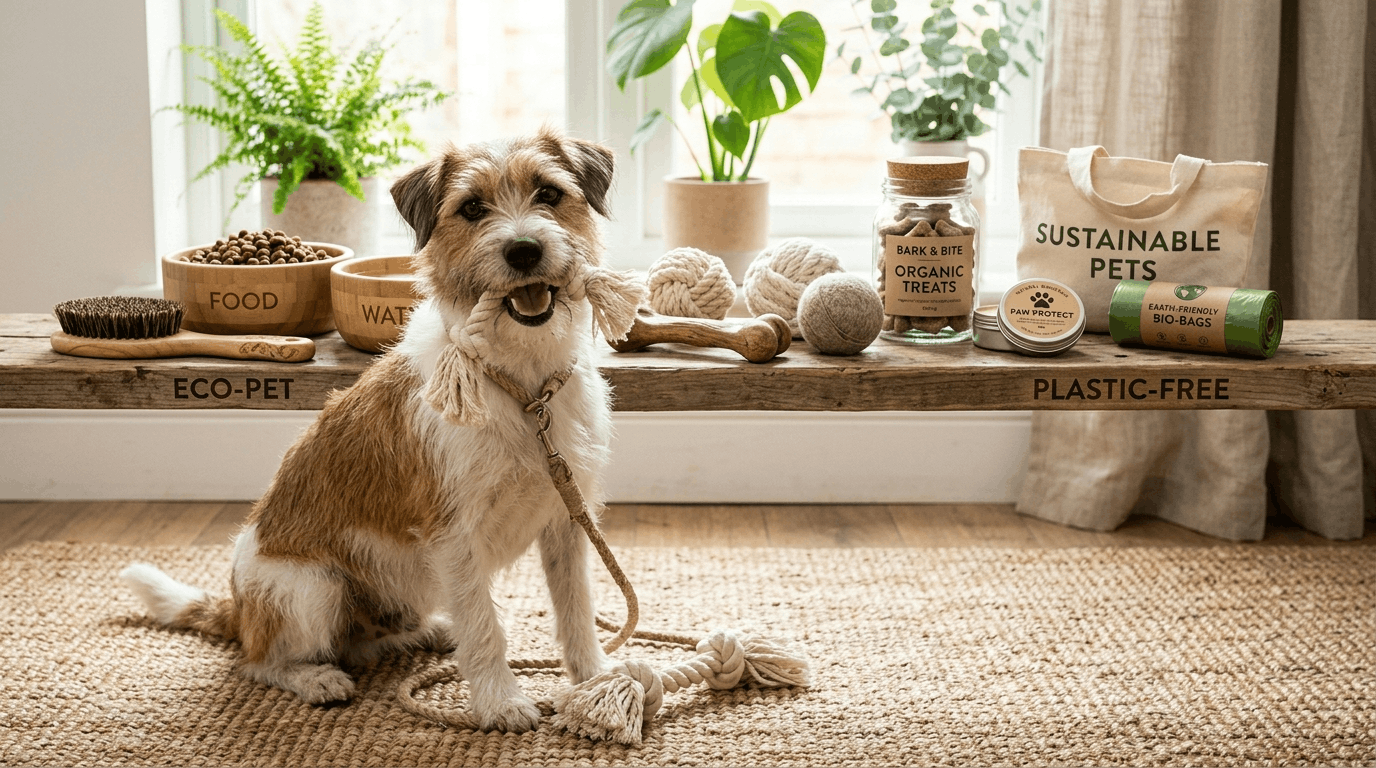
True plastic-free products avoid petroleum-based materials throughout both product construction and packaging whenever possible. Common alternatives include stainless steel, bamboo, natural rubber, cork, hemp, wool, wood, and organic cotton.
Natural fibers play a major role in sustainable pet supplies. Hemp collars, cotton rope toys, and wool bedding often biodegrade far more safely than synthetic alternatives once they reach the end of their usable life.
Packaging also matters greatly. Responsible brands usually avoid excessive plastic wrapping by using recyclable cardboard, compostable mailers, paper tape, or reusable shipping systems.
Durability represents another important factor. Products that last longer reduce replacement frequency and lower overall waste production over time. Consequently, high-quality natural materials often support sustainability more effectively than disposable alternatives.
Transparency remains essential too. Trustworthy companies usually explain their materials, sourcing practices, and environmental commitments clearly rather than relying only on vague eco-friendly language.
Consumers should also watch for hidden plastics. Some products advertised as natural may still contain synthetic linings, coatings, or packaging components that reduce overall sustainability significantly.
Careful shopping helps identify products that genuinely support lower-waste pet ownership rather than simply using environmental marketing trends.
Best Online Stores for Sustainable Dog Supplies
Many online retailers now specialize in plastic-free dog products designed for environmentally conscious households. These stores often prioritize ethical sourcing, recyclable packaging, and biodegradable materials throughout their product lines.
Eco-focused pet boutiques frequently offer curated collections featuring sustainable collars, biodegradable poop bags, natural toys, bamboo feeding accessories, and organic bedding. Since these retailers focus specifically on sustainability, they often provide better product transparency compared to large generic marketplaces.
Some zero-waste online stores also carry dedicated pet sections with refillable grooming products, compostable waste solutions, and durable feeding supplies. These retailers typically emphasize minimal packaging and environmentally responsible shipping practices.
Handmade marketplaces provide another excellent option. Independent creators often sell handcrafted hemp leashes, wool toys, cork accessories, and organic cotton pet items made in small batches with reduced environmental impact.
Additionally, several mainstream pet retailers now offer eco-conscious product categories due to increasing consumer demand. Although not every item qualifies as fully plastic-free, larger retailers continue expanding their sustainable product selections steadily.
Subscription services focused on eco-friendly pet care have also become more common. These programs deliver sustainable treats, toys, and supplies using lower-waste packaging systems that reduce unnecessary shipping materials.
Before purchasing, consumers should still review material details carefully because sustainability standards vary widely between stores and brands.
Plastic-Free Dog Toys That Last Longer
Toys represent one of the biggest categories for plastic-free dog products because traditional chew toys often create substantial waste. Fortunately, several natural alternatives now offer safer and more sustainable play options for dogs.
Natural rubber toys remain especially popular because they provide durability without relying on hard synthetic plastics. High-quality natural rubber also breaks down more safely over time compared to petroleum-based alternatives.
Cotton rope toys made from organic fibers provide another excellent option. Many dogs enjoy chewing and tugging natural rope materials, and these toys generally contain fewer harmful chemicals than synthetic versions.
Wool toys continue gaining popularity as well. Felted wool balls and tug toys offer biodegradable alternatives for lighter play sessions while remaining soft and safe for many dogs.
Some companies even produce chew toys from sustainably harvested wood or cork materials designed specifically for canine use. These products often appeal to dogs that enjoy natural textures and chewing experiences.
Durability still matters greatly when choosing sustainable toys. Cheap eco-labeled products that break immediately may create more waste overall than stronger long-lasting alternatives.
Supervision remains important regardless of toy material. Even natural products may become unsafe once excessively damaged or heavily chewed.
Sustainable Feeding and Grooming Essentials
Feeding and grooming supplies form another important category for plastic-free dog products because these items often remain in daily use for many years.
Stainless steel bowls remain one of the most durable and sustainable feeding options available. Unlike plastic bowls, stainless steel resists scratches, bacteria buildup, and chemical leaching while remaining fully recyclable at the end of its lifespan.
Ceramic feeding dishes also offer excellent plastic-free alternatives when made with non-toxic glazes. Many pet owners appreciate ceramic bowls for their stability and aesthetic appeal.
Bamboo grooming brushes continue gaining popularity because bamboo grows quickly with relatively low environmental impact. Combined with natural bristles or metal pins, these brushes provide durable grooming solutions without excessive plastic waste.
Shampoo bars represent another growing trend among eco-conscious pet owners. Since solid bars eliminate plastic bottles entirely, they reduce packaging waste significantly while often lasting longer than liquid products.
Reusable grooming cloths and biodegradable wipes further support lower-waste pet care routines. Organic cotton towels and washable cloths help minimize disposable product use while maintaining effective hygiene practices.
Many sustainable feeding and grooming items also feature minimalist packaging, which helps reduce unnecessary shipping waste during online purchases.
How to Avoid Greenwashing When Shopping Online
As sustainability becomes more popular, greenwashing has become increasingly common within the pet industry. Some companies exaggerate environmental benefits without making meaningful sustainability improvements. Therefore, consumers shopping for plastic-free dog products should evaluate claims carefully.
Vague phrases such as eco-safe, green choice, or environmentally friendly often lack measurable standards entirely. Instead of relying on slogans alone, shoppers should examine detailed material information and packaging descriptions.
Product photos can also create misleading impressions. Natural-looking colors or earthy branding do not automatically guarantee truly sustainable materials.
Reading ingredient and material lists carefully helps identify hidden plastics or synthetic components. Responsible brands usually explain their sourcing and production methods transparently.
Customer reviews sometimes reveal valuable information regarding durability, packaging waste, or misleading advertising claims. Comparing multiple reviews often provides more realistic product expectations overall.
Researching company values and sustainability commitments can also help. Many environmentally responsible brands publish sourcing policies, packaging goals, or waste reduction initiatives publicly.
Consumers should remain cautious of products labeled biodegradable without certification or detailed decomposition information. Some materials only break down under industrial processing conditions rather than natural environments.
Careful evaluation helps shoppers support genuinely responsible companies rather than purely marketing-driven brands.
Benefits of Switching to Low-Waste Pet Supplies
Many households discover several advantages after switching to plastic-free dog products beyond environmental sustainability alone. Durable materials often improve overall product performance and long-term value.
Natural materials frequently last longer than cheap plastic alternatives. Stainless steel bowls, hemp leashes, and bamboo grooming tools usually withstand years of daily use without breaking easily. Consequently, owners spend less money replacing damaged items repeatedly.
Some dogs also benefit from reduced exposure to synthetic chemicals. Plastic products may contain dyes, additives, or coatings that irritate sensitive pets over time. Natural alternatives often provide gentler daily interaction instead.
Lower household waste creates another noticeable benefit. Reusable and biodegradable products help reduce overflowing trash bins and minimize unnecessary packaging accumulation at home.
Environmentally conscious shopping may also encourage broader sustainable habits. Many pet owners who adopt low-waste pet care routines begin making similar environmentally responsible choices throughout other areas of life.
Supporting sustainable companies helps influence industry standards as well. Consumer demand strongly affects how manufacturers design products, source materials, and reduce packaging waste over time.
Although transitioning completely away from plastic may take time, gradual improvements still create meaningful positive impact for both households and the environment.
How to Build a More Sustainable Pet Routine
Creating a lower-waste pet care routine does not require replacing everything immediately. In fact, gradual adjustments often prove more practical and financially manageable for most households.
Start by replacing frequently used disposable items first. Sustainable poop bags, reusable grooming cloths, and durable feeding bowls usually provide easy entry points into eco-conscious pet ownership.
Buying fewer but higher-quality products often reduces waste more effectively than constantly replacing cheap alternatives. Durable natural materials generally offer better long-term value despite slightly higher upfront costs.
Repairing damaged items whenever possible also supports sustainability. Replacing only worn rope sections or repairing fabric beds helps extend product lifespan significantly.
Reducing impulse purchases matters too. Carefully choosing versatile, long-lasting products minimizes unnecessary waste accumulation over time.
Additionally, recycling or donating usable pet supplies prevents functional items from entering landfills prematurely. Shelters and rescue organizations often welcome gently used supplies.
Most importantly, consistency matters more than perfection. Small sustainable choices made regularly create meaningful environmental improvements over time without requiring unrealistic lifestyle changes.
Conclusion
Shopping for plastic-free dog products online allows pet owners to reduce environmental waste while maintaining high-quality care for their dogs. From natural rubber toys and hemp collars to stainless steel bowls and bamboo grooming tools, sustainable alternatives continue becoming more accessible across online marketplaces.
These products often provide greater durability, lower waste production, and reduced exposure to unnecessary synthetic materials compared to traditional plastic supplies. At the same time, environmentally responsible packaging and ethical sourcing practices help support broader sustainability goals within the pet industry.
However, thoughtful shopping remains essential. Not every product labeled eco-friendly truly eliminates plastic or supports meaningful environmental improvements. Reading material details carefully and researching company practices helps consumers make more informed decisions.
As awareness around sustainable living continues growing, eco-conscious pet care will likely become increasingly mainstream. Every small improvement in purchasing habits contributes to a cleaner environment and a more responsible future for pets and their owners alike.
FAQ
1. Are Natural Rubber Dog Toys Safer Than Plastic Toys?
Natural rubber toys often contain fewer synthetic additives and usually break down more safely than traditional plastic alternatives.
2. What Materials Work Best for Sustainable Dog Collars?
Hemp, organic cotton, cork, and recycled natural fibers provide durable and lower-waste alternatives for collars and leashes.
3. Can Biodegradable Poop Bags Replace Plastic Bags Completely?
Yes, many biodegradable bags work effectively for waste cleanup while reducing long-term landfill impact compared to regular plastic bags.
4. Why Are Stainless Steel Bowls Better for Dogs?
Stainless steel bowls resist bacteria buildup, last longer, and remain fully recyclable after years of daily use.
5. How Can I Avoid Greenwashing When Shopping Online?
Check material lists, packaging details, certifications, and company transparency instead of relying only on marketing slogans.