
Organic pet product claims have become a major selling point in today’s pet industry, especially as more owners look for healthier and more sustainable options. However, not all products labeled as organic meet the expectations that consumers often associate with the term. Therefore, understanding organic pet product claims is essential if you want to make informed decisions and avoid misleading marketing.
Many brands use appealing language to attract attention, but the reality behind these claims is often more complex. While some companies follow strict standards, others rely on vague definitions that create confusion. As a result, organic pet product claims can sometimes reflect marketing strategy more than genuine quality. By learning how to evaluate these claims properly, you can choose products that truly benefit your pet.
What Organic Really Means In Pet Products
The term “organic” carries a strong impression of purity, safety, and environmental responsibility. However, its meaning can vary depending on regulations and product categories. In human food, organic standards are often clearly defined, but in pet products, the rules are less consistent.
Organic pet product claims may refer to ingredients, production methods, or even just a small portion of the formula. Because of this, a product labeled as organic might only contain a limited percentage of organic ingredients. This creates a gap between consumer expectations and actual product composition.
Understanding this distinction is important. When you evaluate organic pet product claims, you need to look beyond the label and examine the details. This approach helps you avoid assumptions and make better choices.
Why Organic Labels Can Be Misleading
Many companies use organic pet product claims to appeal to health-conscious consumers. However, these claims are not always backed by strict standards. In some cases, brands highlight a single organic ingredient while the rest of the product remains conventional.
Another common tactic involves using terms like “made with organic ingredients” instead of “fully organic.” This subtle difference can significantly change the product’s composition. Therefore, reading labels carefully is essential when assessing organic pet product claims.
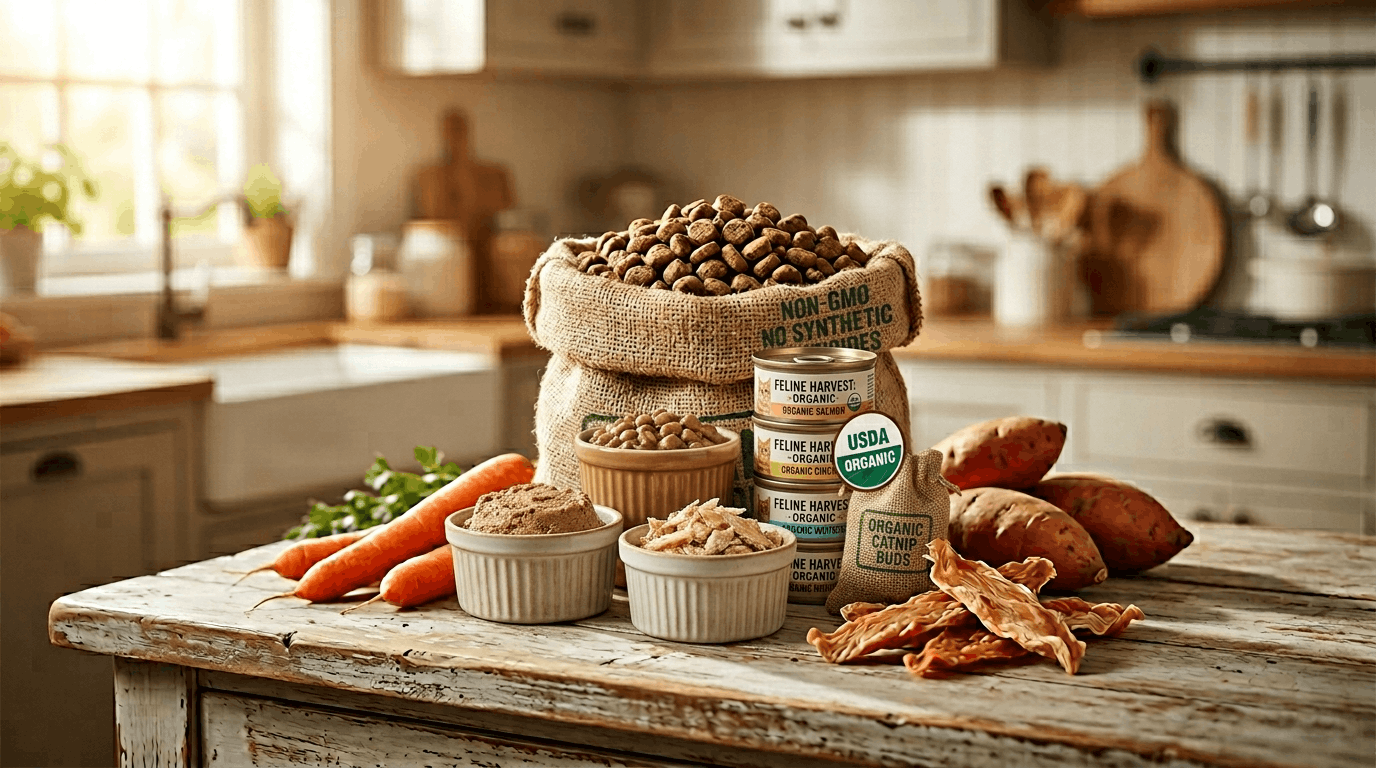
Packaging design also plays a role. Natural colors, earthy imagery, and eco-friendly messaging create a perception of quality. While these elements are visually appealing, they do not guarantee authenticity. As a result, relying solely on appearance can lead to misleading conclusions.
The Role Of Certifications And Standards
Certifications provide one of the most reliable ways to verify organic pet product claims. Recognized labels often require companies to meet specific criteria for sourcing, processing, and labeling. These standards help ensure consistency and transparency.
However, not all certifications are equal. Some are more rigorous than others, and understanding their requirements is important. When evaluating organic pet product claims, look for certifications that are widely recognized and clearly explained.
At the same time, the absence of certification does not automatically mean a product is low quality. Some smaller brands may follow strong practices without formal certification. Therefore, it is important to consider the overall context.
Ingredient Transparency And What To Look For
Ingredient lists provide valuable insight into the quality of a product. When assessing organic pet product claims, pay attention to how ingredients are listed and described. Clear, detailed labeling is a positive sign.
Look for specific ingredient names rather than vague descriptions. For example, identifying the source of proteins or plant-based components helps build trust. Additionally, understanding the proportion of organic ingredients gives a more accurate picture.
Transparency goes beyond listing ingredients. Brands that explain sourcing and production methods demonstrate a commitment to honesty. This level of detail supports more credible organic pet product claims.
Marketing Language Versus Reality
Marketing language often simplifies complex information to attract attention. While this can be helpful, it can also create misunderstandings. Organic pet product claims are frequently presented in ways that emphasize benefits while minimizing limitations.
Words like “pure,” “natural,” and “clean” are often used alongside organic claims. However, these terms do not always have strict definitions. As a result, they can be used freely without supporting evidence.
Understanding the difference between marketing language and verified information helps you make better decisions. Instead of relying on slogans, focus on measurable details and factual descriptions.
The Environmental Side Of Organic Claims
Many consumers associate organic pet product claims with environmental benefits. While organic farming practices can reduce chemical use, they do not automatically guarantee sustainability.
Production, packaging, and transportation also affect environmental impact. A product may contain organic ingredients but still rely on resource-intensive processes. Therefore, evaluating the full lifecycle is important.
When considering organic pet product claims, look for additional sustainability indicators. These may include responsible sourcing, minimal packaging, and ethical production practices. Together, these factors provide a more complete picture.
Balancing Cost And Value
Organic products often come with higher price tags, which can influence purchasing decisions. While the cost may reflect higher-quality ingredients or production methods, it is important to assess whether the value matches the price.
Organic pet product claims should be supported by tangible benefits. If a product offers minimal differences compared to non-organic options, the higher cost may not be justified. Therefore, comparing options helps ensure you are making a worthwhile investment.
At the same time, quality should not be overlooked. Choosing products that genuinely support your pet’s health can provide long-term benefits that outweigh initial costs.
How To Make Smarter Purchasing Decisions
Making informed choices requires a combination of research and critical thinking. Start by reading labels carefully and looking for certifications. Avoid relying solely on packaging or marketing language.
Comparing multiple products can also reveal differences in quality and transparency. When you evaluate organic pet product claims across several brands, patterns become easier to identify.
Additionally, consider your pet’s specific needs. Not every product will be suitable for every animal, so choosing based on individual requirements is important. This approach ensures that your decisions are both practical and effective.
The Growing Demand For Transparency
Consumer demand for transparency is shaping the future of the pet industry. As more people question organic pet product claims, companies are being pushed to provide clearer information.
This shift benefits both consumers and responsible brands. Greater transparency leads to better products and more accurate labeling. Over time, this improves trust and accountability within the industry.
Supporting brands that prioritize honesty encourages further progress. By making thoughtful choices, you contribute to a market that values integrity over marketing tactics.
Small Steps Toward Better Pet Care
Improving your approach to pet care does not require drastic changes. Small steps, such as reading labels and choosing transparent brands, can make a meaningful difference.
Organic pet product claims should be one factor among many when evaluating products. Combining this information with knowledge about ingredients and sourcing leads to better outcomes.
Consistency is key. By applying these principles regularly, you create a routine that supports both your pet’s wellbeing and your values.
Conclusion
Organic pet product claims can provide useful information, but they are not always as straightforward as they appear. While some products genuinely meet high standards, others rely on marketing strategies that create confusion.
By understanding how these claims work, you can make more informed decisions and avoid being misled. Focusing on transparency, certifications, and ingredient quality helps ensure that your choices align with your expectations.
Ultimately, informed consumers drive positive change. As awareness grows, the industry is encouraged to improve standards and provide clearer information. This leads to better products and a more trustworthy marketplace for everyone.
FAQ
1. Are all products labeled organic truly organic?
No, some may only contain a small percentage of organic ingredients.
2. What certifications should I look for?
Look for recognized labels that verify sourcing and production standards.
3. Do organic products guarantee better health for pets?
Not always, as overall ingredient quality and formulation also matter.
4. Why are organic pet products more expensive?
Higher costs often reflect sourcing, production methods, and certification processes.
5. How can I verify product claims?
Check ingredient lists, certifications, and brand transparency for accurate information.