
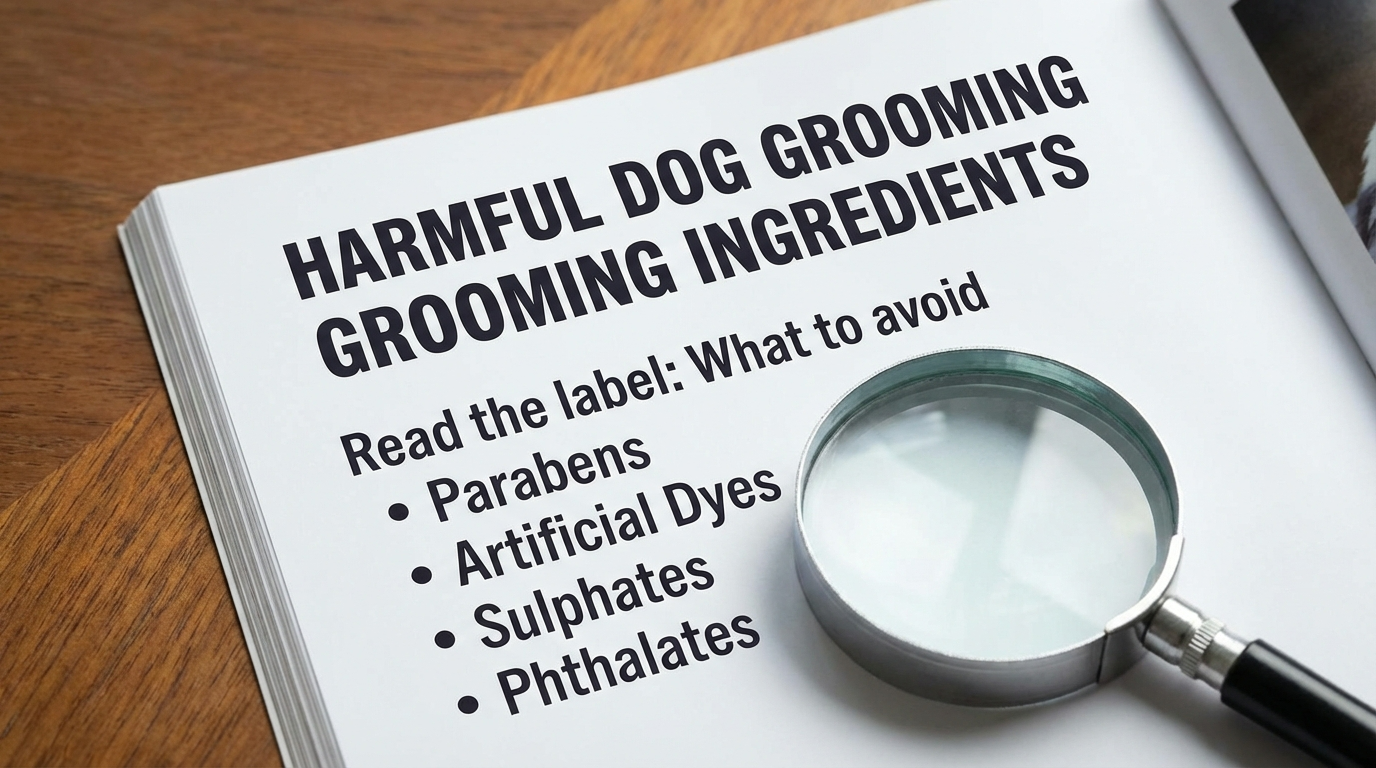

Dog grooming sprays promise convenience. A quick spritz for freshness. A shine boost before guests arrive. A calming scent after a muddy walk. Yet behind the pleasant fragrance and polished packaging, harmful dog grooming ingredients often lurk unnoticed.
Dogs live closer to the ground. They lick their fur. They absorb substances through their skin faster than humans. What seems mild to us may be overwhelming to them. Over time, repeated exposure builds up like water dripping on stone. Slowly, quietly, damage forms.
Understanding harmful dog grooming ingredients is not about fear. It is about awareness. When you know what to avoid, you protect your dog’s comfort, health, and long-term wellbeing. Let’s explore the ingredients that deserve caution and why steering clear matters more than most owners realize.
Why Harmful Dog Grooming Ingredients Are a Hidden Risk
Dog grooming products are not regulated as strictly as many expect. Labels may use vague terms like “pet-safe” or “natural,” yet still contain irritants.
Harmful dog grooming ingredients enter the body in multiple ways. Skin absorption is common. Inhalation occurs during spraying. Ingestion follows when dogs lick their coats.
Small exposures may seem harmless. However, repeated use magnifies impact. Sensitive dogs suffer first, but even healthy dogs can develop issues over time.
Awareness prevents unnecessary suffering.
Artificial Fragrances and Why They Top the List
Artificial fragrance is one of the most common harmful dog grooming ingredients. It exists solely for human preference.
Synthetic fragrances contain complex chemical blends. Many include phthalates and volatile compounds. These chemicals irritate skin and airways.
Dogs have far more sensitive noses than humans. What smells “fresh” to us may feel overwhelming to them.
Common reactions include itching, sneezing, watery eyes, and restlessness. Chronic exposure can worsen anxiety and skin conditions.
Fragrance-free options are always safer.
Phthalates Hidden in Grooming Sprays
Phthalates are often used to make scents last longer. Unfortunately, they are well-known endocrine disruptors.
As harmful dog grooming ingredients, phthalates interfere with hormone balance. Long-term exposure has been linked to developmental and reproductive issues in animals.
Dogs absorb phthalates through the skin easily. Grooming sprays applied frequently increase risk.
Labels rarely list phthalates clearly. They hide under the term “fragrance.”
Transparency matters.
Alcohol and Drying Agents That Damage Skin
Alcohol appears in many grooming sprays. It helps products dry quickly and feel light.
However, alcohol strips natural oils from the skin. This weakens the skin barrier.
Dry skin leads to itching. Itching leads to licking. Licking leads to infection.
For dogs with allergies or sensitive skin, alcohol is especially harmful.
Repeated exposure worsens dryness. Flaking and redness follow.
Avoid sprays listing ethanol, isopropyl alcohol, or SD alcohol.
Formaldehyde and Preservatives to Avoid
Preservatives extend shelf life. Some are necessary. Others are harmful dog grooming ingredients that should never touch your dog.
Formaldehyde-releasing preservatives include:
- DMDM hydantoin
- Diazolidinyl urea
- Imidazolidinyl urea
These compounds slowly release formaldehyde over time. Formaldehyde is a known irritant and carcinogen.
Skin irritation, respiratory distress, and allergic reactions may develop.
Preservation should never come at the cost of safety.
Parabens and Hormonal Disruption
Parabens prevent microbial growth. They are widely used in cosmetics.
As harmful dog grooming ingredients, parabens mimic estrogen. Hormonal imbalance can follow.
Dogs exposed regularly may experience skin issues, lethargy, or reproductive concerns.
While research continues, caution is wise. Many safer preservatives exist.
Look for paraben-free labeling.
Essential Oils: Natural but Not Always Safe
Essential oils are often misunderstood. “Natural” does not mean harmless.
Tea tree oil, eucalyptus, peppermint, citrus oils, and clove oil appear in grooming sprays. In small amounts, some dogs tolerate them. Others react strongly.
Essential oils are concentrated plant compounds. Dogs metabolize them differently than humans.
Skin irritation, neurological symptoms, and respiratory distress have been reported.
Unless recommended by a veterinarian, essential oils should be avoided.
Dyes and Artificial Colors With No Benefit
Color adds nothing to grooming effectiveness. Yet dyes remain common.
Artificial colors are harmful dog grooming ingredients that increase allergy risk. They serve marketing, not health.
Bright blue, pink, or green sprays may look appealing. For dogs, they offer no benefit.
Skin reactions and itching often follow exposure.
Clear products are safer.
Sulfates and Harsh Cleansing Agents
Sulfates create foam and spreadability. They are strong detergents.
In grooming sprays, sulfates dry the skin and disrupt pH balance.
Dogs have more delicate skin than humans. Sulfates compromise that barrier quickly.
Chronic use increases sensitivity and inflammation.
Avoid sodium lauryl sulfate and sodium laureth sulfate.
Silicones That Trap Irritants
Silicones create shine. They coat fur to make it feel smooth.
However, silicones trap dirt and bacteria beneath the surface. Over time, buildup occurs.
Skin cannot breathe properly. Irritation follows.
While not toxic alone, silicones worsen the effects of other harmful dog grooming ingredients.
Moderation matters.
Chemical Sunscreens in Grooming Sprays
Some grooming sprays include sunscreen claims. While sun protection matters, chemical sunscreens pose risks.
Ingredients like oxybenzone and octinoxate absorb into the bloodstream.
Dogs licking treated areas ingest these chemicals.
Mineral sunscreens are safer alternatives when needed.
Chemical sunscreens should be avoided unless veterinary-approved.
How Harmful Dog Grooming Ingredients Affect Long-Term Health
Short-term reactions are visible. Long-term effects are quieter.
Repeated exposure to harmful dog grooming ingredients contributes to:
- Chronic skin inflammation
- Allergies
- Hormonal disruption
- Immune stress
- Behavioral changes
The body compensates until it cannot.
Prevention protects future health.
Signs Your Dog Reacts to Grooming Sprays
Dogs communicate discomfort through behavior.
Watch for:
- Excessive scratching
- Paw licking
- Red or flaky skin
- Sneezing after application
- Restlessness
- Avoidance of grooming
Symptoms may appear hours later.
Patterns reveal causes.
Why Puppies and Seniors Are More Vulnerable
Age matters.
Puppies have developing immune systems. Seniors have slower detoxification.
Both groups absorb chemicals more easily.
Harmful dog grooming ingredients affect them faster and more intensely.
Extra caution is essential.
Reading Labels the Right Way
Labels can be misleading.
“Natural” and “organic” lack strict regulation. Ingredient lists matter more.
Look for short, simple lists. Recognize chemical names.
When in doubt, research unfamiliar ingredients.
Transparency signals trustworthiness.
Safer Alternatives to Conventional Grooming Sprays
Safer options exist.
Choose sprays labeled:
- Fragrance-free
- Hypoallergenic
- Alcohol-free
Look for ingredients like aloe vera, oatmeal, chamomile, or glycerin.
Water-based formulas are gentler.
Sometimes, plain water and brushing are enough.
DIY Grooming Sprays: Proceed With Care
DIY solutions appeal to many owners. Simplicity matters.
A light oatmeal water rinse may soothe skin. However, homemade recipes can spoil quickly.
Never add essential oils without veterinary guidance.
Less is more.
How Often Grooming Sprays Should Be Used
Frequency matters.
Even safe products cause issues if overused.
Grooming sprays should complement bathing, not replace hygiene.
Daily spraying is rarely necessary.
Moderation protects skin balance.
The Psychological Impact of Irritating Grooming Products
Discomfort affects mood.
Dogs with irritated skin feel anxious. Restlessness increases.
Grooming becomes stressful rather than soothing.
Comfort improves behavior.
Building a Safer Grooming Routine
Safety becomes habit.
Use fewer products. Choose quality over quantity.
Observe reactions. Adjust routines.
Your dog’s comfort guides decisions.
When to Consult a Veterinarian
Persistent symptoms need professional evaluation.
If reactions continue after product removal, seek veterinary advice.
Underlying allergies may exist.
Early intervention prevents escalation.
Conclusion
Harmful dog grooming ingredients hide in products designed for convenience and appeal. Artificial fragrances, harsh preservatives, drying agents, and misleading labels create unnecessary risk for dogs who rely on us for protection.
By learning what to avoid, reading labels carefully, and choosing gentler alternatives, you safeguard your dog’s skin, health, and comfort. Grooming should support wellbeing, not compromise it. Awareness transforms routine care into an act of true compassion.
FAQ
1. Are grooming sprays necessary for dogs?
No, many dogs do well with simple brushing and occasional bathing.
2. Can harmful dog grooming ingredients cause allergies?
Yes, repeated exposure often triggers skin and respiratory reactions.
3. Are “natural” grooming sprays always safe?
No, natural ingredients like essential oils can still cause irritation.
4. How quickly do reactions to grooming sprays appear?
Some appear immediately, while others develop hours or days later.
5. Should I stop using a spray if my dog reacts mildly?
Yes, discontinue use and monitor symptoms closely.