
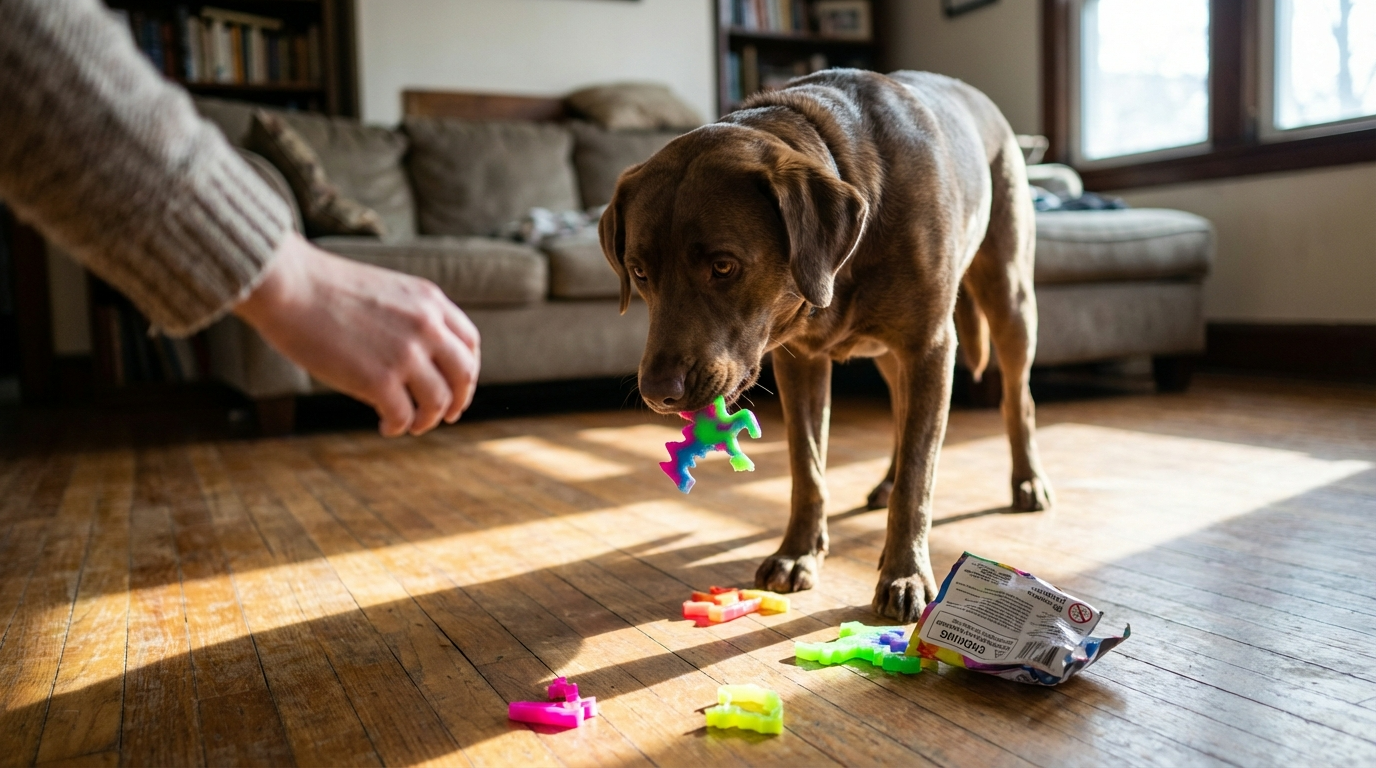

Few moments are more frightening than realizing your dog swallowed something dangerous. One minute they are happily chewing. The next, you notice pieces missing, strange smells, or sudden discomfort. When a dog swallows toxic toys, panic often follows. However, calm and informed action is what truly protects your pet.
Dogs explore the world with their mouths. Chewing is natural, comforting, and deeply instinctive. Unfortunately, not all toys are safe. Some contain harmful chemicals, unsafe dyes, or materials that become toxic once ingested. Others break into sharp or dissolvable fragments that release dangerous substances inside the body.
So what should you do right now? More importantly, how do you know whether the situation is an emergency? Let’s walk through everything step by step, so you can respond with confidence instead of fear.
Why Toxic Toy Materials Are Dangerous for Dogs
Not all toy dangers are obvious. Some risks are silent, slow, and invisible until symptoms appear. When a dog swallows toxic toys, the danger often comes from the materials rather than the size of the object.
Many low-quality or improperly labeled toys contain chemicals designed for durability or color, not safety. These substances may be harmless to touch but harmful when swallowed.
Common toxic materials include:
- Phthalates used to soften plastics
- BPA and similar plasticizers
- Lead-based or heavy metal dyes
- Flame retardants in foam toys
- Treated rubber or synthetic latex
- Glues and bonding agents
- Chemical coatings that dissolve in saliva
Once ingested, these substances can irritate the digestive tract, affect the nervous system, or place stress on the liver and kidneys. In some cases, toxins accumulate over time, making repeated exposure especially dangerous.
Additionally, chewed toys can create sharp edges or absorb stomach acids, releasing even more harmful compounds.
Immediate Steps to Take If Your Dog Swallows Toxic Toys
When you suspect your dog swallowed toxic toy materials, time matters. Acting quickly can reduce harm and improve outcomes.
Stay Calm and Secure Your Dog
First, take a breath. Panic can delay good decisions. Move your dog away from other toys, food, or objects they might chew. Keep them in a quiet, controlled space where you can observe behavior clearly.
Avoid giving treats or meals unless a veterinarian instructs you to do so. Food can sometimes worsen absorption of toxins.
Check What Was Swallowed
If possible, identify the toy. Look for packaging, brand information, or material labels. Even partial details can help a veterinarian assess risk.
Ask yourself:
- Was the toy plastic, rubber, foam, or fabric?
- Was it scented, dyed, or glow-in-the-dark?
- Was it marketed as “durable” or “indestructible”?
- Is part of it missing or chewed into pieces?
Do not dig into your dog’s mouth or throat unless an object is clearly visible and easily removable. Blind attempts can cause injury.
Do Not Induce Vomiting Without Guidance
It may seem logical to make your dog throw up. However, inducing vomiting can be dangerous, especially with chemical exposure or sharp fragments.
Some toxins cause more damage when brought back up. Others can be inhaled into the lungs during vomiting.
Always consult a veterinarian or animal poison control before attempting any home remedies.
Call Your Veterinarian or Animal Poison Control
Contact your vet immediately, even if symptoms are not present yet. If your regular clinic is closed, emergency animal hospitals or pet poison helplines are available.
Be ready to share:
- Your dog’s size, age, and breed
- The time you believe ingestion occurred
- The type of toy and materials involved
- Any symptoms you’ve noticed
Early guidance often prevents complications later.
Signs and Symptoms to Watch For After Ingestion
Sometimes symptoms appear quickly. Other times, they develop slowly over hours or days. When a dog swallows toxic toys, careful monitoring is essential.
Digestive Warning Signs
The gastrointestinal system is often the first to react. Watch for:
- Vomiting or retching
- Diarrhea or loose stools
- Drooling more than usual
- Refusal to eat
- Abdominal tenderness
- Bloating or gas
These signs may indicate irritation, blockage, or chemical exposure.
Behavioral and Neurological Changes
Toxins can affect the nervous system. Be alert for:
- Lethargy or weakness
- Restlessness or pacing
- Tremors or shaking
- Disorientation
- Sudden anxiety or aggression
- Seizures in severe cases
Even subtle changes matter. Trust your instincts if something feels off.
Respiratory and Systemic Symptoms
More serious reactions may involve breathing or circulation:
- Rapid or labored breathing
- Coughing or gagging
- Pale gums
- Increased heart rate
- Collapse
These symptoms require emergency care.
Why Size, Breed, and Health History Matter
Not all dogs respond the same way. A small dog may be affected by a tiny amount of toxin, while a larger dog might tolerate slightly more exposure. Puppies and senior dogs are especially vulnerable.
Pre-existing conditions also play a role. Dogs with liver, kidney, or digestive issues may struggle to process toxins efficiently.
Breed tendencies can influence chewing habits too. Power chewers often break toys faster, increasing risk. Understanding your dog’s profile helps guide safer choices in the future.
Veterinary Treatment Options You May Encounter
If your dog is taken to the vet, treatment depends on timing, material type, and symptoms. Early intervention often leads to simpler care.
Possible treatments include:
- Activated charcoal to bind toxins
- IV fluids to support organs and flush chemicals
- Anti-nausea or pain medications
- Imaging such as X-rays or ultrasound
- Endoscopic removal of remaining fragments
- Surgery in severe blockage cases
In many situations, observation and supportive care are enough. Still, early evaluation prevents escalation.
How Long Does It Take for Toxic Effects to Appear?
This question causes understandable anxiety. Unfortunately, there is no single timeline.
Some reactions occur within minutes, especially with strong chemical exposure. Others develop over several hours. In cases of heavy metals or slow-release chemicals, symptoms may appear days later.
That is why continued observation is important, even if your dog seems fine at first. When in doubt, follow up with your veterinarian.
Preventing Toxic Toy Ingestion in the Future
Prevention is always easier than emergency care. Once a dog swallows toxic toys, many owners reevaluate their toy choices with fresh eyes.
Choose Toys Made from Safe Materials
Look for toys clearly labeled as:
- Non-toxic
- BPA-free
- Phthalate-free
- Made for supervised chewing
Natural rubber, untreated rope, and food-grade silicone are generally safer options when sourced from reputable brands.
Avoid Toys with Strong Odors or Bright Chemical Colors
If a toy smells strongly of chemicals, that is a warning sign. Likewise, extremely bright or metallic paints may indicate unsafe dyes.
Trust your senses. If it seems questionable to you, it likely is.
Match the Toy to Your Dog’s Chewing Style
Destructive chewers need different toys than gentle nibblers. Using the wrong type increases breakage risk.
Rotate toys regularly and inspect them often. Remove any item showing cracks, missing pieces, or exposed layers.
Supervise Playtime Whenever Possible
No toy is completely risk-free. Supervision allows you to intervene before ingestion happens.
If you must leave your dog alone, offer toys designed specifically for solo play, or choose safer alternatives like puzzle feeders.
The Emotional Side of Pet Emergencies
It is easy to blame yourself after an incident. Many owners feel guilt, fear, or embarrassment when a dog swallows toxic toys. These feelings are normal, but they do not help your dog heal.
Focus on what matters now: learning, adjusting, and moving forward. Every experienced pet owner has faced a scare at some point. What defines responsible ownership is how you respond and adapt.
When to Seek Emergency Care Without Waiting
Some situations should never be monitored at home. Seek immediate veterinary help if:
- Your dog is vomiting repeatedly
- Neurological symptoms appear
- Breathing becomes difficult
- Your dog collapses or cannot stand
- You know the toy contained lead or chemicals
In emergencies, minutes matter. Acting quickly saves lives.
Conclusion
When a dog swallows toxic toys, fear often arrives before clarity. Yet knowledge turns panic into action. By staying calm, seeking guidance, and monitoring symptoms closely, you give your dog the best possible chance at recovery.
This experience can also become a turning point. Safer toy choices, better supervision, and informed habits reduce future risks. Your dog depends on you, not for perfection, but for care and awareness. With the right steps, even a frightening moment can lead to a safer, healthier future together.
FAQ
1. How do I know if a toy is toxic for my dog?
Look for chemical smells, lack of safety labeling, imported novelty toys, or materials not designed for pet use.
2. Should I wait for symptoms before calling the vet?
No. Early consultation is recommended, even if your dog appears normal at first.
3. Can toxic toy materials pass naturally through the system?
Sometimes small amounts pass without issue, but toxins can still be absorbed, so monitoring is essential.
4. Are natural-looking toys always safe?
Not necessarily. Some “natural” toys are treated with chemicals or dyes. Labels and sourcing matter.
5. What is the safest type of chew toy overall?
No toy is completely risk-free, but high-quality natural rubber or food-grade silicone toys are generally safer when used appropriately.