
Bringing home a new toy for your dog feels great—until it’s destroyed in five minutes. The stuffing is everywhere. The squeaker is missing. And you’re left wondering what your dog may have swallowed. That frustration is exactly why many pet owners turn to DIY dog toys.
DIY dog toys give you control. You choose the materials. You match the toy to your dog’s personality. However, safety must always come first. A homemade option should never create new risks.
So how do you make fun, durable, and safe toys at home? Let’s break it down in a practical, easy way.
Why DIY Dog Toys Are Worth Making
Store-bought toys are convenient. Still, not all of them are built well. Some are stuffed too loosely. Others use low-quality fabric. Moreover, certain imported products may contain questionable dyes or materials.
When you create DIY dog toys yourself, you remove the guesswork. You know exactly what your dog is chewing.
Another major benefit is cost. Dogs go through toys quickly, especially if they are strong chewers. Instead of constantly buying replacements, you can repurpose items you already own.
Old t-shirts, worn towels, and mismatched socks can become something new. Rather than throwing them away, you turn them into play tools.
Most importantly, homemade toys can be customized. A gentle senior dog needs something soft. A young, energetic retriever needs durability. With DIY dog toys, you adjust accordingly.
Safety Rules You Should Never Ignore
Creativity is fun, but safety always comes first.
First, avoid small detachable pieces. Buttons, beads, plastic eyes, and metal parts can easily break off. Once swallowed, they become dangerous.
Second, choose non-toxic materials. If fabric smells heavily of chemicals or has been treated with harsh cleaners, do not use it. Natural cotton and fleece are safer options.
Third, focus on strength. Thin material tears quickly. When fabric rips, threads loosen. Loose strings can create choking hazards.
Additionally, supervise new toys during early play sessions. Watch how your dog interacts. If they immediately shred it, redesign with thicker layers.
Finally, inspect toys often. Even the safest designs wear out over time. Replace them when damage appears.
Best Materials for Safe Homemade Dog Toys
The safest projects often start with simple materials already in your home.
Cotton t-shirts work well. They stretch, they’re soft, and they wash easily. Braided together, they become surprisingly durable.
Fleece fabric is another excellent choice. It resists fraying, which reduces loose threads. As a result, it works well for tug ropes.
Old bath towels provide thickness. Because they are dense, they offer resistance for dogs that love to chew.
Tennis balls can also be used if they are intact. Avoid cracked or peeling surfaces. Damaged rubber can break apart easily.
Avoid foam cushions, brittle plastic, and treated wood. These materials break down too quickly and may splinter.
When building safe DIY dog toys, simple designs often work best.
Easy DIY Dog Toys You Can Make Today
You don’t need advanced skills. Basic tools and household items are enough.
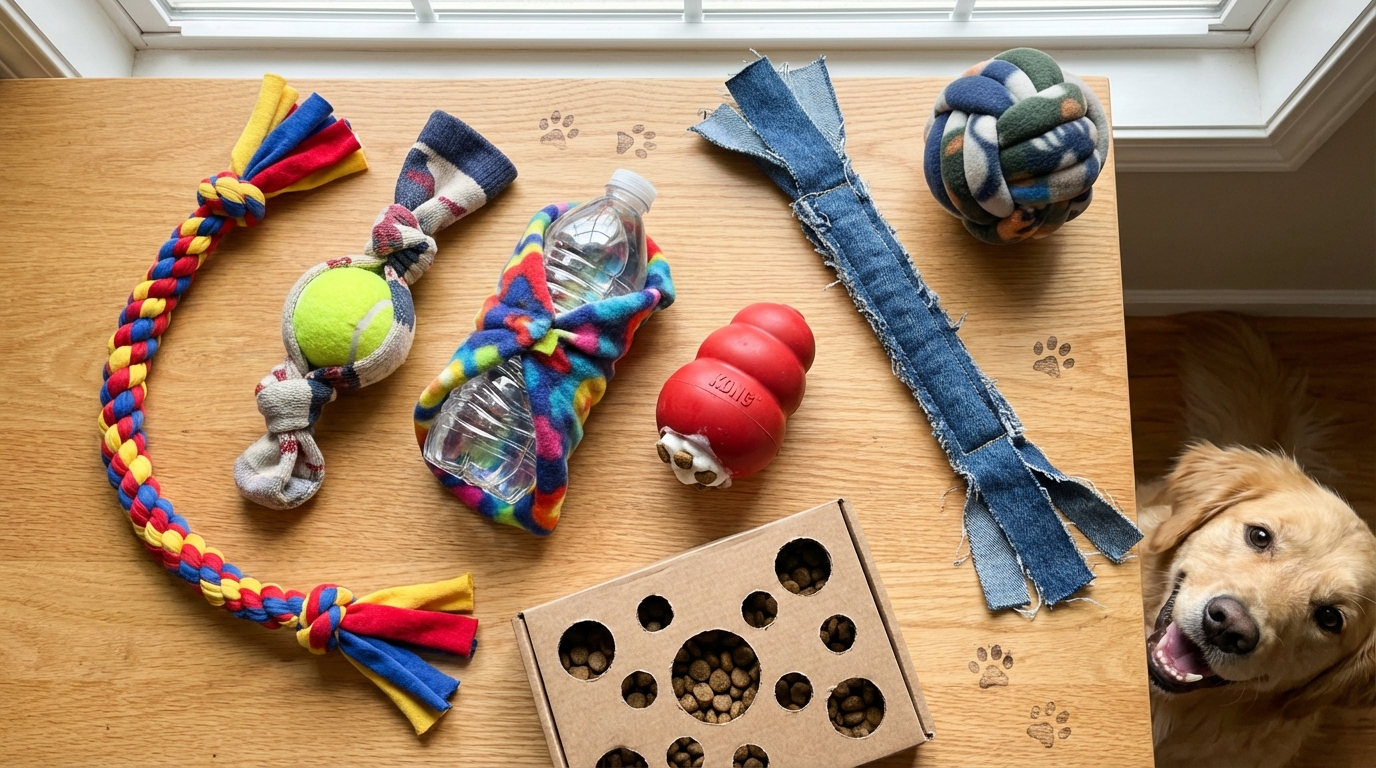
Braided T-Shirt Tug Rope
Cut old shirts into long strips. Gather three to five strips. Tie a tight knot at one end. Braid firmly and evenly. Finish with another secure knot.
The tighter the braid, the stronger the rope. Because there are no hard components, this tug rope stays safer during interactive play.
Rolled Towel Knot Toy
Lay a towel flat. Roll it tightly lengthwise. Tie one or two large knots along the roll.
This toy works well for moderate chewers. However, inspect knots frequently. If they loosen, retie them securely.
Sock and Ball Toss Toy
Place a tennis ball inside a thick sock. Tie a strong knot above the ball.
This simple design makes a great fetch toy. Still, ensure the sock has no holes before use.
Frozen Treat Enrichment Toy
Fill a thick fabric pouch or durable rubber toy with plain yogurt or natural peanut butter. Freeze it overnight.
This provides mental stimulation and soothes teething discomfort. Always confirm that ingredients are safe for dogs.
Matching Toy Type to Your Dog’s Personality
Every dog plays differently. Therefore, one design does not fit all.
If your dog loves tug-of-war, braided ropes work best. If they prefer chewing, thicker towel toys may be more suitable.
High-energy dogs benefit from interactive toys. Frozen enrichment options challenge their minds. Meanwhile, older dogs often prefer softer textures.
Observe behavior closely. Does your dog shred? Carry toys around? Bury them? These habits guide your choices.
When you tailor DIY dog toys to natural instincts, playtime becomes safer and more engaging.
Common Mistakes When Making DIY Dog Toys
Even with good intentions, mistakes happen.
One common error is tying loose knots. Weak knots unravel quickly. Loose threads then become hazards.
Another mistake is underestimating chewing strength. What seems sturdy may not survive ten minutes with a determined dog.
Overcomplicating designs also causes issues. The more complex a toy becomes, the more points of failure it has.
Additionally, ignoring wear and tear creates risk. Even well-made DIY dog toys eventually break down. Replace them promptly.
How to Clean and Maintain Homemade Toys
Clean toys protect your dog’s health.
Cotton and fleece designs can be washed in warm water using mild detergent. Avoid strong fragrances or bleach. Air drying helps preserve fabric strength.
Towel-based toys should be fully dried to prevent mold growth. Damp material encourages bacteria.
Food-based enrichment toys must be cleaned after every use. Residue builds quickly.
Regular cleaning extends toy life while reducing health risks.
Knowing When to Throw a Toy Away
No toy lasts forever.
Watch your dog’s chewing behavior. If they begin swallowing pieces instead of chewing, remove the toy at once.
Saving a few dollars is never worth risking your pet’s safety.
How Homemade Toys Support Mental Stimulation
Play is more than physical activity. It stimulates the mind.
Interactive rope games strengthen your bond. Frozen enrichment toys challenge problem-solving skills. Hidden treats encourage scent exploration.
Mental engagement reduces boredom. As a result, destructive behaviors often decrease.
DIY dog toys can become simple tools for training and enrichment.
Adapting Toys for Puppies, Adults, and Seniors
Puppies need softer textures. Their teeth are developing. Lightweight braids work well.
Adult dogs often require stronger resistance. Thick, tightly braided ropes offer durability.
Senior dogs may prefer comfort over intensity. Softer fabrics protect aging teeth and gums.
By adjusting designs based on age, you ensure safe play throughout your dog’s life.
Budget and Sustainability Benefits
Dog toys add up quickly. Frequent replacements strain your budget.
Homemade options reduce spending. Old clothing gains new purpose. Towels avoid landfills. Socks get another life.
In addition to saving money, you reduce waste. That makes your pet routine more sustainable.
The real benefit, however, remains control. You know the strength. You understand how it was made.
Building a Stronger Bond Through DIY Dog Toys
Dogs connect play with affection. When you craft something yourself, that effort shows in interaction.
Time spent making a toy reflects care. Time spent playing strengthens trust.
Think of it like cooking a meal for someone you love. The ingredients matter, but the intention matters more.
Safe DIY dog toys become small acts of devotion.
Conclusion
Making safe toys at home is practical, affordable, and rewarding. By choosing strong materials, avoiding hazardous components, and supervising play, you create a safer environment for your dog.
Homemade toys allow customization. They reduce waste. They strengthen your bond. Most importantly, they give you peace of mind.
Instead of relying solely on store shelves, try creating something yourself. With thoughtful design and regular inspection, DIY dog toys can become a reliable part of your pet’s happy routine.
FAQs
- Are homemade toys safe for heavy chewers?
They can be safe if made from thick materials and closely supervised. Extremely aggressive chewers may still destroy them quickly. - What fabrics are safest to use?
Natural cotton and fleece are generally safe choices because they are soft, washable, and less likely to fray. - How often should I inspect homemade toys?
Check them weekly and after intense play sessions. Replace them immediately if damage appears. - Can frozen treat toys replace regular chew toys?
They provide enrichment but should complement, not replace, durable chew options. - Is it necessary to wash homemade dog toys?
Yes. Regular washing removes dirt and bacteria, helping protect your dog’s health.