
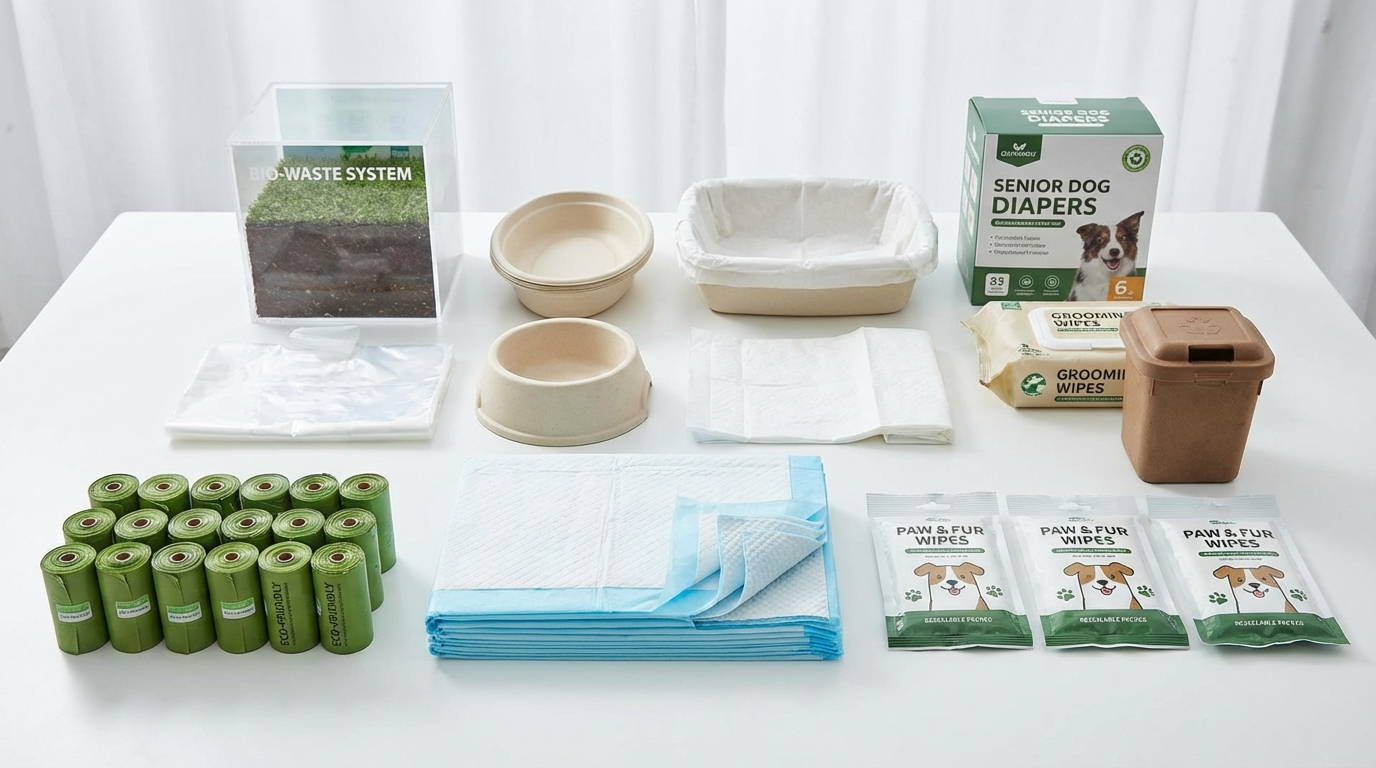

Disposable pet products make life easier. You grab a pad, a wipe, a bag, or a single-use toy, and toss it after use. No washing. No maintenance. No hassle. However, convenience often hides a deeper cost.
Every puppy pad, plastic poop bag, and throwaway grooming wipe adds to a growing mountain of waste. Because pets are part of millions of households worldwide, the collective impact becomes significant.
The environmental cost of disposable pet products is rarely discussed in detail. Yet it touches landfills, oceans, air quality, and natural resources. If you care about your pet and the planet, it is worth looking closer.
Let’s explore what happens after these products are thrown away and how smarter choices can reduce the burden.
Why Disposable Pet Products Are So Popular
Modern life moves quickly. Pet owners juggle work, family, and daily responsibilities. Therefore, convenience matters.
Disposable pet products solve problems instantly. Puppy training pads absorb accidents. Single-use litter liners simplify cleaning. Pre-moistened wipes freshen fur in seconds.
Additionally, marketing emphasizes hygiene. Many consumers believe disposable equals cleaner.
However, this convenience depends on materials designed to be used briefly and discarded permanently. That imbalance creates environmental strain.
Although individual items seem small, billions are discarded annually.
The Landfill Impact of Disposable Pet Products
Landfills receive enormous amounts of waste every day. Disposable pet products contribute significantly to that stream.
Most training pads contain plastic backing, synthetic absorbent gels, and bleached pulp. These materials do not decompose quickly. Some components can persist for decades.
Plastic poop bags are another major contributor. Even those labeled “biodegradable” often require specific industrial conditions to break down properly. In typical landfill environments, decomposition slows dramatically.
As a result, disposable pet products accumulate rather than disappear.
Landfill overflow leads to soil contamination and methane production. Methane, a potent greenhouse gas, contributes to climate change.
Convenience today becomes environmental burden tomorrow.
Plastic Pollution and Disposable Pet Products
Plastic remains one of the largest concerns linked to disposable pet products.
Single-use waste bags, litter liners, and packaging often rely on petroleum-based plastics. When improperly disposed of, these plastics enter waterways.
Marine animals may ingest fragments. Microplastics form as larger pieces break down. These particles enter food chains.
Even responsibly discarded plastic creates challenges. Recycling rates remain limited. Many thin plastics cannot be processed efficiently.
While plastic provides durability and moisture resistance, its environmental cost is high.
Reducing plastic-based disposable pet products significantly lowers long-term pollution.
Resource Consumption Behind Disposable Pet Products
Before products reach shelves, resources are consumed extensively.
Manufacturing disposable pet products requires raw materials, energy, and water. Plastic production relies on fossil fuels. Paper pulp requires logging and water-intensive processing.
Transportation adds another layer. Items are shipped from factories to warehouses and then to retail locations.
Because these products are discarded quickly, the resource-to-lifespan ratio remains inefficient.
In contrast, reusable alternatives spread resource use over longer periods.
When considering sustainability, production impact matters as much as disposal.
Carbon Footprint of Single-Use Pet Items
Every stage of production emits carbon.
Extraction of raw materials releases emissions. Manufacturing facilities consume electricity. Shipping generates additional greenhouse gases.
Since disposable pet products are replaced frequently, this cycle repeats continuously.
While one product may seem insignificant, cumulative demand multiplies emissions globally.
Reducing reliance on single-use items lowers your pet’s indirect carbon footprint.
Climate impact often feels abstract. However, everyday purchasing patterns contribute meaningfully.
Hidden Chemicals in Disposable Pet Products
Environmental cost extends beyond waste volume.
Some disposable pet products contain synthetic fragrances, chemical preservatives, and bleaching agents. When discarded, residues can leach into soil and water systems.
Absorbent gels used in training pads may not break down easily. Chemical-treated wipes may release compounds during disposal.
Although regulations exist, long-term environmental effects are still being studied.
Choosing products with minimal additives reduces ecological risk.
Convenience Culture and Consumption Habits
Disposable culture thrives on speed. Clean up quickly. Throw away. Move on.
However, this mindset encourages overconsumption. Products are purchased in bulk and replaced automatically.
Reusable solutions require more effort upfront. They demand washing, drying, or maintenance. Yet they reduce overall waste.
Shifting from disposable pet products to reusable alternatives requires mindset change.
Small behavioral adjustments lead to significant environmental improvements over time.
Sustainable Alternatives to Disposable Pet Products
Eco-friendly options exist for nearly every category.
Washable training pads replace single-use versions. Reusable cloth wipes substitute disposable grooming wipes.
Biodegradable waste bags made from plant-based materials reduce petroleum reliance. However, ensure they are certified compostable under real-world conditions.
Stainless steel litter boxes and washable liners extend lifespan dramatically.
Although reusable products may cost more initially, they reduce long-term expenses.
Durability spreads environmental impact over years instead of days.
Reducing Waste Without Sacrificing Hygiene
Hygiene remains important for pet health. Fortunately, sustainability does not require compromise.
Washable pads can be sanitized thoroughly. Cloth wipes can be laundered with hot water.
Designated cleaning routines maintain sanitation while reducing landfill contributions.
Additionally, spot cleaning may reduce reliance on full disposable solutions.
Balance is achievable when awareness guides habits.
The Economic Argument Against Disposable Pet Products
Disposable pet products appear affordable per unit. However, recurring purchases add up.
A household using daily training pads may spend hundreds annually. Multiply that over a pet’s lifetime, and costs increase substantially.
Reusable options often pay for themselves within months.
Financial savings align naturally with environmental responsibility.
Sustainable choices frequently benefit both wallet and planet.
Pet Industry Responsibility and Consumer Influence
Manufacturers respond to demand.
When consumers prioritize sustainable alternatives, companies invest in greener innovation.
Already, some brands reduce packaging waste and offer refill systems.
Public awareness influences product development rapidly.
While corporate responsibility matters, consumer action accelerates progress.
Choosing fewer disposable pet products signals market preference.
Balancing Practical Needs With Environmental Awareness
Certain situations require disposable solutions. Travel, emergencies, and medical needs may limit reusable options.
However, occasional use differs from daily reliance.
Evaluate where disposables are essential and where alternatives fit easily.
Gradual transition feels manageable and realistic.
Sustainability is not perfection. It is progress.
Long-Term Environmental Impact of Disposable Pet Products
If global pet ownership continues rising, waste generation will grow as well.
Without intervention, disposable pet products will strain landfill capacity further.
Plastic pollution will expand. Resource extraction will intensify.
However, widespread adoption of sustainable practices could reverse trends.
Collective behavior determines trajectory.
Every shift away from single-use waste contributes to systemic change.
Conclusion
Disposable pet products offer convenience, yet their environmental cost is substantial. From landfill accumulation to plastic pollution and carbon emissions, the impact reaches far beyond the trash bin.
By choosing reusable alternatives, reducing plastic reliance, and adopting mindful consumption habits, pet owners can lower their ecological footprint significantly. Sustainability does not demand radical transformation. Instead, it grows through consistent, thoughtful adjustments.
Caring for your pet should not compromise the planet they live on. When convenience is balanced with responsibility, everyday routines become acts of environmental stewardship.
FAQs
- Are biodegradable pet waste bags truly eco-friendly?
Some are compostable under industrial conditions, but always check certification to ensure real-world breakdown. - Do washable training pads work as well as disposable ones?
Yes, high-quality washable pads absorb effectively and can be reused for years. - How can I reduce plastic from pet products?
Choose reusable tools, refill packaging, and plant-based alternatives to petroleum plastics. - Are disposable pet wipes harmful to the environment?
Many contain synthetic fibers and chemicals that do not decompose quickly, contributing to waste. - Is switching away from disposable pet products expensive?
Reusable options often cost more initially but save money over time through reduced repeat purchases.