
Learning how to compost dog waste safely is becoming more important for environmentally conscious pet owners. Every day, millions of dog owners throw pet waste into plastic bags that eventually end up in landfills. Unfortunately, this creates unnecessary environmental pressure while increasing plastic pollution and waste management problems. However, composting dog waste properly offers a cleaner and more sustainable alternative.
Unlike regular kitchen compost, pet waste composting requires extra care. Dog feces can contain harmful bacteria and parasites that may contaminate soil or water if handled incorrectly. Still, with the right setup and proper techniques, homeowners can manage pet waste responsibly while reducing landfill contributions. More importantly, safe composting methods can help transform waste into usable non-edible garden material.
Many people assume dog waste cannot be composted at all. In reality, the issue is not whether composting works, but how safely the process happens. Once you understand the proper system, composting becomes easier and far less intimidating. As a result, many households now choose composting instead of relying entirely on disposable plastic waste bags.
Why Dog Waste Requires Special Composting Methods
Before you compost dog waste safely, it helps to understand why pet waste differs from regular compost materials. Fruit peels, leaves, and grass clippings break down naturally without introducing serious health concerns. Dog waste, however, may contain pathogens such as E. coli, salmonella, and parasites.
Because dogs consume protein-rich diets, their waste carries bacteria levels much higher than herbivore manure. Therefore, dog feces should never go directly into vegetable gardens or traditional backyard compost piles. Instead, dedicated pet waste compost systems provide safer containment and controlled decomposition.
Temperature also plays a major role in safe composting. Harmful organisms die more effectively when compost reaches high internal temperatures. Unfortunately, many casual compost piles never become hot enough to destroy dangerous bacteria completely. Consequently, specialized composting methods help reduce contamination risks.
Another important factor involves location. Compost bins for pet waste should remain away from vegetable gardens, water sources, and children’s play areas. Proper placement reduces accidental exposure and helps maintain a healthier outdoor environment.
Despite these concerns, safe composting remains achievable for most households. Once pet owners follow proper guidelines consistently, the process becomes manageable and environmentally beneficial.
Choosing the Right Composting System
If you want to compost dog waste safely, selecting the correct composting system matters greatly. Several methods work well, although each offers different advantages depending on your yard size and climate.
One popular option involves in-ground pet waste digesters. These systems function similarly to mini septic tanks. Owners bury a container underground and regularly add dog waste along with decomposition enzymes or water. Over time, natural bacteria break down the material safely beneath the surface.
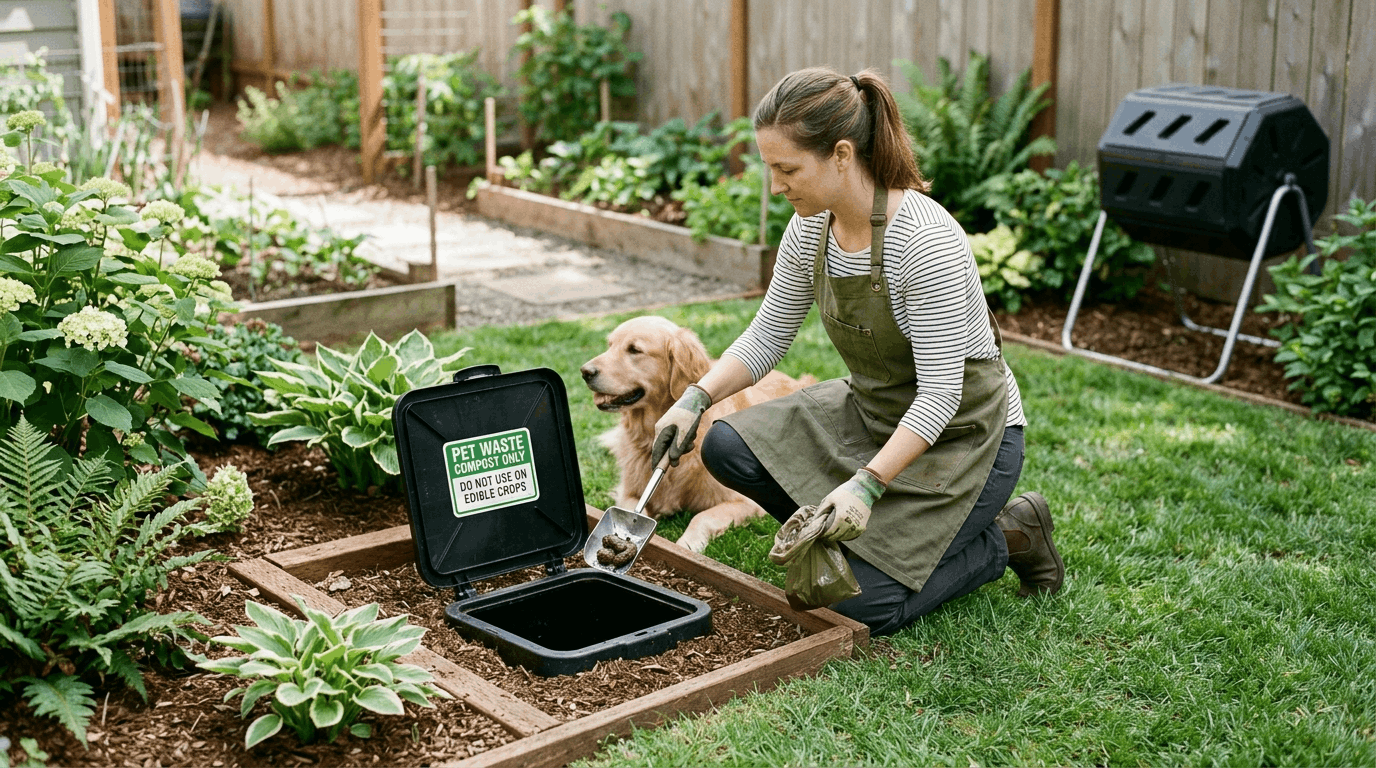
Another method uses dedicated above-ground compost bins designed specifically for pet waste. These bins usually include ventilation systems that encourage heat buildup and microbial activity. Since they remain sealed, they also help control odor and reduce pest attraction.
Some homeowners build DIY composting stations using plastic barrels or wooden containers. While homemade systems can work effectively, proper drainage and airflow remain essential. Without enough oxygen, compost may smell unpleasant and decompose slowly.
Additionally, certain commercial pet waste composters include solar heating features that accelerate decomposition. These systems often work especially well in colder climates where natural heat buildup becomes more difficult.
Regardless of the system you choose, never mix dog waste with edible garden compost. Keeping the materials completely separate reduces contamination risks and ensures safer compost management.
Materials Needed for Safe Composting
To compost dog waste safely, you need more than pet waste alone. Successful composting depends on balancing nitrogen-rich waste with carbon-rich materials that support decomposition and control moisture.
Dry leaves, sawdust, shredded newspaper, and straw all work well as carbon sources. These materials absorb moisture while helping beneficial microbes break down waste efficiently. In addition, they reduce odor and improve airflow inside the compost pile.
Many composters also use enzyme starters or compost accelerators specifically designed for pet waste systems. These products encourage microbial activity and may help speed up decomposition. Although optional, they often improve overall compost performance.
Water is equally important. Compost should remain damp but not soaked. Excess moisture creates unpleasant smells and slows the decomposition process. On the other hand, overly dry compost may stop breaking down altogether.
You should also keep a dedicated scoop or shovel for handling pet waste compost. Using separate tools prevents cross-contamination with gardening equipment or household items.
Protective gloves provide another important safety measure. Although composting reduces waste naturally, direct contact with raw pet waste should always be avoided.
How to Start the Composting Process
Starting a pet waste compost system may feel overwhelming initially, but the process becomes straightforward once established. First, place a layer of carbon material such as leaves or sawdust at the bottom of the compost container. This layer helps absorb moisture while improving airflow.
Next, add collected dog waste along with another layer of dry carbon material. Alternating these layers supports faster decomposition and reduces odors significantly. In most cases, maintaining a ratio of roughly two parts carbon to one part waste works effectively.
After each addition, lightly moisten the pile if necessary. Compost should feel similar to a damp sponge rather than muddy or dripping wet. Proper moisture levels encourage healthy microbial activity throughout the pile.
Turning the compost occasionally also improves decomposition. Mixing introduces oxygen, which beneficial bacteria need to function efficiently. However, avoid excessive handling of raw material during the early stages.
As decomposition progresses, the compost gradually darkens and develops an earthy smell. Depending on temperature and system design, the process may take several months to over a year. Patience remains essential for safe and complete decomposition.
Importantly, never rush the process. Fully decomposed compost reduces health risks far more effectively than partially broken-down material.
Common Mistakes Pet Owners Should Avoid
Even experienced composters sometimes make mistakes when trying to compost dog waste safely. Fortunately, most problems can be prevented with proper planning and consistent maintenance.
One of the most common mistakes involves adding pet waste to regular garden compost. This practice increases contamination risks and may expose edible plants to harmful bacteria. Therefore, dedicated compost systems remain the safest option.
Another issue involves poor carbon balance. Too much waste without enough dry material creates strong odors and slows decomposition. Conversely, excessive dry material may prevent sufficient microbial activity.
Improper placement also causes problems. Compost systems located near water sources or vegetable gardens create unnecessary contamination risks. Ideally, compost bins should remain in isolated outdoor areas with good drainage.
Some homeowners stop maintaining moisture levels altogether. Compost requires consistent moisture and oxygen to function effectively. Without proper monitoring, the decomposition process may stall completely.
Overfilling the compost system too quickly can also reduce efficiency. Smaller, balanced additions often decompose more effectively than large amounts dumped all at once.
Finally, many people underestimate safety precautions. Gloves, handwashing, and dedicated tools should remain standard practices whenever handling pet waste compost systems.
Using Finished Compost Properly
Once you compost dog waste safely and completely, the finished material still requires careful use. Although the compost may appear rich and soil-like, it should never be used on edible crops or vegetable gardens.
Instead, pet waste compost works best around ornamental plants, trees, shrubs, or landscaping areas. Many homeowners use it to enrich flower beds or support decorative garden features. This approach minimizes health risks while still reducing landfill waste.
Before using compost, ensure decomposition is fully complete. Finished compost should no longer resemble raw waste and should produce a natural earthy smell. If strong odors remain, additional composting time may still be necessary.
Some gardeners prefer burying finished compost beneath mulch layers for additional safety. This method further limits human or pet contact with the material.
Local regulations may also affect compost usage. Certain municipalities have guidelines regarding pet waste disposal and composting systems. Therefore, checking local recommendations helps ensure compliance and environmental safety.
While composting provides environmental benefits, responsible handling always remains essential. Proper use protects both public health and your surrounding ecosystem.
Environmental Benefits of Pet Waste Composting
Many people choose to compost dog waste safely because of the significant environmental advantages. Traditional disposal methods rely heavily on plastic bags and landfill systems that contribute to pollution and greenhouse gas production.
Plastic poop bags create long-term waste problems since many bags take decades or centuries to decompose. Even biodegradable bags may break down slowly inside oxygen-poor landfills. Consequently, composting offers a more sustainable waste management solution.
Reducing landfill waste also decreases methane emissions associated with organic material decomposition. Since methane contributes heavily to climate change, lowering organic landfill waste supports broader environmental goals.
Composting additionally encourages more mindful pet ownership habits. People who manage waste responsibly often become more aware of other eco-friendly choices, including sustainable pet products and reduced plastic consumption.
Moreover, composting helps return nutrients to the soil instead of treating waste solely as garbage. Although pet waste compost should not support edible crops, it can still benefit landscaping and ornamental gardens effectively.
As sustainability awareness grows, more communities now encourage responsible pet waste management through education and environmentally friendly disposal systems.
Conclusion
Learning how to compost dog waste safely at home offers a practical way to reduce environmental impact while managing pet waste responsibly. Although dog waste requires more caution than standard compost materials, proper systems and safe handling practices make composting achievable for many households.
Dedicated compost bins, balanced carbon materials, and consistent maintenance all play important roles in successful decomposition. At the same time, careful placement and responsible use help minimize health risks and environmental contamination.
Pet owners who compost responsibly often reduce plastic waste, lower landfill contributions, and support more sustainable living habits overall. While the process requires patience and attention, the long-term environmental benefits make the effort worthwhile.
As more people seek eco-friendly alternatives for daily waste management, pet waste composting continues gaining popularity. With the right approach, homeowners can create cleaner outdoor spaces while helping reduce the environmental burden caused by traditional disposal methods.
FAQ
1. Is It Safe to Compost Pet Waste at Home?
Yes, it can be safe when you use a dedicated composting system and avoid using the finished compost on edible plants.
2. Can Dog Feces Go Into Regular Garden Compost?
No, dog feces should stay separate from traditional compost piles because harmful pathogens may survive the process.
3. How Long Does Pet Waste Take to Decompose?
The decomposition process usually takes several months to over a year depending on temperature, moisture, and compost conditions.
4. What Materials Help Break Down Pet Waste Faster?
Dry leaves, sawdust, straw, and shredded newspaper help balance moisture and improve microbial activity during composting.
5. Where Should Finished Compost Be Used?
Finished compost works best around ornamental plants, shrubs, trees, and landscaping areas rather than vegetable gardens.