
Chemical free dog grooming has become a priority for many pet owners who want cleaner, gentler products for their dogs. Shampoos, sprays, wipes, conditioners, paw balms, and ear cleaners can touch your dog’s skin often, so the ingredients matter. However, choosing safer grooming products can feel confusing because many labels use words like natural, pure, gentle, botanical, and eco-friendly without clearly explaining what they mean.
The truth is that no grooming product is truly free from all chemicals. Water is a chemical, and so are many safe plant-based ingredients. In everyday pet care, though, most owners use the phrase to mean products made without harsh synthetic fragrances, strong detergents, irritating dyes, questionable preservatives, or unnecessary additives. Therefore, the goal is not to fear every ingredient. Instead, the goal is to choose products with simple, safer, and more transparent formulas.
Your dog’s skin is different from yours. It can react quickly to products that are too harsh, too strongly scented, or poorly matched to their coat type. Because of that, chemical free dog grooming should focus on comfort, skin balance, and practical safety. When you understand labels, avoid common irritants, and choose products based on your dog’s needs, grooming becomes healthier and less stressful.
Why Ingredient Choice Matters for Dogs
A dog’s coat may look tough, but the skin underneath can be sensitive. Dogs lick, roll, scratch, shed, swim, and explore the world nose-first. As a result, grooming products can end up on their paws, fur, belly, and mouth. If a product leaves behind irritating residue, your dog may lick it or rub against furniture, bedding, or people.
Some dogs tolerate many products without trouble. However, others develop itching, redness, dryness, flakes, greasy patches, hot spots, or ear irritation. These symptoms do not always come from grooming products, but harsh formulas can make them worse. Therefore, chemical free dog grooming is especially useful for puppies, senior dogs, allergy-prone dogs, short-coated breeds, and dogs with dry or sensitive skin.
Fragrance is one of the biggest concerns. A shampoo that smells fresh to you may feel overwhelming to your dog. Dogs have a much stronger sense of smell, so heavy perfume can make grooming unpleasant. In addition, artificial fragrance blends may include many undisclosed components. If your dog scratches after baths or avoids freshly scented bedding, fragrance may be part of the issue.
Strong detergents can also cause problems. Some shampoos strip away too much natural oil, leaving the coat clean but the skin dry. At first, this may seem like a successful bath because the dog smells better. However, dryness can lead to more scratching, flaking, and discomfort. A mild cleanser is usually better for routine care.
Preservatives and stabilizers are not automatically bad. In fact, water-based products need protection from bacteria and mold. However, safer products should use preservatives responsibly and list them clearly. A transparent label helps you understand what you are applying to your dog’s body.
Dyes are another ingredient category to question. Dogs do not need shampoo to be bright blue, pink, or green. Color additives often serve the owner’s eye more than the dog’s health. Because of that, many owners prefer dye-free formulas when building a chemical free dog grooming routine.
What “Chemical Free” Should Really Mean
The phrase sounds simple, yet it can be misleading. Since everything is made of chemicals, a more accurate goal is low-tox, gentle, and ingredient-conscious grooming. Still, the phrase remains popular because it reflects a real desire. Pet owners want fewer harsh ingredients and more products that feel safe for regular use.
A good chemical free dog grooming product should have a clear ingredient list. You should not need a chemistry degree to understand the main purpose of the formula. For example, a mild shampoo may include water, plant-based cleansers, aloe, oatmeal, coconut-derived ingredients, glycerin, and a safe preservative system. It may also avoid synthetic fragrance, artificial color, parabens, phthalates, formaldehyde-releasing preservatives, and harsh sulfates.
However, natural does not always mean safe. Essential oils, for example, can irritate some dogs when used incorrectly. Tea tree oil, strong citrus oils, peppermint, eucalyptus, and similar ingredients may be too intense for certain pets. Even gentle plant extracts can cause reactions in sensitive dogs. Therefore, chemical free dog grooming should never rely on the word natural alone.
Organic claims also need context. An organic ingredient can still bother your dog’s skin. Meanwhile, a carefully chosen synthetic preservative may help keep a product safe from contamination. So, the best approach is balanced. Look for formulas that are simple, well-labeled, dog-specific, and suited to your pet’s skin.
Dog-specific products matter because dogs have different skin needs than humans. Human shampoos can disrupt your dog’s skin balance, especially when used often. Although one accidental use may not cause harm for every dog, regular use is not ideal. Choose products made for dogs, and avoid anything designed for human beauty routines.
It also helps to avoid vague claims. Words such as pure, clean, green, and safe are not enough. A stronger label tells you what the product excludes and what it includes. For example, “fragrance-free” is clearer than “lightly scented.” “No artificial dyes” is clearer than “gentle color.” The more specific the label, the easier it is to trust.
How to Read Grooming Product Labels
Start with the product’s purpose. A dog shampoo, paw balm, grooming wipe, ear cleaner, and coat spray all stay on the body in different ways. A rinse-off shampoo has less contact time than a leave-on spray. Because of that, leave-on products deserve extra attention. Anything left on fur can be licked later.
Next, scan the ingredient list for fragrance. If the label says fragrance, parfum, or perfume without details, be cautious. Some dogs handle light scent well, but fragrance-free is often safer for sensitive pets. If a product uses essential oils, check which oils appear and how strongly the product smells. A scent that fills the room may be too much.
Look at the cleanser type. Harsh sulfates may clean deeply, but they can also dry skin. Gentler alternatives are often better for routine baths. For many dogs, a mild shampoo with soothing ingredients such as aloe or colloidal oatmeal can support a cleaner coat without leaving the skin tight or flaky.
Avoid products that hide behind overly broad terms. If a label lists “proprietary blend” without enough detail, you may not know what touches your dog’s skin. Transparency matters more than fancy marketing. A brand that explains its ingredients clearly is usually easier to evaluate.
Check for warnings and usage directions. A responsible grooming product should tell you where to use it, how often to use it, and what to avoid. For example, some products should not touch the eyes, ears, nose, or broken skin. Others may need rinsing thoroughly. Clear directions help prevent mistakes.
Pay attention to your dog’s reaction after each product. Even a carefully chosen chemical free dog grooming item can fail for an individual dog. If your dog scratches, licks, rolls excessively, develops redness, or seems uncomfortable after use, stop using the product. Then, rinse the area if needed and contact your veterinarian if symptoms continue.
Patch testing can help. Apply a small amount of the product to a limited area, then watch for irritation before using it more widely. This is especially smart for dogs with allergies, thin coats, or a history of skin trouble. While patch testing is not perfect, it can reduce the risk of a full-body reaction.
Choosing Safer Shampoos, Wipes, and Sprays
Shampoo is usually the first product owners think about. A safer shampoo should clean without stripping the skin. For many dogs, a mild, fragrance-free or lightly naturally scented formula works well. If your dog has dry skin, look for soothing support rather than a strong deodorizing claim. Heavy deodorizing products may contain stronger fragrance or more aggressive cleaners.
Oatmeal shampoos can be helpful for some itchy dogs, but they are not a cure for all skin problems. If your dog has constant itching, odor, hair loss, sores, or recurring infections, grooming products alone will not solve it. In that case, a veterinarian should check for allergies, parasites, yeast, bacteria, or other issues.
Grooming wipes are convenient, but they deserve careful review. Since wipes are leave-on products, their ingredients remain on paws, fur, and skin. Choose unscented wipes when possible. Also, avoid wipes made for household cleaning, babies, or human cosmetics. Dogs lick their paws, so pet-safe labeling matters.
Coat sprays and detanglers can help long-haired dogs, but some contain silicone, fragrance, or conditioning agents that may build up. A simple, dog-safe detangling spray can reduce brushing discomfort. However, it should not make the coat sticky, greasy, or heavily scented. If your dog dislikes sprays, apply the product to a brush instead of spraying near their face.
Paw balms should be simple and lick-safe. Many owners use them for dry pads, winter protection, hot surfaces, or rough ground. Ingredients like shea butter, coconut oil, beeswax, and certain plant oils can work well in dog-safe formulas. Still, too much balm can make paws slippery, so apply a thin layer.
Ear cleaners need special care. Never pour random natural mixtures into your dog’s ears. Ear problems can involve infection, mites, allergies, or injury. A gentle dog-specific ear cleaner may help routine care, but ongoing odor, redness, head shaking, or discharge needs veterinary attention. Chemical free dog grooming should not replace medical treatment when symptoms appear.
Dental products also need caution. Dogs swallow toothpaste, so human toothpaste is not safe. Choose dog-specific toothpaste and check for clear ingredient labeling. If your dog dislikes strong flavors, try a simpler formula. Regular brushing, when tolerated, can support oral health better than relying on sprays alone.
Matching Products to Your Dog’s Skin and Coat
Not every dog needs the same grooming plan. A short-coated dog may need fewer baths but more skin-friendly wipes after muddy walks. A long-coated dog may need conditioner, detangler, and regular brushing. A curly-coated dog may need products that prevent matting. Therefore, chemical free dog grooming should match your dog’s coat type, lifestyle, and sensitivity level.
Dogs with oily coats may need more frequent cleaning, but harsh products can create a cycle. If the skin becomes stripped, it may produce more oil. A gentle shampoo and consistent brushing can help. However, strong odor that returns quickly may signal a skin or ear issue.
Dogs with dry skin need extra care. Frequent bathing can worsen dryness, even with a mild product. In many cases, brushing, spot cleaning, and fewer full baths work better. When baths are needed, choose a moisturizing formula and rinse very well. Leftover shampoo can irritate skin, even when the product is gentle.
White or light-coated dogs often attract brightening products. Be careful with strong whitening shampoos because some can be drying. A gentle formula and regular maintenance may be safer than chasing a very bright coat. Stain removers used around the eyes also need caution. Avoid products that make big promises without clear safety information.
Active dogs may need more cleaning after hikes, beach days, or muddy play. Still, every cleanup does not require a full bath. Rinsing with water, wiping paws, brushing out debris, or using a damp towel can reduce product use. This keeps your dog clean while limiting exposure to unnecessary ingredients.
Dogs with allergies or sensitive skin often benefit from fewer products overall. Instead of using shampoo, spray, conditioner, balm, wipes, and deodorizer, keep the routine simple. A mild shampoo, a gentle wipe, and a safe balm may be enough. Simpler routines make it easier to spot which product causes problems.
Your dog’s behavior also matters. Some dogs hate grooming because past products stung their skin, smelled too strong, or made bath time stressful. A gentler routine can improve trust. Use warm water, calm handling, non-slip mats, and rewards. When grooming feels safer, your dog may resist less over time.
Building a Cleaner Routine at Home
A safer grooming routine starts before the bath. Brush your dog first to remove loose hair, dirt, and mats. This helps shampoo reach the coat more evenly. It also reduces the amount of product needed. For long-haired dogs, brushing before bathing can prevent tangles from tightening.
Use lukewarm water, not hot water. Hot water can dry or irritate skin. Wet the coat well, then apply a small amount of shampoo. More product does not mean a better clean. In fact, too much shampoo is harder to rinse and may leave residue.
Rinse longer than you think you need to. Residue is one of the most common causes of post-bath irritation. Run your fingers through the coat and check areas like the belly, armpits, tail base, and paws. These spots can hold shampoo. Once the water runs clear and the coat feels clean, rinse again briefly.
Dry your dog gently. Rubbing too hard can irritate skin or tangle fur. Use an absorbent towel, and keep blow dryers on a low, warm, safe setting if your dog tolerates them. Avoid high heat. Also, never force a nervous dog through a loud drying session if it creates panic.
Between baths, use simple maintenance. Brush regularly, wipe paws after walks, wash bedding, and keep grooming tools clean. Dirty brushes and damp towels can spread odor and bacteria. Clean tools support the benefits of chemical free dog grooming and help products work better.
Store products properly. Keep lids closed, avoid extreme heat, and discard items that change smell, color, or texture. Natural or low-tox products may not last forever. If a shampoo looks separated, smells sour, or grows anything unusual, throw it away.
Do not mix products casually. Combining essential oils, vinegar, baking soda, medicated shampoos, or homemade recipes can irritate skin. Some online grooming hacks are too harsh for dogs. When in doubt, keep the routine simple and ask your veterinarian or groomer for guidance.
Conclusion
Choosing safer grooming products is not about chasing perfect labels or fearing every ingredient. It is about making thoughtful choices for your dog’s skin, coat, comfort, and long-term health. The best products are clear, gentle, dog-specific, and suited to your pet’s real needs. They clean well without relying on overpowering scent, harsh detergents, artificial dyes, or vague claims.
Chemical free dog grooming works best when you combine better products with better habits. Read labels carefully. Choose fragrance-free options for sensitive dogs. Use mild shampoos, rinse thoroughly, and avoid unnecessary sprays or additives. Most importantly, watch your dog’s response. Your pet’s skin, coat, comfort, and behavior will tell you whether a product is truly working.
A cleaner grooming routine can also make care more enjoyable. When products feel gentle and bath time stays calm, your dog can learn to trust the process. Over time, grooming becomes less about covering odors and more about supporting health. With patience, simple ingredients, and smart product choices, chemical free dog grooming can become a safer and more comfortable part of your dog’s everyday care.
FAQ
- What Does a Safer Grooming Product Usually Avoid?
A safer grooming product often avoids strong synthetic fragrance, artificial dyes, harsh sulfates, and vague ingredient blends. However, the full formula matters. Choose products with clear labels, dog-specific directions, and ingredients that suit your pet’s skin.
- Are Natural Dog Shampoos Always Better?
Not always. Natural ingredients can still irritate some dogs, especially when they include strong essential oils. A mild, well-labeled dog shampoo is better than a product that only uses natural claims for marketing.
- How Often Should I Bathe My Dog With Gentle Products?
Bathing frequency depends on coat type, activity, odor, and skin condition. Some dogs need baths often, while others do better with occasional bathing and regular brushing. If your dog has skin problems, ask your veterinarian for a schedule.
- Can I Use Human Shampoo on My Dog?
Human shampoo is not ideal for regular dog grooming because it may disrupt your dog’s skin balance. Choose a dog-specific shampoo instead. If your dog reacts badly after any product, rinse well and seek professional advice.
- What Should I Do if My Dog Itches After Grooming?
Stop using the product and rinse your dog with lukewarm water if residue may remain. Watch for redness, swelling, sores, or ongoing scratching. If symptoms continue or worsen, contact your veterinarian for help.
Featured Image Alt Text:
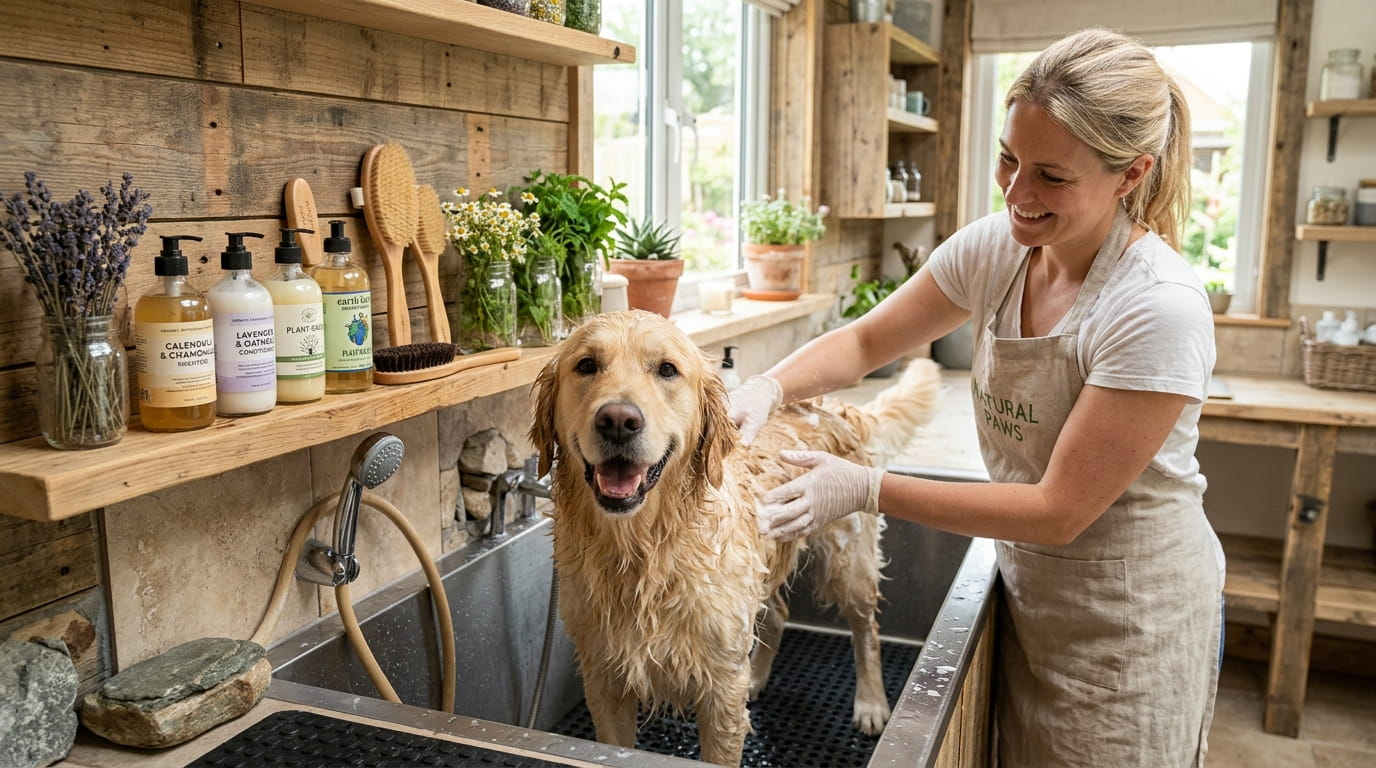
Dog being washed with gentle shampoo and chemical free dog grooming products on a bathroom counter.