
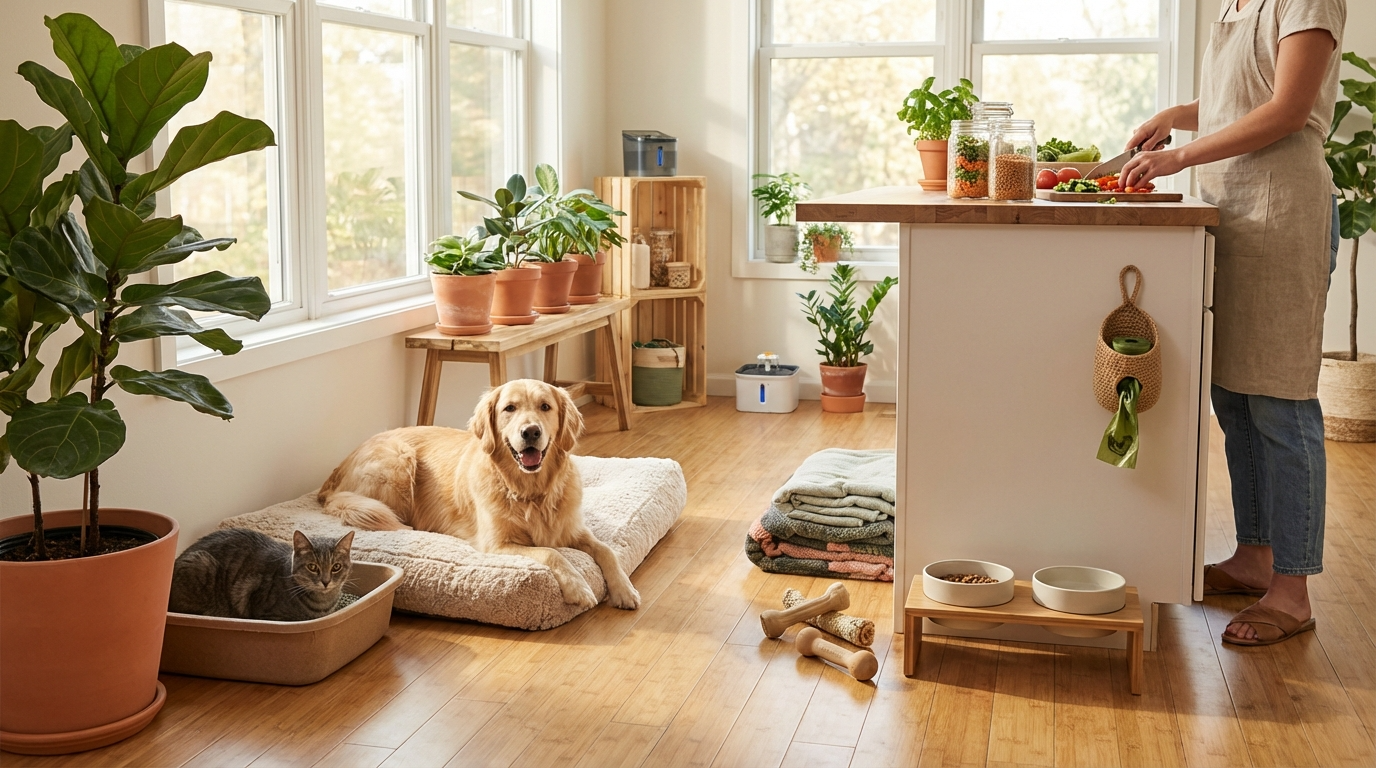

Many pet owners want to reduce their environmental impact. However, few realize how much their furry companions contribute to household waste and resource use. If you want to Live Sustainably With Pets, small daily decisions can make a meaningful difference.
From food production to plastic toys, pet care leaves a carbon footprint. Therefore, choosing eco-conscious options helps protect the planet without sacrificing your animal’s comfort. Sustainable pet parenting does not require extreme lifestyle changes. Instead, it involves smarter purchasing, waste reduction, and mindful habits.
In this guide, you will discover practical strategies to Live Sustainably With Pets while keeping them healthy and happy.
Why Sustainable Pet Ownership Matters
Pets bring joy, companionship, and emotional support. At the same time, they consume food, water, and manufactured goods. Consequently, their environmental footprint adds up over time.
Pet food production requires land, water, and energy. Additionally, packaging waste often ends up in landfills. Plastic toys and synthetic bedding contribute further to pollution.
Because millions of households own pets, collective impact matters. If more owners choose eco-friendly practices, the industry responds with better solutions. Therefore, deciding to Live Sustainably With Pets supports broader environmental change.
Even modest adjustments can reduce waste significantly. For example, buying durable products instead of disposable ones cuts long-term consumption.
Choose Sustainable Pet Food Options
Food accounts for a major share of a pet’s carbon pawprint. Livestock farming generates greenhouse gases and consumes resources. Therefore, ingredient sourcing matters.
Look for brands that use responsibly sourced proteins. Certifications such as MSC for seafood or organic farming standards indicate better environmental practices. Additionally, consider formulas that use alternative proteins like insect meal or plant-based blends when appropriate.
Buying in bulk reduces packaging waste. Moreover, selecting recyclable packaging supports circular systems. When possible, research companies that publish sustainability reports.
To Live Sustainably With Pets, prioritize nutrition and environmental responsibility together. Always consult your veterinarian before making major dietary changes.
Reduce Packaging and Plastic Waste
Pet supplies often come wrapped in layers of plastic. However, you can minimize this impact with thoughtful choices.
Choose refillable treat containers. Purchase food in larger bags to reduce per-unit packaging. Furthermore, support brands that use compostable or recyclable materials.
Avoid single-use grooming wipes when washable cloths work just as well. Stainless steel bowls last longer than plastic alternatives. As a result, fewer items end up in landfills.
If you want to Live Sustainably With Pets, consider durability first. Long-lasting products reduce resource consumption over time.
Small swaps create meaningful environmental benefits.
Eco-Friendly Toys and Accessories
Many pet toys contain synthetic rubber and plastic. Although affordable, these materials degrade slowly. Therefore, consider sustainable alternatives.
Natural rubber toys often break down more safely. Organic cotton rope toys avoid chemical dyes when certified. Additionally, recycled materials offer creative and eco-conscious options.
Rotate toys to extend their lifespan. Repair minor tears instead of replacing items immediately. Because dogs and cats enjoy novelty, rotation keeps playtime exciting without constant purchases.
When you Live Sustainably With Pets, focus on quality over quantity. Durable toys reduce waste and protect your pet from harmful fragments.
Sustainable Grooming Practices
Grooming products often contain chemicals that harm waterways. Consequently, eco-friendly shampoos and conditioners matter.
Look for biodegradable formulas free from harsh detergents. Additionally, avoid microplastics in grooming products. These particles enter water systems and persist in ecosystems.
Brush your pet regularly to reduce excessive bathing. Less frequent washing saves water and preserves natural oils. Use reusable towels instead of disposable wipes.
By adjusting grooming habits, you Live Sustainably With Pets while maintaining healthy skin and coats.
Water conservation and chemical awareness go hand in hand.
Managing Pet Waste Responsibly
Waste management presents one of the biggest sustainability challenges. Dog waste bags create significant plastic pollution. However, alternatives exist.
Biodegradable or compostable bags reduce long-term landfill impact. Some communities offer pet waste composting systems. Check local regulations before composting at home.
For cat owners, consider plant-based or recycled paper litter. Traditional clay litter involves mining practices that harm ecosystems. In contrast, renewable materials break down more easily.
To Live Sustainably With Pets, handle waste thoughtfully and consistently. Responsible disposal protects soil and water quality.
Energy and Resource Efficiency at Home
Pet ownership also affects household energy use. Aquariums, heated beds, and lighting consume electricity. Therefore, energy-efficient appliances make a difference.
Choose LED lighting for tanks. Use programmable heating pads to limit unnecessary power use. Additionally, wash pet bedding in full loads to conserve water.
Air purifiers designed for pet dander should have energy-saving modes. When possible, line-dry blankets instead of using a dryer.
If you aim to Live Sustainably With Pets, evaluate daily habits for small efficiency gains.
These incremental changes reduce both environmental impact and utility bills.
Adopt Instead of Shop
Pet population control directly impacts sustainability. Overbreeding increases resource demand and contributes to shelter overcrowding.
Adopting from shelters reduces demand for large-scale breeding operations. Furthermore, adoption supports animal welfare and responsible pet population management.
Before bringing a new pet home, consider long-term commitment. Impulse purchases often lead to rehoming, which increases stress and resource waste.
When you Live Sustainably With Pets, thoughtful adoption decisions play a critical role in ethical ownership.
Responsible choices benefit both animals and ecosystems.
Support Eco-Conscious Brands
Consumer demand influences industry practices. Therefore, support companies committed to environmental responsibility.
Research brands that publish carbon reduction goals. Look for transparent sourcing information. Additionally, check whether companies use renewable energy in production facilities.
Avoid greenwashing by verifying third-party certifications. Trust brands that provide measurable data rather than vague promises.
By choosing responsible companies, you help drive systemic change. To Live Sustainably With Pets, your purchasing power matters more than you think.
Market shifts happen when consumers act collectively.
Travel and Transportation Considerations
Pet travel also affects sustainability. Frequent car trips increase fuel consumption. Therefore, combine errands when possible.
Use eco-friendly carriers made from recycled materials. Additionally, choose pet-friendly accommodations that promote sustainable practices.
Walking instead of driving to nearby parks reduces emissions. Furthermore, public transportation options may allow small pets in carriers.
When planning trips, factor in environmental considerations alongside comfort and safety.
Living responsibly extends beyond your home environment.
Teaching Sustainable Habits to Family Members
Sustainability becomes more effective when shared. Teach children how to dispose of waste properly. Encourage family members to conserve water during pet baths.
Create clear recycling systems for pet packaging. Moreover, explain why durable toys cost more but last longer.
By involving everyone in the household, you reinforce eco-friendly routines. As a result, efforts to Live Sustainably With Pets become consistent rather than occasional.
Education fosters long-term environmental awareness.
Balancing Comfort and Responsibility
Sustainable living should not compromise your pet’s well-being. Nutrition, medical care, and comfort remain top priorities.
Choose environmentally responsible options that meet safety standards. Avoid extreme changes that could harm your pet’s health. Additionally, consult veterinarians before switching foods or litter types.
You can Live Sustainably With Pets without sacrificing quality of life. Balance, awareness, and informed decisions create the best outcomes.
Every step forward counts.
Conclusion
Choosing to Live Sustainably With Pets reflects a commitment to both animal welfare and environmental stewardship. While pets naturally consume resources, thoughtful habits reduce unnecessary waste and emissions.
Select responsibly sourced food, minimize plastic packaging, and manage waste carefully. Support eco-conscious brands and adopt energy-efficient practices at home. Additionally, involve your family in sustainable routines.
Sustainability does not require perfection. Instead, it requires consistency and intention. By making gradual improvements, you protect the planet while caring for your companion.
Living responsibly today ensures a healthier world for future generations of pets and people alike.
FAQ
- What is the biggest environmental impact of pet ownership?
Pet food production and waste management contribute significantly to carbon emissions and landfill use. - Are biodegradable poop bags truly better?
Yes, certified compostable bags break down faster and reduce long-term plastic pollution. - Can plant-based pet foods be sustainable?
Some formulas use lower-impact ingredients, but always consult a veterinarian before switching diets. - How can I reduce plastic in pet care?
Choose refillable containers, durable toys, and recyclable packaging whenever possible. - Is adoption more sustainable than buying from breeders?
Adoption reduces overpopulation and supports responsible animal welfare practices.