
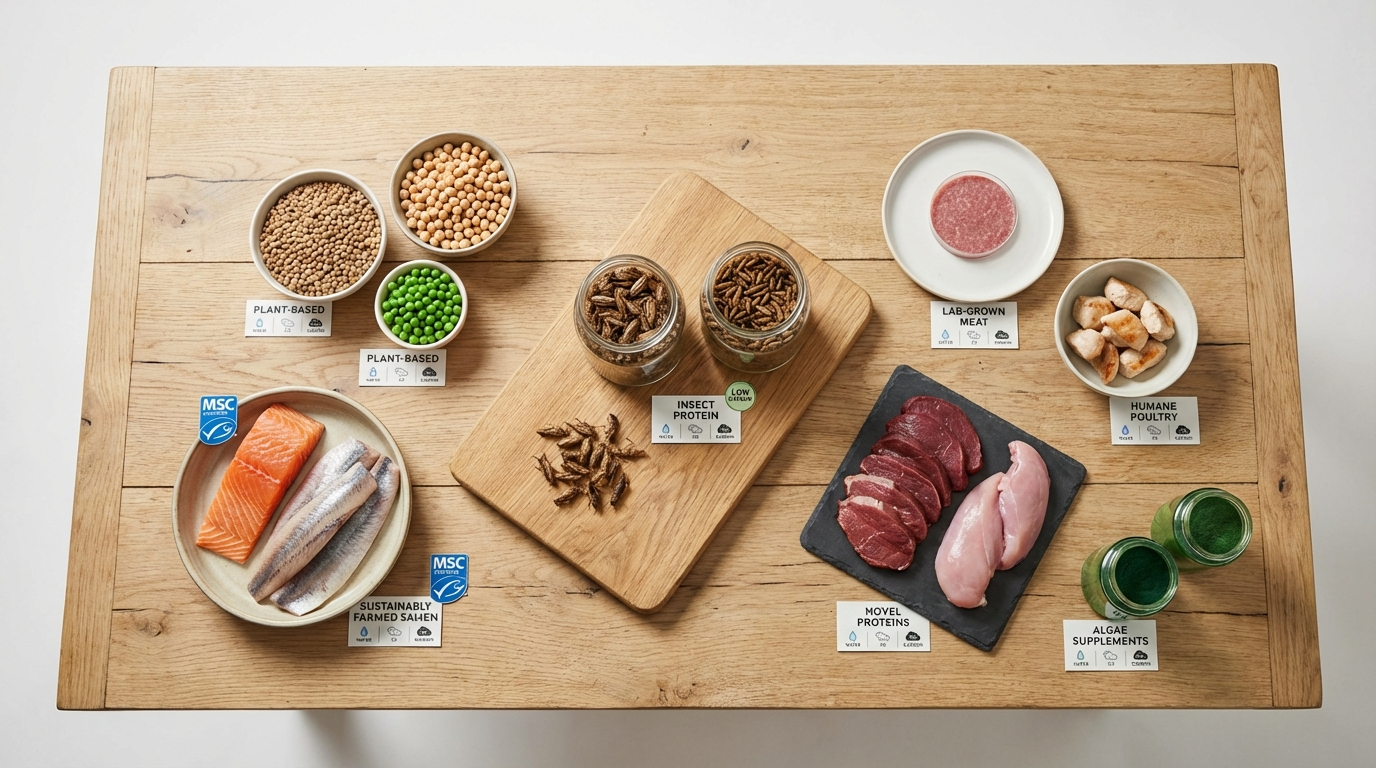

Eco friendly pet proteins are becoming more visible on store shelves. You may notice labels mentioning insect meal, responsibly sourced fish, or regenerative farming practices. Prices often run higher than traditional options. Naturally, that raises an important question: are they really worth paying extra for?
Pet owners want healthy food for their animals. At the same time, many care deeply about environmental impact. However, budgets are real. Every purchase decision involves trade-offs. Therefore, it helps to look beyond marketing and understand what you are actually funding.
Let’s explore whether eco friendly pet proteins deliver genuine value or simply carry a premium label.
Understanding What Eco Friendly Pet Proteins Include
Not all alternative ingredients qualify automatically. Eco friendly pet proteins generally refer to protein sources produced with reduced environmental impact. These may include insect-based meals, plant-forward blends for dogs, or meat raised under regenerative agriculture systems.
Some products feature fish certified by sustainability programs. Others rely on farms that prioritize soil health and lower emissions. In each case, production methods aim to minimize strain on land, water, and climate systems.
Unlike conventional livestock operations that may require large feed crops and intensive resource use, these alternatives seek efficiency. Because environmental footprint varies widely across protein types, thoughtful sourcing matters.
Understanding what stands behind the label helps you judge value more accurately.
Why Eco Friendly Pet Proteins Often Cost More
Higher prices do not appear randomly. Several factors influence the cost.
First, many alternative protein systems are still scaling. Insect farming, for example, requires specialized facilities. Production volumes remain smaller compared to traditional livestock. As a result, per-unit costs stay elevated.
Second, responsible sourcing involves monitoring and certification. Audits ensure compliance with environmental standards. That oversight adds administrative expense.
Third, regenerative and ethical farming often avoids shortcuts. Slower growth cycles or improved animal welfare conditions may increase operational costs.
While the price difference can feel significant, it usually reflects supply chain adjustments designed to reduce harm.
Environmental Impact Compared to Traditional Proteins
The strongest argument for eco friendly pet proteins lies in environmental performance.
Conventional livestock farming generates considerable greenhouse gas emissions. Water use for feed crops and grazing is substantial. Land clearing contributes to habitat loss.
In contrast, insect protein requires minimal land and water. Some plant-based blends for dogs reduce reliance on animal agriculture. Responsibly managed fisheries prevent overharvesting.
Although no system eliminates impact entirely, alternative protein models often show measurable reductions.
When evaluating cost, consider long-term ecological benefits rather than short-term pricing alone.
Carbon Footprint and Climate Responsibility
Climate change discussions increasingly include food systems. Pet food production contributes to overall emissions, particularly when meat-heavy formulas dominate.
By incorporating lower-impact ingredients, eco friendly pet proteins can help reduce your pet’s carbon footprint. Insect farms emit far less methane than cattle operations. Regenerative grazing practices may improve soil carbon retention.
While one purchase will not solve global warming, collective consumer behavior influences industry direction.
Supporting lower-emission models sends a clear signal to manufacturers.
Nutritional Adequacy and Quality Considerations
Price should always connect to performance. Therefore, nutrition must be examined carefully.
Many eco friendly pet proteins offer complete amino acid profiles when properly formulated. Insect-based ingredients contain essential nutrients. Certain plant-inclusive dog diets meet established feeding standards when balanced correctly.
However, cats require specific nutrients such as taurine. Careful formulation remains essential for feline diets.
Reputable brands conduct feeding trials or follow recognized nutritional guidelines. Always review product information before switching diets.
Higher cost does not automatically mean better nutrition. It may, however, reflect improved sourcing and formulation oversight.
Digestibility and Allergy Potential
Some pets struggle with common proteins like beef or chicken. Repeated exposure can lead to sensitivities.
Novel ingredients, including insect-based options, sometimes improve tolerance. Because exposure remains limited, allergic reactions may decrease in certain dogs.
Digestibility studies have shown promising results for alternative proteins. Nevertheless, individual variation exists.
If digestive comfort improves, perceived value increases significantly.
Ethical and Transparency Factors
Ethical sourcing motivates many buyers. Eco friendly pet proteins often emphasize traceability and responsible farming practices.
Consumers increasingly want to know where ingredients originate. Transparency builds trust.
While ethical benefits are difficult to quantify financially, they influence purchasing decisions strongly.
When your spending aligns with personal values, satisfaction rises beyond simple cost comparison.
Are Eco Friendly Pet Proteins Just Marketing?
Skepticism remains healthy. Some brands exaggerate claims without clear verification.
Therefore, research matters. Look for credible certifications or transparent sourcing explanations. Avoid vague language unsupported by data.
The broader sustainability movement, however, is not imaginary. Resource constraints and climate pressures demand innovation across food systems.
Separating genuine progress from superficial branding protects your investment.
Long-Term Financial Perspective
Upfront price often dominates attention. Yet long-term value deserves consideration.
If higher-quality ingredients improve digestion, feeding efficiency may increase. Some pets maintain weight better on nutrient-dense formulas.
Additionally, supporting innovative systems may accelerate cost reductions over time as scale improves.
While direct savings may not appear immediately, broader benefits accumulate gradually.
When Traditional Protein May Still Make Sense
Eco friendly pet proteins are not mandatory for every household.
If your pet thrives on a responsibly sourced conventional diet and financial flexibility is limited, maintaining current feeding practices may be reasonable.
Health remains the primary priority. Environmental considerations should complement, not replace, nutritional adequacy.
Balanced evaluation prevents unnecessary guilt.
Blended Approaches to Reduce Impact
You do not need a dramatic switch to make progress.
Some owners combine alternative protein formulas with traditional food. Partial integration lowers environmental impact without fully absorbing higher costs.
Gradual changes feel more manageable. They also allow careful monitoring of tolerance.
Small adjustments still matter.
Industry Evolution and Consumer Influence
Market demand drives production change.
As more consumers explore eco friendly pet proteins, manufacturers invest in research and infrastructure. Increased scale may reduce pricing over time.
Innovation accelerates when buyers demonstrate interest.
Supporting responsible sourcing today shapes tomorrow’s standards.
Conclusion
Eco friendly pet proteins often carry higher price tags because they reflect evolving production systems, reduced environmental impact, and improved sourcing transparency. While not essential for every household, they offer meaningful benefits for those prioritizing sustainability alongside pet health.
Value depends on perspective. If environmental responsibility and ethical sourcing matter deeply to you, the additional cost may feel justified. If budget constraints dominate, incremental steps still contribute positively.
Ultimately, feeding your pet involves balancing health, cost, and conscience. When informed decisions guide that balance, every meal becomes an opportunity to support both your companion and the world they inhabit.
FAQs
- Are eco friendly pet proteins nutritionally complete?
Yes, when formulated according to recognized feeding standards and veterinary guidelines. - Do alternative proteins reduce environmental impact?
Many lower-impact protein sources require less land, water, and emissions compared to conventional livestock. - Are they suitable for cats as well as dogs?
Dogs adapt more easily to diverse proteins, while cats require precise nutrient balancing. - Why do these products cost more?
Higher prices often reflect smaller production scale, responsible sourcing, and certification expenses. - Can I transition gradually to alternative protein diets?
Yes, gradual integration helps monitor tolerance and manage costs effectively.