
Bath time is supposed to help your dog feel clean, fresh, and comfortable. Yet for some dogs, a simple wash can spark days of itching, redness, and misery. If you have ever wondered whether dog shampoo allergies are real, the answer is clear. Yes, they are. And they are often overlooked.
Many owners assume allergies come only from food or the environment. However, what touches your dog’s skin matters just as much. Shampoos sit directly on the skin, soak into fur, and linger long after rinsing. When the ingredients are harsh or unsuitable, reactions can follow.
Understanding how dog shampoo allergies happen empowers you to protect your dog’s comfort and health. Let’s explore what causes these reactions, how to spot them early, and what you can do differently.
What Are Dog Shampoo Allergies?
Dog shampoo allergies occur when a dog’s immune system reacts negatively to one or more ingredients in grooming products. These reactions may be immediate or delayed. In some cases, irritation builds slowly over repeated baths.
Unlike food allergies, shampoo reactions affect the skin first. The skin acts as a barrier, but it also absorbs substances easily. When that barrier becomes irritated, inflammation spreads.
All dogs can develop sensitivities. However, dogs with existing skin issues are at higher risk. Puppies and seniors may also react more strongly.
Why Dog Shampoo Allergies Are Often Missed
Dog shampoo allergies are frequently mistaken for other problems. Owners may blame fleas, grass, or seasonal allergies instead. Because symptoms appear after bathing, they can be subtle at first.
Sometimes reactions show up hours later. Other times, they worsen over days. This delay makes it harder to connect cause and effect.
Additionally, many shampoos are marketed as “gentle” or “natural.” Unfortunately, these labels are not always regulated. Even well-meaning choices can trigger irritation.
Common Ingredients That Trigger Dog Shampoo Allergies
Not all shampoos are created equal. Some ingredients are more likely to cause reactions.
Artificial Fragrances and Dyes
Fragrance is a major culprit. While it smells pleasant to humans, dogs process scents differently. Synthetic fragrances can irritate sensitive skin.
Artificial dyes add no health benefit. Instead, they increase allergy risk. Bright colors often signal unnecessary additives.
Sulfates and Harsh Detergents
Sulfates create foam. However, they strip natural oils from the skin. Once protective oils are removed, the skin becomes dry and inflamed.
Repeated use worsens the problem. Over time, the skin barrier weakens.
Preservatives and Chemical Stabilizers
Preservatives prevent spoilage. Some are safe. Others are problematic.
Ingredients like parabens or formaldehyde-releasing agents can trigger immune responses. Sensitive dogs may react quickly.
Essential Oils and Botanical Extracts
Natural does not always mean safe. Essential oils are concentrated plant compounds. Tea tree oil, citrus oils, and peppermint are common irritants.
In small doses, they may be tolerated. In larger amounts, reactions are common.
Symptoms of Dog Shampoo Allergies
Dog shampoo allergies show up primarily through skin and behavior changes. Being observant helps catch problems early.
Skin Reactions
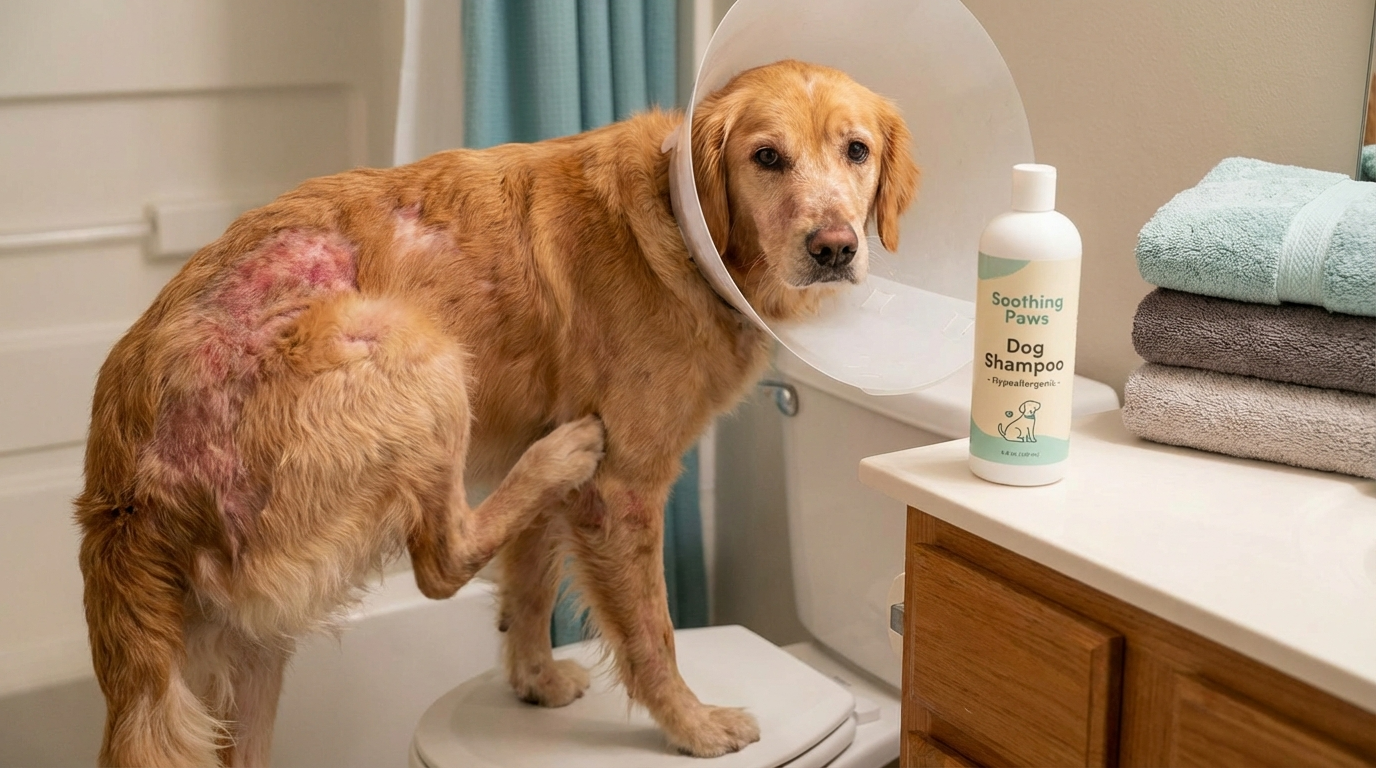
Skin symptoms are usually the first sign.
- Redness or rash
- Dry, flaky skin
- Hives or bumps
- Hot spots
- Swelling around eyes or muzzle
These signs often appear on the belly, paws, ears, and underarms.
Behavioral Clues
Dogs communicate discomfort through actions.
- Excessive scratching
- Licking or chewing paws
- Rubbing against furniture
- Restlessness after bathing
If behavior changes suddenly after grooming, shampoo should be considered.
Secondary Infections
Prolonged irritation invites bacteria and yeast. Infections may follow if allergies are untreated.
Signs include odor, discharge, and thickened skin. Veterinary care becomes necessary at this stage.
Immediate vs Delayed Reactions
Some dog shampoo allergies appear right away. Others take time.
Immediate reactions may happen during or shortly after bathing. These include intense itching or redness.
Delayed reactions appear hours or days later. Because of this delay, owners often miss the connection.
Both types are important. Neither should be ignored.
Breeds More Prone to Dog Shampoo Allergies
While any dog can react, certain breeds have sensitive skin by nature.
Breeds commonly affected include:
- Bulldogs
- Boxers
- Retrievers
- Terriers
- German Shepherds
Dogs with wrinkles or folds trap moisture and residue. This increases irritation risk.
However, mixed breeds are not immune. Sensitivity depends more on individual biology than breed alone.
How Often You Bathe Matters
Overbathing contributes to dog shampoo allergies. Even gentle shampoos remove natural oils.
Dogs do not need frequent baths unless medically necessary. Most dogs do well with monthly or less frequent bathing.
When baths are too frequent, the skin cannot recover. Irritation accumulates.
Balancing cleanliness with skin health is key.
How to Tell If Shampoo Is the Cause
Identifying dog shampoo allergies requires observation.
Ask yourself:
- Did symptoms start after a bath?
- Do they worsen after grooming sessions?
- Do they improve when bathing stops?
Keeping a simple log helps. Note dates, products used, and symptoms.
If switching shampoos improves symptoms, the answer becomes clearer.
What to Do If You Suspect Dog Shampoo Allergies
Quick action reduces discomfort.
Stop Using the Suspected Shampoo
Discontinue the product immediately. Do not “test it again.” Re-exposure can worsen reactions.
Rinse With Plain Water
Rinsing helps remove residue. Lukewarm water is best. Avoid scrubbing irritated areas.
Consult a Veterinarian
If symptoms persist beyond 48 hours, seek professional advice. Severe reactions require treatment.
Medications may be prescribed to reduce inflammation and itching.
Veterinary Diagnosis and Treatment
Vets diagnose dog shampoo allergies primarily through history and examination. Allergy testing is rarely needed.
Treatment may include:
- Medicated shampoos
- Antihistamines
- Topical creams
- Antibiotics if infection is present
Most dogs recover quickly once the trigger is removed.
Choosing Safer Shampoos to Prevent Dog Shampoo Allergies
Prevention starts with smarter choices.
Look for Minimal Ingredients
Short ingredient lists are safer. Fewer components mean fewer risks.
Choose shampoos labeled:
- Fragrance-free
- Dye-free
- Hypoallergenic
pH Matters
Dog skin has a different pH than human skin. Human shampoos disrupt balance.
Always use products designed for dogs.
Oatmeal and Aloe
Colloidal oatmeal soothes itching. Aloe calms inflammation.
These ingredients are often well tolerated when used correctly.
Veterinary-Recommended Brands
Products recommended by vets undergo more scrutiny. They prioritize safety over scent.
Natural Alternatives and DIY Options
Some owners explore homemade solutions. While appealing, caution is needed.
Plain oatmeal rinses can soothe mild irritation. However, DIY recipes should be vetted carefully.
Never apply essential oils without professional guidance. Concentration errors cause harm.
When in doubt, simplicity is best.
Grooming Habits That Reduce Allergy Risk
Shampoo choice is only part of the picture.
- Rinse thoroughly
- Avoid hot water
- Dry completely
- Brush regularly
Residue left behind causes ongoing irritation. Rinsing longer than washing is often advised.
Environmental Factors That Worsen Reactions
Environmental allergens weaken skin defenses. Pollen, dust, and humidity play a role.
When combined with irritating shampoos, reactions intensify.
Managing the environment supports skin recovery.
Long-Term Skin Health Strategies
Healthy skin resists allergies better.
- Feed balanced nutrition
- Support gut health
- Address underlying allergies
- Limit unnecessary products
Skin reflects internal health. Addressing both improves outcomes.
Myths About Dog Shampoo Allergies
Some myths persist.
One myth claims “natural” means safe. This is false. Another suggests frequent bathing prevents allergies. It does not.
Understanding facts prevents mistakes.
When Allergies Are Not the Cause
Sometimes shampoo is blamed incorrectly. Other conditions mimic allergy symptoms.
- Fleas
- Food allergies
- Mange
- Hormonal disorders
Veterinary evaluation rules these out.
Building a Safer Bath Routine
A gentle routine builds trust and comfort.
Use warm water. Massage gently. Rinse thoroughly. Dry carefully.
Bath time becomes stress-free when skin stays calm.
Conclusion
Dog shampoo allergies are real, common, and often preventable. What you put on your dog’s skin matters just as much as what goes into their bowl. By recognizing symptoms early, choosing gentler products, and adjusting grooming habits, you can protect your dog from unnecessary discomfort.
Healthy skin supports a happy life. With awareness and thoughtful care, bath time can return to being a positive experience rather than a painful one. Your dog deserves comfort, and the right shampoo choice makes all the difference.
FAQ
1. Can dog shampoo allergies develop suddenly?
Yes, dogs can become sensitive over time, even to products used previously without issue.
2. Are puppy shampoos always safer?
They are usually gentler, but ingredients still matter. Always read labels carefully.
3. How long do dog shampoo allergy symptoms last?
Mild reactions may resolve in days. Severe cases may need veterinary treatment.
4. Can I use human baby shampoo on my dog?
No. Human shampoos disrupt canine skin pH and increase irritation risk.
5. Should I avoid bathing my dog entirely if allergies occur?
No, but bathing frequency and product choice should be adjusted for skin health.