
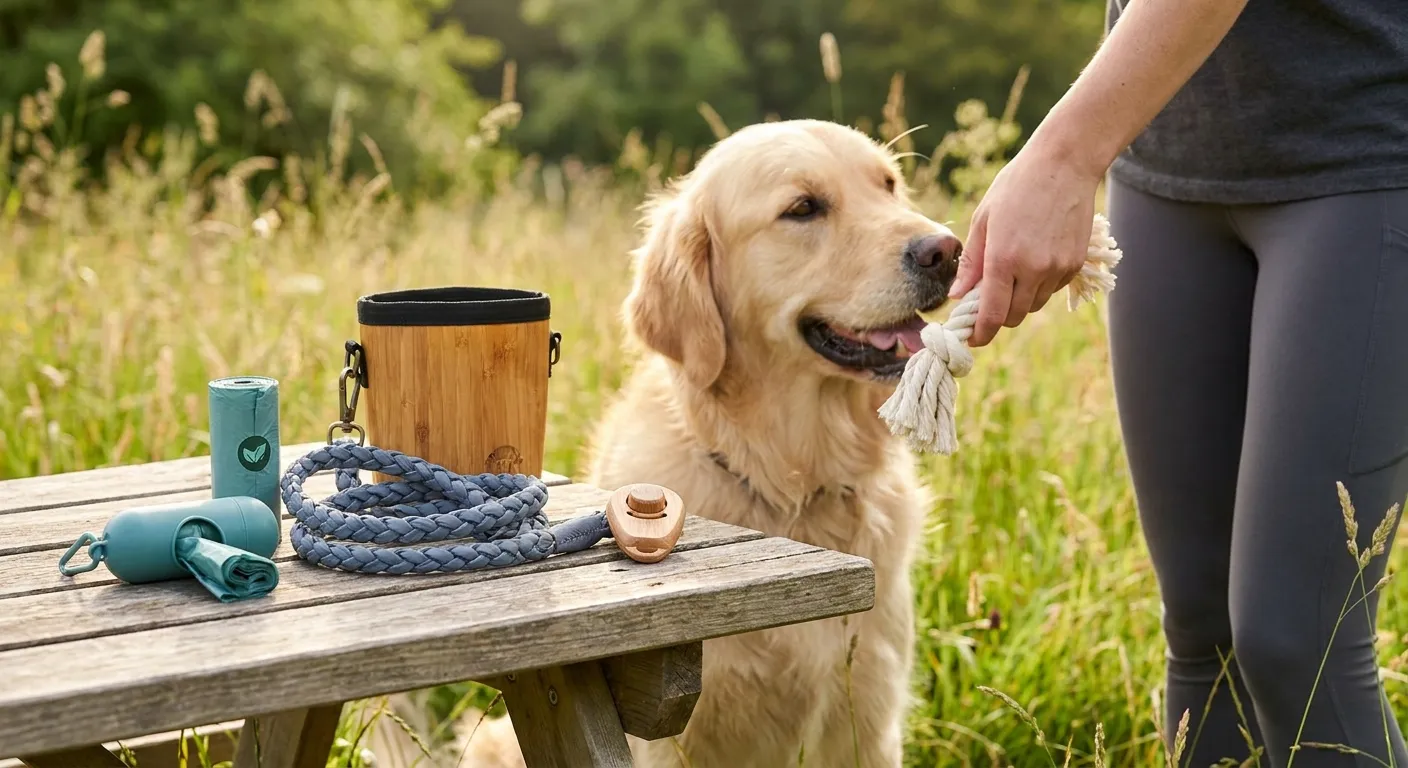

Eco dog training essentials should satisfy two separate checks: does the item support a humane, practical plan, and is its environmental claim specific enough to assess? A green material description cannot compensate for poor fit or unsuitable use. Likewise, a useful piece of gear does not automatically have the environmental benefits suggested by its packaging.
This guide helps you build a small, evidence-based kit without ranking brands. It is educational, not veterinary advice or a substitute for individual behavioral assessment. Seek professional help for fear, aggression, pain or safety concerns. No quantified environmental saving or training result is promised. The aim is to buy only items with a defined role and maintain them appropriately.
Give every proposed purchase a job
Write the skill or management task you are trying to support. You may need a reliable attachment for an ordinary walk, a way to carry suitable rewards or a defined surface for a settling exercise. A broad promise of better behavior is not a clear equipment requirement. Ask how the item fits the actual plan before considering its material claims.
List what you already own and whether it remains serviceable for the intended purpose. An existing suitable pouch or mat may require no replacement. Do not keep damaged or unsuitable equipment solely to avoid a purchase, but do not discard functioning gear merely because a newer product uses eco language. The first decision is about the real task and condition.
Use a humane method as the starting point
The AVSAB humane-training statement recommends reward-based methods and advises against aversive methods. Choose equipment to support that approach rather than relying on pain, fear or intimidation. A device’s material origin does not change how the method affects the dog. Environmental positioning and training welfare must not be merged into one reassuring label.
Ask a qualified reward-based trainer how to set up a manageable exercise and use the tools correctly. If the dog is distressed or the behavior raises safety concerns, get professional input instead of buying a stronger device. A small kit can be useful only within a suitable plan. No item should be expected to replace assessment or guarantee a trained response.
Check fit and fasteners before fiber descriptions
For a collar or harness, follow the exact manufacturer’s fitting instructions and seek help if uncertain. Inspect fasteners, attachment points, stitching and overall condition. Check whether the model is intended for your dog’s size and the planned use. Do not infer suitability from a material being natural, recycled or marketed as durable.
If you observe discomfort, damage or unreliable closure, stop relying on the item while seeking an appropriate solution. Avoid making a load-bearing repair yourself without competent manufacturer guidance. Repairing an owner pouch is a different task from altering equipment used to manage the dog. A sustainability goal should not encourage continued use of an item that no longer performs its essential job.
Ask what the environmental claim covers
Read the product description closely. Does recycled refer to the whole item, one fabric panel, the packaging or a stated proportion? Does renewable refer to a specific raw material? Are claims supported by information about the actual model, rather than a general supplier story? Keep each proposition in its own field in your comparison notes.
The FTC’s Green Guides summary explains the importance of specific, supported environmental claims. A broad phrase such as planet-friendly does not tell you which attribute was assessed. This article does not compare life-cycle impacts or claim that one fiber is universally superior. Ask for narrower evidence and limit your own conclusion to what it supports.
Examine how the item can be maintained
Read cleaning, drying and storage instructions. Ask whether worn components can be replaced by an authorized route and what the manufacturer advises when damage occurs. An item may be attractive at purchase while difficult to maintain in your actual routine. Check the practical details before assuming a long service life.
Do not improvise a cleaning recipe that conflicts with product instructions or introduces unassessed exposure for the dog. Likewise, do not assert that a particular wash method makes the product hygienic without relevant guidance. The maintenance plan should be understandable and compatible with the actual materials, use and professional advice where needed.
Choose a reward container you can use reliably
A closable, suitable existing container or pouch may be enough for owner-carried supplies. Check opening, attachment and cleaning. Keep rewards appropriate for the dog and ask your veterinary team how food rewards fit the overall diet. Avoid buying extra treats merely because the packaging has a sustainability claim.
Prepare a manageable amount and store it according to applicable instructions. The container should help the handler reach a reward without scattering small items. If a complicated closure makes practice awkward, discuss a simpler setup. An elaborate accessory is unnecessary when an existing arrangement works safely and consistently for the intended job.
Evaluate toys by the dog and intended use
If play forms part of the training plan, choose an item suitable for the dog’s size, behavior and the instructed activity. Read the manufacturer’s directions and inspect condition. A recycled-content or plant-derived claim does not establish that a toy is indestructible, safe to swallow or appropriate for every dog.
Do not use damaged pieces simply because replacing them seems wasteful. Seek advice if you are uncertain about suitability or the dog tends to ingest objects. This guide does not provide a homemade chew or tug-toy pattern. Reusing fabric as an owner organizer is a different proposition from making equipment the dog will mouth or pull.
Plan the practice environment
Identify where the exercise will happen and which management tools the plan requires. A quieter or less difficult setup may reduce the temptation to buy more gear, but do not claim a particular location guarantees calm behavior. Ask the trainer how to arrange the task appropriately and keep the dog secure.
Check any barrier, mat or line under its own instructions. Do not assume a longer line is suitable in a crowded setting or a barrier resolves a serious behavior concern. The equipment should support an individual plan that can be reviewed. If the current setup does not work, seek guidance about the task and environment as well as the product.
Consider packaging without letting it dominate
Ask whether the proposed order includes unnecessary accessories you will not use. Compare the actual product and packaging information rather than accepting a broad zero-waste claim. Keep a specific observation, such as a stated packaging material, separate from a conclusion about the total environmental impact of manufacture and delivery.
Also consider quantity. Buying duplicates solely to qualify for a discount may add clutter without serving a training job. This article does not claim that every smaller order has a lower footprint. It asks whether the household actually needs the items, since unused gear does not improve the plan merely because the purchase was marketed as sustainable.
Establish an end-of-life route
Before assuming the item is recyclable or compostable, check its components and local acceptance. Mixed materials, fasteners and electronics may need different routes. Ask the manufacturer and waste service about the exact item. A symbol or general material category does not guarantee an available destination where you live.
If serviceable equipment is no longer needed, ask a recipient whether it accepts that exact item and condition before donating. Do not pass on unreliable restraint gear. Keep end-of-life planning proportionate and documented rather than making an unsupported claim that the item will return harmlessly to nature.
Review the kit by use and evidence
Eco dog training essentials should earn their place through a humane job, suitable design, maintainable condition and a specific claim you can verify. Reuse existing gear when it is appropriate, replace unsuitable equipment and keep material claims separate from training promises. A clear kit can be small without being defined by the cheapest price.
After ordinary use, record what worked, what was awkward and what needs professional input. Let those observations guide the next purchase. The goal is a practical routine with clear limits, rather than more products under a greener label. The dog’s welfare, the handler’s ability to use the kit and the actual evidence remain central.