
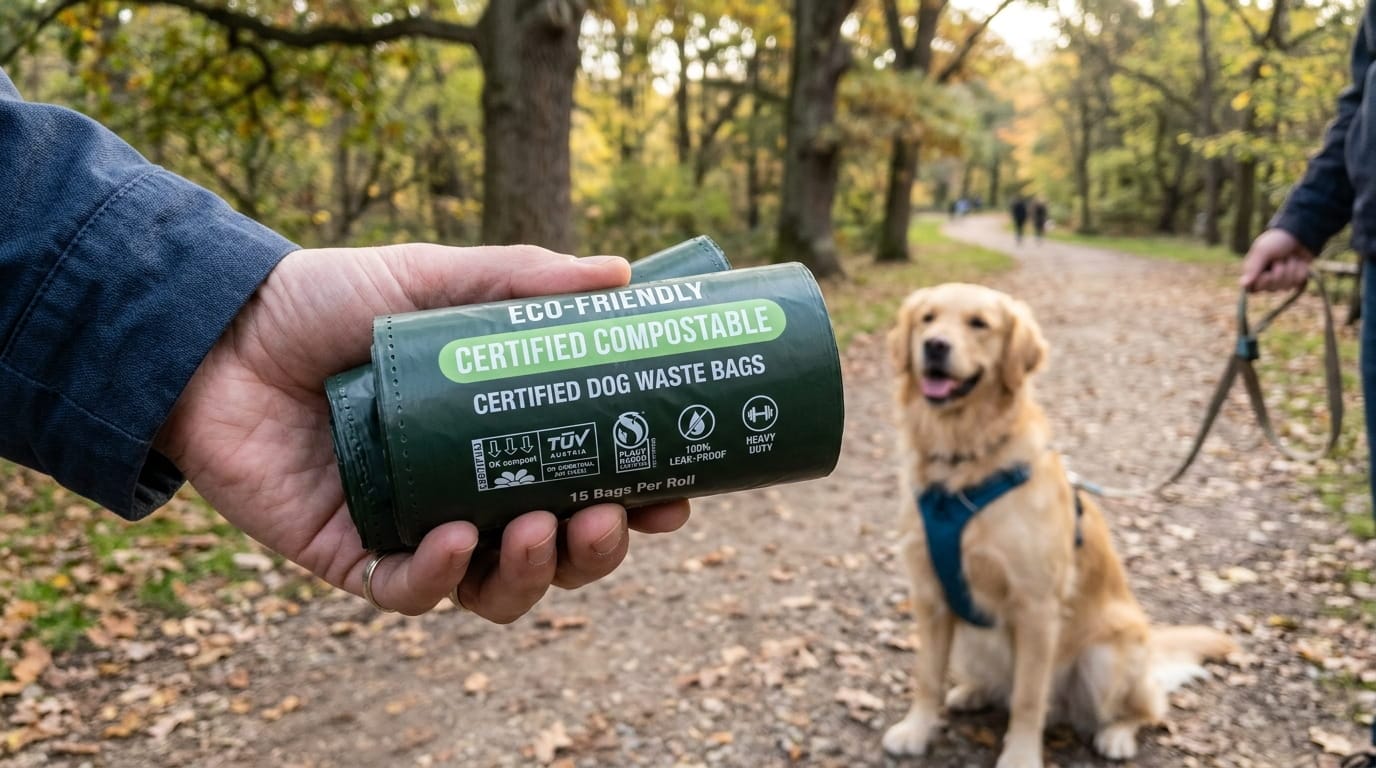

Certified dog waste bags are becoming more important for pet owners who want a cleaner way to handle daily walks without falling for vague eco claims. Many brands now use words like green, earth-friendly, biodegradable, plant-based, compostable, and sustainable. However, those terms do not always mean the same thing. Some bags are genuinely tested to meet recognized standards, while others rely on soft marketing language that sounds responsible but gives very little proof.
Dog waste cleanup is one of those small habits that happens again and again. One bag after one walk may not seem like much. Yet over weeks, months, and years, the impact grows. Because of that, choosing better bags can make your routine feel more thoughtful. Still, the goal is not only to buy something that looks eco-friendly. The goal is to choose a product that performs well, protects hygiene, and supports a more honest waste routine.
The challenge is that pet waste itself is not simple. Dog poop can carry bacteria, parasites, and odor. Therefore, it needs to be handled safely. At the same time, many traditional plastic bags linger in landfills for a very long time. This creates a real problem for pet owners who want convenience without adding unnecessary plastic waste. Certified dog waste bags can help, but only when you understand what certification means.
Why Certification Matters More Than Green Marketing
Eco-friendly packaging can be confusing because brands often use similar words for very different products. A bag labeled biodegradable may not break down quickly in a landfill. A plant-based bag may still contain plastic blends. A compostable bag may need an industrial composting facility, not a backyard bin. Therefore, certification gives you something more useful than a pretty label.
A certification usually means the product has been tested against a specific standard. That standard may focus on compostability, material breakdown, heavy metal limits, or other environmental requirements. While certification does not make a product perfect, it gives shoppers a better way to compare claims. Without it, you may only have the brand’s promise.
This matters because some dog waste bags use vague terms that sound impressive but do not explain the conditions needed for breakdown. For example, a product may say it breaks down faster, yet not say where, how long it takes, or what remains afterward. In contrast, certified dog waste bags should point to a clearer testing framework.
However, certification should still be read carefully. Compostable does not always mean you can toss used dog waste bags into your garden compost. In many places, pet waste is not accepted in compost systems because of health risks. Some municipal compost programs also refuse pet waste, even if the bag itself meets a compostable standard. As a result, you need to consider both the bag and the disposal method.
The strongest choice is a bag with clear certification, practical strength, and disposal guidance that matches your local options. If your city does not accept pet waste in compost, the bag may still be a better material choice, but it may not compost as intended. This is why honest labeling matters. It helps you avoid unrealistic expectations.
What to Look for on the Label
When shopping for certified dog waste bags, start by looking for specific certification names or standard numbers. Labels that mention recognized compostability standards are more useful than broad claims like eco-safe or earth-conscious. Common references may include industrial compostability standards or third-party marks from organizations that test compostable materials.
The word compostable should be supported by details. Does the bag meet a recognized standard? Is it designed for commercial composting only? Does the package explain whether pet waste can go into that system? These questions matter because a compostable material may need heat, moisture, oxygen, and time that a regular landfill does not provide.
Also check whether the bag is home compostable or industrially compostable. Home compostable materials are designed to break down under lower-temperature conditions. However, dog waste is still the concern. Many experts do not recommend using compost from pet waste around edible plants. So, even if the bag material is home compostable, safe waste handling still matters.
Thickness and durability matter too. A bag that tears during use is not a better choice, even if the label sounds green. It can create mess, stress, and hygiene risks. Look for bags that feel strong enough for your dog’s size and your walking routine. If you have a large dog, thin bags may not be practical.
Scent is another factor. Many waste bags use fragrance to cover odor, but strong scents can bother sensitive people and pets. Unscented bags are often a better choice if you prefer a cleaner, simpler product. In addition, fewer additives may support a more straightforward eco profile.
Packaging deserves attention as well. Some certified dog waste bags come in recyclable cardboard boxes or minimal wraps. Others use extra plastic packaging that weakens the overall benefit. While packaging should not be your only concern, it can help you compare similar products.
Finally, check the brand’s transparency. A trustworthy company should explain what the bag is made from, what certification it carries, and how to dispose of it responsibly. If a brand hides behind vague language, be cautious. Clear labels make better choices easier.
Compostable, Biodegradable, and Recycled Bags
The terms compostable, biodegradable, and recycled are often used as if they mean the same thing. They do not. Understanding the difference helps you choose certified dog waste bags with more confidence and less confusion.
Compostable bags are designed to break down into natural elements under specific composting conditions. However, those conditions may require an industrial composting facility. If the bag ends up in a landfill, it may not break down the same way. Landfills often lack the oxygen and conditions needed for proper composting.
Biodegradable bags sound helpful, but the term can be too vague. Many materials will eventually break down over a long enough timeline. The real question is how long it takes, under what conditions, and whether harmful fragments remain. Without certification, biodegradable claims can be hard to trust.
Recycled plastic bags take a different approach. Instead of focusing on compostability, they use existing plastic material. This can reduce demand for new plastic, which may be a meaningful benefit. However, recycled plastic still does not disappear after disposal. It may be a practical choice when composting options are limited, but it is not the same as compostable.
Plant-based bags can also vary. Some are made from renewable materials like cornstarch or other plant-derived inputs. Others blend plant materials with plastic. A plant-based claim does not automatically prove the bag is compostable. Again, certification and disposal instructions are the key.
Oxo-degradable bags need caution. These products are designed to fragment faster when exposed to certain conditions. However, faster fragmentation is not the same as safe breakdown. Some environmental groups criticize these materials because they may contribute to microplastic concerns. If you see this term, read carefully before buying.
In real life, the best option depends on your local waste system. If commercial composting accepts pet waste and certified bags, compostable options may make sense. If not, recycled-content bags or certified compostable bags used with responsible trash disposal may still reduce some impact. The perfect choice is not always available, but a better choice usually is.
How to Match Bags to Your Daily Routine
The best bag is one you will actually use correctly. If a product is too thin, too small, too hard to open, or too expensive for daily life, it may not work for your household. Certified dog waste bags should support your routine, not make every walk harder.
Start with size. Small dogs may need less bag space, but owners still need enough room to tie the bag securely. Large dogs need stronger bags with more capacity. If you often walk more than one dog, choose rolls that offer enough bags for longer outings. Running out of bags can lead to poor cleanup habits, which hurts shared spaces.
Ease of opening matters more than many owners expect. Some eco-focused bags can feel stiff or clingy, especially in cold weather. If you struggle to separate bags on a windy sidewalk, you may become frustrated fast. A good product should be easy to tear, open, use, and tie.
Think about where you walk. If you walk in city areas with plenty of trash bins, smaller rolls may work well. If you hike, camp, or visit parks, you may need thicker bags that control odor longer. You may also need a carrier that keeps full bags secure until you reach a proper bin.
Storage matters too. Keep rolls near the leash, in the car, and by the door. This simple habit prevents last-minute mistakes. It also helps every family member follow the same cleanup routine. Better bags only help when they are easy to grab.
Cost is another real factor. Some certified dog waste bags cost more than basic plastic bags. However, you can often save by buying larger packs, avoiding scented versions, or choosing simple packaging. If the price feels high, compare cost per bag rather than package price alone.
For pet owners who care about waste reduction, using fewer bags responsibly can also help. For example, one bag may handle multiple small pickups during a yard cleanup. However, do not overfill bags or risk leaks. Hygiene should stay first.
Common Mistakes to Avoid
One common mistake is assuming every green bag can go in any compost pile. This is not true. Used pet waste bags can create health concerns, especially if compost is used near food gardens. Even when the bag material is certified, the waste inside must be handled safely.
Another mistake is trusting only the word biodegradable. Without a recognized standard or clear explanation, that word can be weak. It may not tell you how the bag breaks down or whether it leaves plastic fragments. Certified dog waste bags give you stronger information than vague claims.
Some owners also flush dog waste bags. This is risky and should be avoided unless a product is specifically designed and approved for flushing. Most bags can clog plumbing, harm sewer systems, or create costly problems. Even bags that claim to dissolve may not be accepted everywhere.
It is also easy to overlook local rules. Waste systems vary by city, county, and country. Some places accept pet waste in certain green bins, while others do not. Some compost programs accept only food scraps and yard waste. Checking local guidance can prevent contamination and keep your waste routine responsible.
Another issue is buying bags that are too fragile. If a bag breaks, you may need to double bag, which defeats the purpose. Choose a durable option from the start. Strength is not a luxury when you are handling pet waste.
Finally, avoid stocking up before testing. Buy a smaller pack first if you are trying a new brand. Test how the bags open, tear, tie, and hold odor. Once you find a reliable option, larger packs may make more sense.
Building a More Responsible Cleanup Habit
A better waste routine does not stop at the bag. It also includes how you store, carry, and dispose of dog waste. When each step works smoothly, you are more likely to stay consistent. That consistency matters for cleaner sidewalks, parks, trails, yards, and neighborhoods.
Always pick up after your dog, even in natural areas. Dog waste can affect water quality, spread parasites, and create problems for wildlife and other pets. Leaving it behind is not the same as leaving wild animal waste. Dogs often eat managed diets and live close to people, so their waste belongs in a proper disposal system.
Use a bag carrier if you often forget bags. Many carriers clip to a leash and make cleanup automatic. Some even hold a full bag until you find a trash can. This keeps hands free and reduces the temptation to leave bags on trails, which is a common and frustrating problem.
Do not leave filled bags on the ground, even if you plan to pick them up later. People often forget, and wildlife may tear them open. A bag left beside a trail can become worse than unbagged waste because it adds plastic or compostable material to the environment.
At home, consider a dedicated outdoor pet waste bin with a secure lid. This can control odor and keep bags away from indoor trash. If you use a waste pickup service, ask what types of bags they prefer. Some services may have specific rules.
If you have a yard, regular cleanup prevents buildup. Frequent small cleanups are easier than waiting until the job feels unpleasant. Certified dog waste bags can make this routine feel more responsible, especially when paired with a clean storage system and proper disposal.
You can also reduce impact by choosing products from brands that publish clear sustainability details. Look for information about material sourcing, testing, packaging, and manufacturing. While no brand is perfect, transparency helps you support better practices.
Conclusion
Choosing dog waste bags may seem simple, but the labels can be surprisingly confusing. Green claims are everywhere, yet not all of them mean much. That is why certification, transparency, durability, and disposal guidance matter. A trustworthy bag should do more than look eco-friendly. It should explain what it is, how it was tested, and how to use it responsibly.
Certified dog waste bags can be a smart choice for pet owners who want cleaner habits and fewer vague promises. They can help reduce confusion, support better material choices, and make daily walks feel more aligned with your values. However, they still need proper disposal. Compostable does not always mean backyard-safe, and biodegradable does not always mean better.
The most responsible approach is practical. Choose bags with clear certification, enough strength, simple ingredients, and packaging that makes sense. Then, follow local waste rules and keep cleanup consistent. When you combine better products with better habits, every walk becomes a small chance to care for your dog, your community, and the planet.
FAQ
- What Certification Should I Look For on Dog Waste Bags?
Look for recognized compostability certifications or standard numbers, along with clear disposal instructions. A trustworthy label should explain whether the bag is industrially compostable, home compostable, or made with recycled content.
- Are Compostable Bags Always Better Than Plastic Bags?
Not always. Compostable bags work best when disposed of in the right system. If they go to a landfill, they may not break down as intended. In some areas, recycled-content bags may be more practical.
- Can I Put Used Dog Poop Bags in My Compost Bin?
Usually, you should not put pet waste in compost used for food gardens. Dog waste can carry harmful organisms. Only follow a pet waste composting method if your local guidance says it is safe.
- Do Scented Bags Affect Eco-Friendliness?
Scented bags may include extra additives, and some people dislike the fragrance. Unscented options are often simpler and more comfortable for sensitive noses. However, certification and material quality still matter most.
- How Can I Tell if a Brand Is Trustworthy?
A trustworthy brand gives clear details about materials, certification, testing, and disposal. Be careful with vague terms like green or earth-friendly if the package does not explain the claim.