
Cleaning up after dogs is part of responsible pet ownership, yet many people rarely think about the environmental impact of how they dispose of pet waste. Traditional cleanup methods often involve plastic bags that end up sitting in landfills for decades. Because of growing environmental concerns, more pet owners now search for eco-friendly dog poop disposal solutions that reduce waste while still keeping neighborhoods and outdoor spaces clean.
Dog waste itself creates environmental challenges when handled improperly. Left unattended, it can contaminate waterways, spread harmful bacteria, and damage local ecosystems. However, using excessive plastic bags and non-biodegradable disposal products also creates long-term pollution problems. Consequently, many environmentally conscious pet owners want cleaner alternatives that balance convenience with sustainability.
Fortunately, modern pet care now includes several practical solutions designed to reduce environmental harm. Biodegradable waste bags, composting systems, flushable options, and specialized waste digesters provide more sustainable approaches for handling pet waste responsibly. Additionally, many communities now encourage greener cleanup habits through education and environmentally focused pet care programs.
Eco-friendly dog poop disposal does not require complicated routines or major lifestyle changes. In many cases, small adjustments can significantly reduce waste while still maintaining cleanliness and public health standards. Therefore, understanding the safest and most practical disposal methods helps pet owners make smarter long-term choices.
As more households prioritize sustainable living, pet waste management has become an important part of reducing overall environmental impact. Responsible disposal not only protects neighborhoods and parks, but it also supports cleaner waterways and healthier outdoor spaces for everyone.
Why Proper Dog Waste Disposal Matters
Many people assume dog waste naturally breaks down without causing problems. Although animal waste eventually decomposes, untreated dog poop can create serious environmental and health concerns before that process finishes.
Dog waste often contains harmful bacteria, parasites, and nutrients that contaminate soil and waterways when left exposed. Rainwater can carry waste into storm drains, rivers, and lakes, affecting water quality and wildlife habitats. Consequently, improper disposal contributes to pollution problems in both urban and suburban environments.
Additionally, dog poop releases methane gas during decomposition inside landfills. Methane is a powerful greenhouse gas that contributes to climate change. While pet waste alone may seem minor, millions of dogs collectively generate enormous amounts of waste each year.
Plastic waste creates another major concern. Traditional plastic poop bags frequently remain intact for decades after disposal. Even some products labeled biodegradable may not break down properly inside standard landfill conditions. Therefore, choosing truly sustainable disposal methods matters significantly.
Public health also depends on responsible cleanup. Dog waste left on sidewalks, parks, and trails increases exposure to harmful pathogens for both humans and animals. Because children and other pets often come into contact with contaminated areas unknowingly, prompt disposal remains essential.
Eco-friendly dog poop disposal addresses these concerns by encouraging cleaner habits that reduce pollution, limit unnecessary plastic use, and support healthier public spaces.
Biodegradable Waste Bags as a Better Alternative
One of the easiest ways to improve pet waste habits involves switching to biodegradable poop bags. These products break down more efficiently than conventional plastic bags under proper environmental conditions.
Many biodegradable bags use plant-based materials such as cornstarch or compostable polymers instead of petroleum-based plastics. As a result, they generally decompose faster when processed correctly. Additionally, some compostable bags meet certified environmental standards that confirm safer breakdown processes.
Several online brands now specialize in eco-friendly dog poop disposal supplies. Earth Rated, Pogi’s, BioBag, and UNNI all offer biodegradable or compostable bag options designed for daily use. These products often feel just as durable and convenient as regular plastic bags while creating less long-term environmental waste.
However, pet owners should understand the difference between biodegradable and compostable labeling. Some biodegradable products only fragment into smaller plastic particles rather than fully decomposing safely. Certified compostable bags usually provide stronger environmental benefits because they break down more completely under industrial composting conditions.
Storage also matters. Compostable bags often perform best when kept away from excessive heat and moisture before use. Fortunately, most high-quality products now offer durability strong enough for everyday walking routines and backyard cleanup.
Although switching bags alone does not solve all pet waste concerns, it provides a simple first step toward more sustainable habits.
Composting Dog Waste Safely
Composting has become one of the most discussed eco-friendly dog poop disposal methods in recent years. However, dog waste requires special handling because it differs significantly from standard food or yard compost.
Unlike herbivore manure, dog waste may contain harmful pathogens that make traditional composting unsafe for edible gardens. Therefore, pet waste compost should never mix directly with regular vegetable compost systems. Instead, specialized systems designed specifically for pet waste provide safer alternatives.
Dedicated pet waste composters work by breaking down waste underground using enzymes, bacteria, and natural decomposition processes. These systems typically resemble small in-ground digesters that process waste gradually over time. Because they operate separately from food gardens, they reduce contamination risks significantly.
Doggie Dooley remains one of the most recognized pet waste digester systems available online. Similar systems use septic-style designs that allow waste to decompose naturally underground with the help of water and decomposition tablets.
Location matters greatly when installing pet waste composters. Systems should remain away from vegetable gardens, wells, and natural water sources to avoid contamination risks. Additionally, local regulations may affect whether these systems are permitted in certain areas.
Although composting requires more effort initially, it can reduce landfill waste substantially over time. For households with multiple dogs, this method may provide especially meaningful environmental benefits.
Can You Flush Dog Waste Safely?
Some pet owners now explore flushing as another eco-friendly dog poop disposal method. In certain situations, flushing dog waste through toilets connected to municipal treatment systems can provide a safer alternative to landfill disposal.
Municipal wastewater treatment facilities process human waste already, so properly managed systems can often handle small amounts of pet waste as well. Consequently, flushing may reduce landfill accumulation while allowing waste to enter regulated treatment processes.
Several companies now produce flushable dog waste bags specifically designed for sewer-safe disposal. These products dissolve more easily than traditional bags and reduce plastic waste significantly. However, not every plumbing system supports flushable products safely.
Before using this method, pet owners should verify local wastewater regulations and septic system compatibility. Homes using private septic tanks may not handle pet waste effectively because additional bacteria and solids can disrupt septic performance.
Additionally, flushing cat litter or large amounts of pet waste remains unsafe in most cases. Moderate and responsible use matters greatly when considering this option.
While flushing may not suit every household, it can provide an environmentally preferable alternative under the right conditions.
Reducing Waste During Daily Walks
Many dog owners create unnecessary waste during everyday walks without realizing it. Small adjustments to walking routines can improve sustainability significantly while still maintaining proper hygiene and public responsibility.
Reusable waste bag holders help reduce packaging waste by allowing owners to buy refill rolls in bulk rather than purchasing heavily packaged individual products repeatedly. Additionally, carrying only the number of bags needed for each walk prevents unnecessary waste accumulation.
Some environmentally conscious pet owners also use compostable paper-based waste collection systems instead of plastic products during backyard cleanup. Although paper options may not suit every situation, they can work effectively for certain households.
Choosing durable leashes, reusable treat containers, and washable accessories further supports sustainable walking routines overall. Eco-friendly dog poop disposal works best when combined with broader waste-reduction habits across daily pet care activities.
Community cleanup awareness also matters. Responsible disposal protects parks, trails, and shared spaces from contamination while encouraging better public behavior overall. Because dog waste complaints remain common in many communities, environmentally responsible habits improve both cleanliness and neighborhood relationships.
Importantly, consistency matters more than perfection. Small daily improvements create meaningful long-term results when practiced regularly.
Why Plastic Waste From Pet Care Adds Up Quickly
Many pet owners underestimate how much waste routine pet care generates annually. Poop bags alone create enormous amounts of plastic waste worldwide because most households use multiple bags every day.
A single dog owner may use hundreds or even thousands of plastic bags each year. Consequently, millions of pet owners collectively contribute substantial landfill waste through routine cleanup habits. Because traditional plastic decomposes extremely slowly, these bags often remain in the environment for decades.
Pet care products beyond waste bags also contribute to pollution. Disposable wipes, packaging materials, toy wrappers, and grooming supplies create additional environmental strain over time. Therefore, sustainable pet ownership increasingly involves evaluating all areas of household pet waste.
Fortunately, consumer demand now encourages better product innovation. More companies continue developing compostable materials, refill systems, recyclable packaging, and lower-waste alternatives designed specifically for environmentally conscious pet owners.
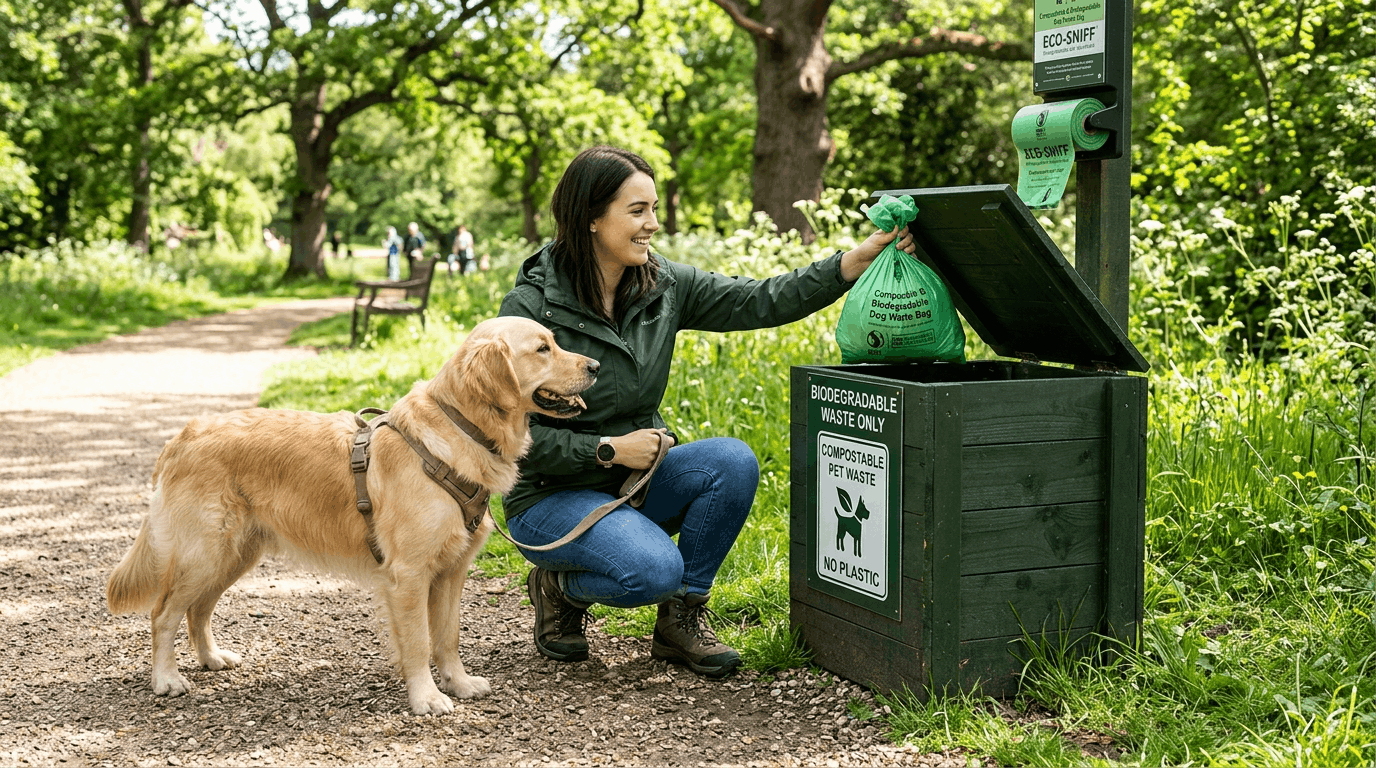
Social awareness also continues growing. Many communities now provide biodegradable bag dispensers in parks and public spaces to encourage greener habits. Additionally, environmental organizations increasingly educate pet owners about sustainable cleanup methods and pollution prevention.
Although individual changes may seem small initially, widespread adoption of eco-friendly habits can reduce enormous amounts of waste over time.
Choosing the Right Sustainable Disposal Method
No single disposal solution works perfectly for every household. Instead, the best eco-friendly dog poop disposal method often depends on location, local regulations, household size, and daily routines.
Apartment residents may prefer compostable bags combined with municipal waste systems because space limitations make composting difficult. Meanwhile, homeowners with private yards may benefit more from underground digesters or dedicated pet waste compost systems.
Households with multiple dogs may prioritize larger waste-reduction solutions because their overall waste output remains much higher. In contrast, occasional pet sitters or small-dog owners may focus mainly on biodegradable bag alternatives.
Climate also affects certain methods. Composting systems generally work better in moderate temperatures, while extremely cold climates may slow decomposition significantly.
Budget considerations matter too. Fortunately, sustainable options now exist across various price ranges. Simple bag replacements cost very little, while advanced digesters or composting systems require greater upfront investment.
Ultimately, the most effective solution is the one pet owners consistently use responsibly. Sustainable habits succeed best when they remain practical for everyday life.
Conclusion
Eco-friendly dog poop disposal provides pet owners with smarter ways to reduce waste while protecting public health and the environment. From biodegradable bags and composting systems to flushable solutions and waste digesters, modern pet care now offers several practical alternatives to traditional plastic-heavy disposal methods.
Because improper waste handling contributes to pollution, harmful bacteria, and landfill accumulation, responsible cleanup remains essential for both communities and ecosystems. Fortunately, sustainable disposal methods allow pet owners to maintain cleanliness without relying entirely on long-lasting plastics and environmentally harmful products.
Small adjustments in daily routines can create meaningful environmental improvements over time. Whether switching to compostable bags, installing a pet waste digester, or reducing unnecessary plastic use during walks, every responsible choice contributes positively.
As more consumers embrace sustainable living, eco-friendly dog poop disposal will likely become an increasingly important part of responsible pet ownership. By choosing cleaner habits today, pet owners help create healthier outdoor spaces and a more environmentally conscious future for companion animal care.
FAQ
1. Are biodegradable poop bags better than regular plastic bags?
Yes, many biodegradable bags break down faster and create less long-term environmental waste than standard plastic bags.
2. Can dog waste go into regular compost bins?
No, pet waste should stay separate from standard compost because harmful pathogens may contaminate edible gardens.
3. Is flushing dog poop safe for all homes?
Not always. Homes with septic systems may experience problems, so checking local guidelines and plumbing compatibility is important.
4. What is a pet waste digester system?
A pet waste digester is an underground system that breaks down dog waste naturally using bacteria and decomposition processes.
5. How can I reduce waste during dog walks?
Use compostable bags, reusable accessories, bulk refill packs, and responsible disposal habits to minimize environmental impact.