
Choosing safe dog toys is one of the most important decisions you can make for your pet’s health. Dogs chew, tug, and shake toys daily. Therefore, poor-quality products can quickly become hazards.
Many pet owners focus on fun designs. However, safety should always come first. From choking risks to toxic materials, the wrong toy may cause injury. This guide explains how to select durable, non-toxic, and appropriately sized play items that truly protect your dog.
Why Toy Safety Matters More Than You Think
Dogs explore the world with their mouths. Consequently, toys experience constant chewing pressure. If materials break apart easily, small pieces may become choking hazards.
Additionally, certain plastics and dyes contain harmful chemicals. While manufacturers regulate many products, not all brands follow strict safety standards. Therefore, researching before purchasing is essential.
Beyond choking risks, unsafe toys can damage teeth. Extremely hard materials may cause fractures. Soft toys with weak seams can expose stuffing. In both cases, veterinary visits may follow.
By selecting safe dog toys, you reduce preventable injuries and support long-term health.
Understand Your Dog’s Chewing Style First
Every dog chews differently. Some nibble gently. Others destroy toys within minutes. Therefore, identifying your dog’s chewing style helps you choose wisely.
Light Chewers
Light chewers prefer plush or rubber toys. These dogs rarely rip seams or crack hard materials. However, even gentle chewers need durable stitching and non-toxic fabrics.
Moderate Chewers
Moderate chewers apply consistent pressure. They require reinforced rubber or thick rope toys. While plush toys may still work, stronger seams are necessary.
Aggressive Chewers
Power chewers demand heavy-duty materials. Look for thick natural rubber, industrial-grade nylon, or reinforced composite materials. Even then, inspect toys regularly for wear.
Because chewing habits vary, safe dog toys must match behavior, not just breed size.
Materials to Look For and Avoid
Material quality directly affects safety. Therefore, always read product labels carefully.
Safe Material Options
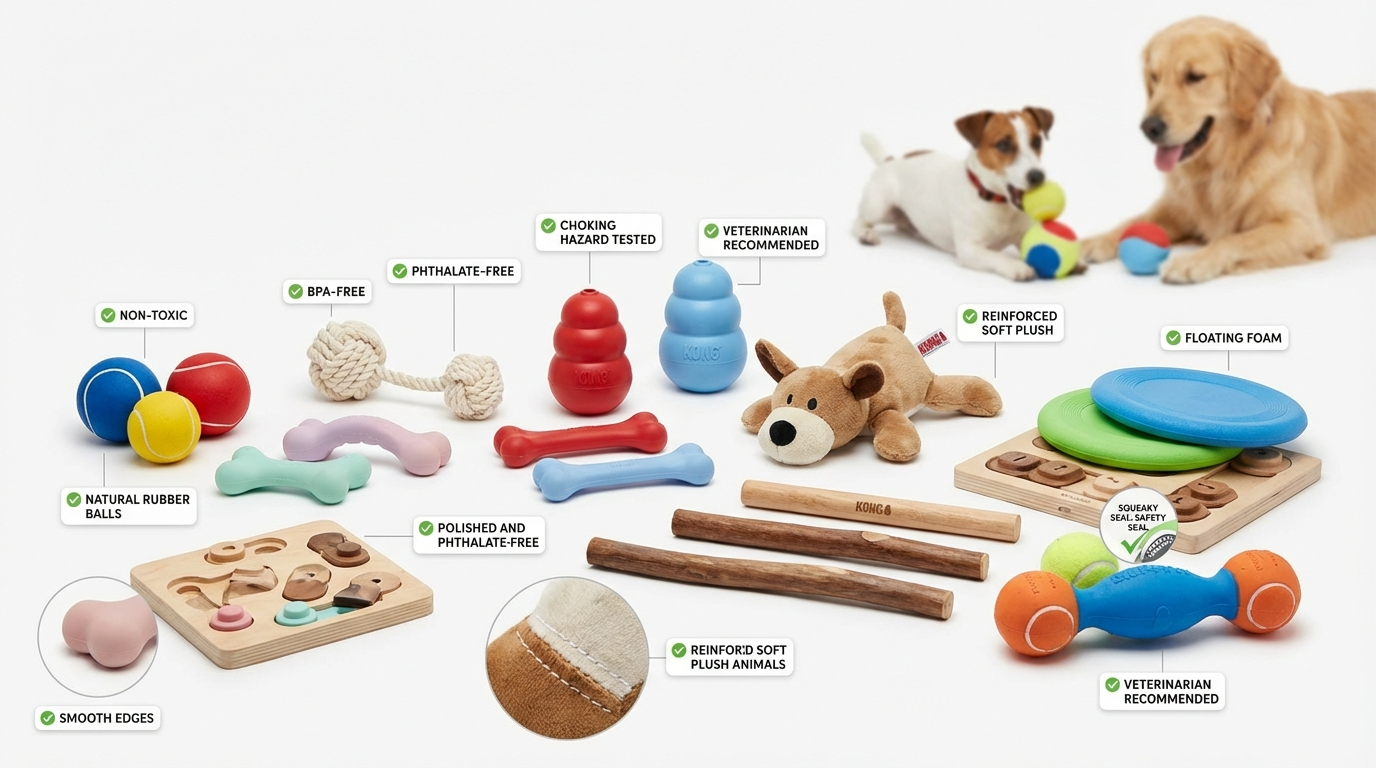
High-quality natural rubber provides flexibility and strength. It bends under pressure rather than cracking. Additionally, food-grade silicone offers safe durability.
Organic cotton works well for rope toys. Ensure the fibers remain tightly woven. Meanwhile, non-toxic plush fabrics should use secure stitching and pet-safe dyes.
When evaluating safe dog toys, choose BPA-free and phthalate-free products. These labels indicate reduced chemical exposure risk.
Materials to Avoid
Avoid brittle plastic. It cracks easily and creates sharp edges. Steer clear of toys with small glued parts, such as plastic eyes. These pieces detach quickly.
Additionally, avoid extremely hard bones or antlers if your dog chews aggressively. Although natural, they may fracture teeth.
If a product lacks clear labeling, consider another option. Transparency often reflects quality standards.
Size Matters More Than You Realize
Proper sizing prevents choking and swallowing hazards. Toys that are too small may become lodged in the throat. Conversely, oversized toys may frustrate smaller dogs.
Measure your dog’s mouth width if unsure. Choose toys slightly larger than your dog can fully fit in their mouth.
For fetch balls, select sizes specifically labeled for large breeds when needed. Tennis balls may pose choking risks for bigger dogs.
Selecting safe dog toys always involves size verification before purchase.
Design Features That Improve Safety
Beyond materials and size, design features influence overall safety.
Seam Strength and Construction
Double stitching increases durability. Reinforced edges prevent tearing. Avoid toys with loose threads or exposed seams.
Ventilation Holes in Rubber Toys
Solid rubber toys without air holes may create suction in a dog’s mouth. Properly designed holes prevent tongue injuries.
Secure Internal Components
If a toy contains squeakers, ensure they sit within reinforced compartments. Loose squeakers often cause choking when removed.
Safe dog toys combine strong construction with thoughtful design.
Rotating Toys to Extend Safety
Even the best products wear down over time. Therefore, rotate toys regularly.
Rotating keeps your dog interested. Additionally, it allows you to inspect items for damage. Remove toys immediately if you notice cracks, tears, or missing pieces.
Regular inspection ensures safe dog toys remain safe throughout use.
Toys for Puppies vs. Adult Dogs
Puppies require softer materials to protect developing teeth. Teething toys made from flexible rubber soothe gums.
However, adult dogs need stronger options. Harder rubber supports jaw strength without breaking apart easily.
Avoid giving adult-strength toys to very young puppies. Conversely, do not give fragile toys to powerful adult chewers.
Matching age with material strength increases overall safety.
Interactive and Puzzle Toys
Interactive toys stimulate mental engagement. However, treat-dispensing designs must remain durable.
Choose puzzle toys with thick compartments. Avoid models with easily removable lids. Dogs may chew through weaker plastic to reach treats.
Additionally, supervise initial use. Observation ensures your dog interacts safely before independent play.
When selected carefully, safe dog toys can also support cognitive development.
Supervision Is Always Essential
No toy is completely indestructible. Therefore, supervision remains critical.
Even heavy-duty products can fail under persistent chewing. Watch how your dog interacts with new toys. If aggressive tearing begins, remove the item promptly.
Supervised play reduces choking risk and prevents accidental ingestion.
Cleaning and Maintenance
Clean toys regularly to prevent bacteria buildup. Rubber toys can often go in the dishwasher. Plush toys usually require machine washing.
However, always check manufacturer instructions. Harsh cleaning chemicals may weaken materials.
Proper hygiene supports health while extending product lifespan. Maintaining safe dog toys ensures long-term protection.
Signs a Toy Is No Longer Safe
Inspect toys weekly. Replace them if you see:
- Deep cracks
- Loose stuffing
- Broken squeakers
- Sharp edges
- Significant wear
Even durable products degrade eventually. Replacing damaged items prevents accidents.
Consistent monitoring keeps your dog protected at all times.
Budget vs. Safety: Finding the Right Balance
Cheap toys may seem attractive. However, low-quality materials break quickly. As a result, you may spend more replacing them.
Investing in high-quality safe dog toys often saves money long term. Durable materials last longer and reduce veterinary risks.
Look for reputable brands with safety certifications. Reviews from verified buyers also provide helpful insight.
Environmental and Non-Toxic Considerations
Many owners now prioritize eco-friendly products. Sustainable rubber and recycled fabrics reduce environmental impact.
Additionally, non-toxic dyes and chemical-free materials protect your dog’s health. Although eco-friendly options may cost more, they often meet higher safety standards.
Balancing environmental responsibility with durability creates smarter purchasing decisions.
Conclusion: Protect Playtime With Smart Choices
Play supports physical health and mental stimulation. However, safety must remain the priority. Poorly designed products can cause choking, broken teeth, or toxic exposure.
By selecting safe dog toys that match your dog’s size and chewing style, you significantly reduce risk. Choose high-quality materials, inspect items regularly, and supervise play sessions.
Thoughtful selection protects your pet while allowing them to enjoy active, engaging play. With the right approach, you create a safe environment where fun and health go hand in hand.
FAQ
- How often should I replace my dog’s toys?
Replace toys when you notice cracks, loose stuffing, or missing pieces to prevent choking hazards. - Are rubber toys safer than plastic ones?
High-quality natural rubber is generally safer because it bends under pressure instead of cracking. - Can hard bones damage teeth?
Yes, extremely hard materials may cause fractures, especially for aggressive chewers. - Should puppies use the same toys as adult dogs?
No, puppies need softer materials to protect developing teeth and sensitive gums. - What is the safest way to introduce a new toy?
Supervise initial play sessions and observe chewing behavior before allowing independent use.